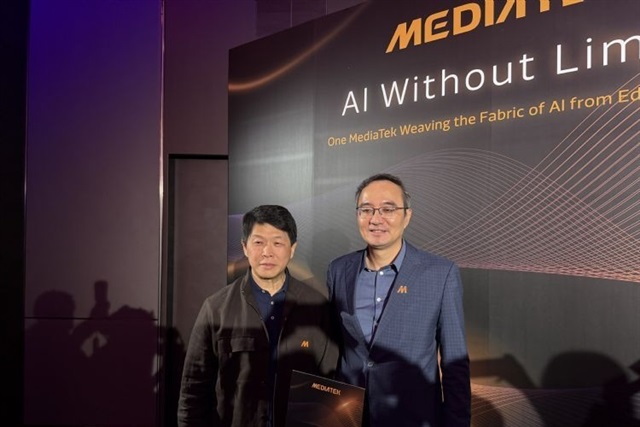
MediaTek and the Vision of AI Beyond the Cloud
MediaTek, a renowned semiconductor manufacturer, is redefining its development strategy, decisively focusing on distributed artificial intelligence. The company has identified a significant opportunity in the growing shift of AI workloads from cloud data centers towards edge devices and local infrastructures. This includes a focus on emerging product categories such as AI-powered smart glasses, AI-enhanced personal computers, and home servers. MediaTek's vision aligns with a broader industry trend that sees AI computation evolving "beyond the cloud," favoring solutions closer to the data source and the end-user.
This transition is not merely technological but also addresses practical and strategic needs of businesses. Managing AI on-premise or at the edge offers tangible benefits in terms of latency, data security, and Total Cost of Ownership (TCO), especially for sensitive or compute-intensive workloads that require real-time responses.
The Crucial Role of Edge Computing in AI
The shift to an "beyond the cloud" AI computing model is driven by several critical considerations. For applications requiring real-time responses, such as AI assistants integrated into smart glasses or autonomous vehicles, the inherent latency of communication with cloud servers can be an insurmountable obstacle. Processing AI directly at the edge, or on local servers, drastically reduces response times, improving user experience and system reliability.
Another decisive factor is data sovereignty and compliance. Many organizations, particularly in the financial, healthcare, or government sectors, are subject to stringent regulations (such as GDPR in Europe) that impose restrictions on data location and processing. Keeping AI workloads on-premise or on home servers offers greater control over sensitive data, mitigating privacy and security risks. This approach is particularly relevant for air-gapped environments, where external connectivity is limited or absent for security reasons.
Hardware and Strategic Implications for Deployment
MediaTek's strategy implies a particular focus on developing silicon optimized for AI Inference on low-power devices with space constraints. This includes designing System-on-Chips (SoCs) capable of running Large Language Models (LLM) and other AI models directly on local hardware, with VRAM and computing power requirements suitable for specific use cases. The challenge lies in balancing performance, energy efficiency, and costs, a crucial aspect for the overall TCO of distributed AI solutions.
For companies evaluating on-premise LLM Deployment, hardware selection is fundamental. Solutions like AI-powered home servers, while smaller in scale compared to traditional data centers, still require careful planning in terms of processing capacity, memory, and connectivity. AI-RADAR offers analytical frameworks on /llm-onpremise to evaluate the trade-offs between initial (CapEx) and operational (OpEx) costs, energy consumption, and expected performance, helping decision-makers navigate this complex landscape.
Future Prospects and Trade-offs of Distributed AI
MediaTek's vision of a future where AI is pervasive and distributed, operating on a wide range of devices outside the central cloud, highlights a clear direction for the industry. This shift does not eliminate the cloud but redefines its role, transforming it into a complement for more intensive training workloads or centralized model and data management. Inference, however, is increasingly moving towards the edge, where proximity to data and end-users becomes a competitive advantage.
The trade-offs in this scenario are evident: greater control and reduced latency versus potential complexities in managing and updating a distributed infrastructure. However, for sectors with specific security, privacy, and performance needs, the "beyond the cloud" approach promoted by MediaTek and other industry players represents an increasingly attractive and strategically advantageous solution.









💬 Comments (0)
🔒 Log in or register to comment on articles.
No comments yet. Be the first to comment!