The Memory Market at a Crossroads: AI's Driving Force
The memory sector, traditionally characterized by "boom-bust" cycles, is now facing a potential structural transformation. Projections indicate that the market could reach a trillion-dollar valuation, a significant milestone that puts the artificial intelligence growth thesis to a crucial test. This evolution is not just about sales volumes but also about the very nature of demand, increasingly oriented towards high-performance and high-capacity solutions.
The primary driver behind this growth outlook is the pervasive adoption of artificial intelligence, particularly Large Language Models (LLMs) and other machine learning applications. The demand for memory is no longer just a matter of quantity but of speed and integration, with direct implications for the hardware and infrastructure required to support these complex workloads.
Artificial Intelligence's Insatiable Demand for Memory
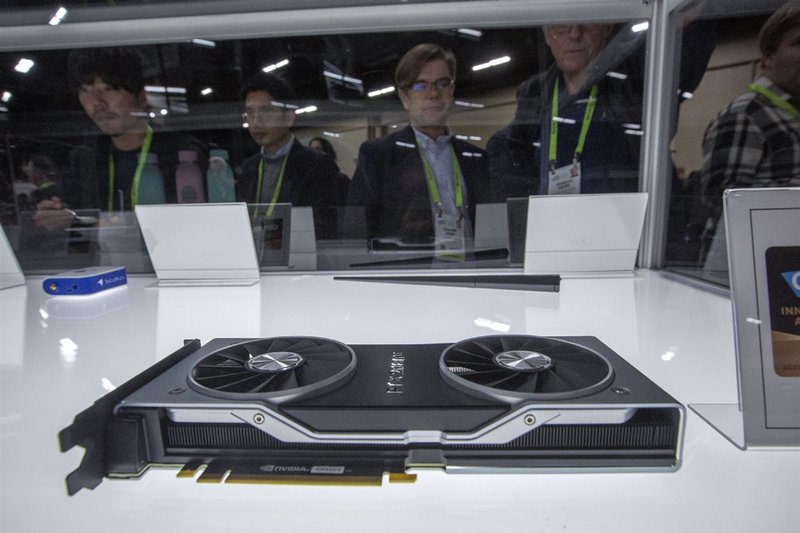
The architecture of modern LLMs and generative AI models requires vast amounts of high-speed memory, both for training phases and, increasingly, for Inference. GPUs, the beating heart of many AI systems, critically depend on VRAM (Video RAM) to store model parameters, Embeddings, and intermediate data during processing. Models with billions of parameters can easily saturate the VRAM available on consumer cards or even mid-range professional ones, making solutions like GPUs with 80GB or more of VRAM, often in interconnected multi-GPU configurations, indispensable.
The ability to handle large context windows, high batch sizes, and perform efficient Quantization operations directly depends on memory availability and speed. For companies developing and deploying AI solutions, the choice of memory hardware directly influences Throughput, latency, and ultimately, the overall TCO of the deployment.
Implications for On-Premise Deployments
For organizations evaluating Self-hosted or Air-gapped AI deployments, memory availability and cost become strategic factors. The necessity to host large LLMs on-premise for reasons of data sovereignty, compliance, or security imposes stringent requirements on hardware infrastructure. Investment in servers equipped with GPUs with adequate VRAM and high-bandwidth memory systems (such as HBM) represents a significant component of initial CapEx.
However, a well-planned on-premise deployment can offer long-term advantages in terms of OpEx, data control, and environment customization. Efficient memory management, through techniques like Quantization or the use of optimized Frameworks, is crucial for maximizing hardware resource utilization and reducing TCO. For those evaluating on-premise deployments, there are significant trade-offs between initial CapEx, long-term OpEx, and achievable performance, aspects that AI-RADAR explores in detail within its analytical frameworks at /llm-onpremise.
Future Outlook and the AI Thesis Test
The potential achievement of a trillion-dollar memory market is not just an economic indicator but a true test for the long-term sustainability of the "AI thesis." If memory demand continues to grow structurally, it would imply that AI is not a speculative bubble but a fundamental driving force for the digital economy. This scenario will require continuous innovations in memory technologies, from next-generation HBM to new architectures that can overcome current capacity and bandwidth limitations.
The challenge for the industry will be to balance increasing demand with production capacity and energy efficiency, ensuring that costs remain sustainable for businesses wishing to adopt AI at scale, both in the cloud and on-premise. The success of this transition will determine not only the future of the memory market but also the speed and depth of AI integration across every sector.







💬 Comments (0)
🔒 Log in or register to comment on articles.
No comments yet. Be the first to comment!