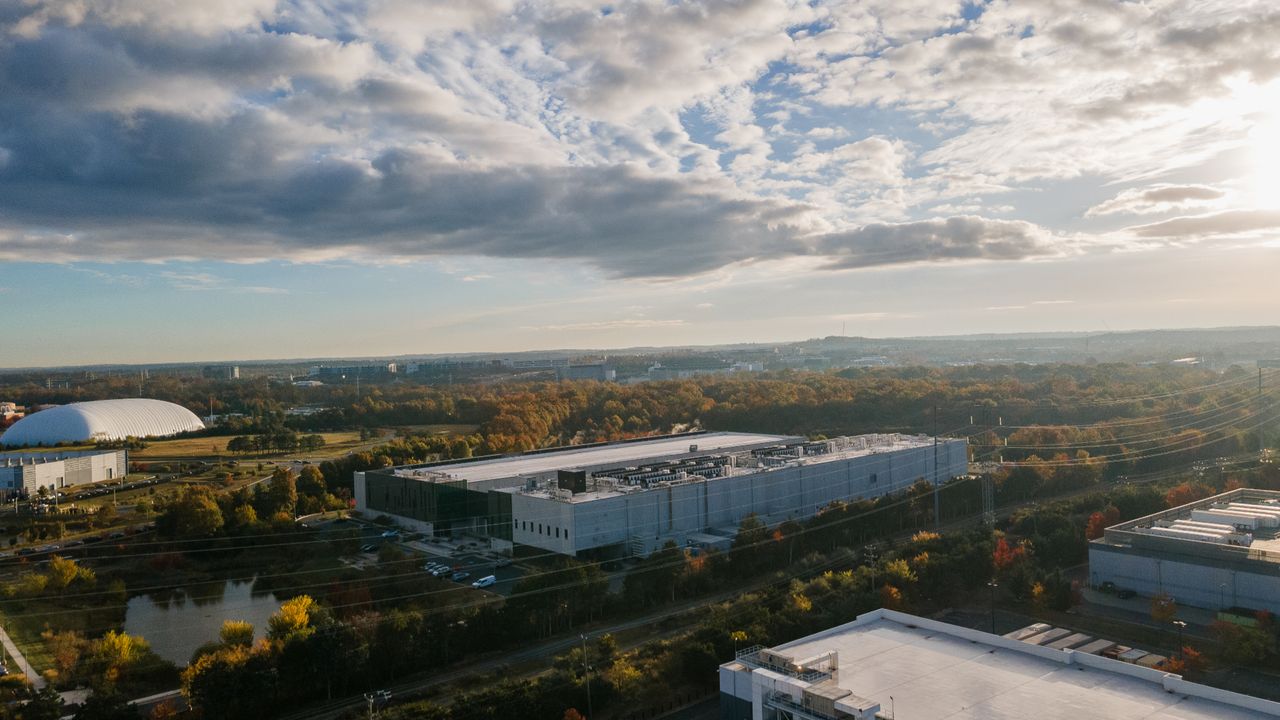
The Menlo Park giant raised the stakes in the AI race with an expansion that leaves little room for half measures: the Hyperion supercomputer, already one of the world’s largest computing clusters, will reach a capacity of 5 gigawatts, pushing the total investment in Louisiana well past $50 billion. Part of that figure, over $1 billion, will go toward improving local infrastructure — a detail that alone signals how AI is becoming a matter of territory, not just silicon.
We’re looking at numbers that until a few years ago belonged to the world of power plants, not data centers. Five gigawatts exceed the installed capacity of many mid-sized cities. For reference, a modern nuclear reactor typically produces around 1–1.5 GW. This means Meta is effectively planning industrial-scale energy infrastructure dedicated exclusively to training and inference of large language models.
The choice of Louisiana is no accident. The state offers access to power grids that still have usable headroom, unlike saturated hubs such as Northern Virginia, and the promise of investments in public infrastructure — roads, water systems, grid upgrades — helps build the political consensus needed for projects of this magnitude. But behind the deal lies a structural problem: the AI industry is now constrained less by GPU availability than by access to abundant and cheap energy. Those who can’t secure it get left behind.
For the on-premise and self-hosted AI landscape, Meta’s move is an unambiguous signal. If training frontier models requires billion-dollar clusters and entire dedicated substations, companies considering independent deployment must rethink their cost metrics. It’s no longer just about buying servers with NVIDIA H100 GPUs or the next generation: you need to calculate total cost of ownership factoring in energy procurement, cooling, and contract negotiations with grid operators. On-premise stops being a privacy question and becomes a full-blown engineering challenge.
At the same time, this concentration of resources risks widening the gap between those who can afford hyperscale clusters and everyone else. Cloud providers, paradoxically, may find themselves chasing: if big tech builds proprietary capacity at these scales, their need to rent compute from third parties shrinks, shifting market dynamics. For mid-sized enterprises, the most realistic path remains a mix of cloud and hybrid environments, with attention increasingly focused on inference optimized through quantization and compression techniques rather than direct training competition.
On the data sovereignty front, Meta’s architecture remains entirely under its own control — no small advantage in an era of growing regulatory tensions. Yet the environmental and social impact of 5 GW facilities cannot be ignored: local communities, while benefiting from the promised investments, will have to live with an energy footprint that has no precedent in the civilian sector. The debate is bound to move from engineering departments to local council chambers.
Ultimately, the Hyperion expansion is not just a tech news item. It is the concrete manifestation of a phase change: AI transforms from a software problem into a civil engineering challenge, where electrical power becomes the primary limiting factor. A reality that every decision maker wrestling with deployment strategies should keep firmly in mind before drafting the next budget.







💬 Comments (0)
🔒 Log in or register to comment on articles.
No comments yet. Be the first to comment!