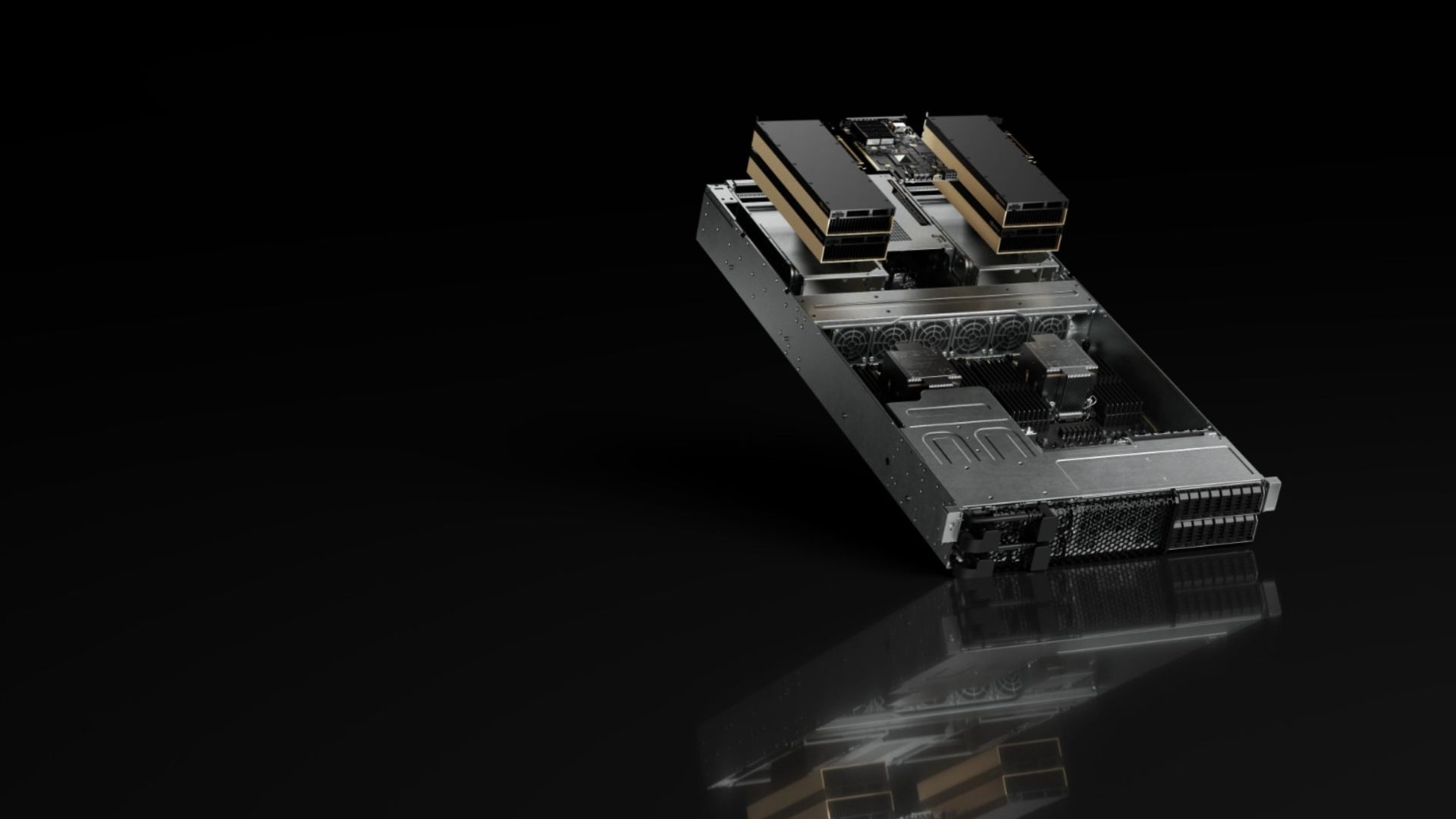
The promise of efficiency in running Large Language Models (LLMs) on shared infrastructures faces a new and subtle security challenge: the possibility that different AI models, hosted on the same vLLM server, can communicate covertly. This potential flaw, which exploits GPU rounding errors, opens an unexpected front in the debate over data sovereignty and resource isolation in on-premise deployment environments.
Side-channel attacks, which extract information from unintentional side effects of processing (such as execution times, power consumption, or, in this case, minimal variations in floating-point calculations), are a known threat in cybersecurity. However, their direct application to communication between LLMs sharing the same graphics processing units represents a worrying evolution. In a context where organizations seek to maximize the utilization of expensive GPUs for inference across multiple models, the idea that these models can "talk" to each other through low-level computational artifacts challenges the effectiveness of current isolation strategies.
For companies opting for self-hosted or air-gapped deployments, this discovery is particularly relevant. The choice to keep AI data and workloads within their physical or logical boundaries is often driven by stringent compliance requirements, data sovereignty, and control. While logical separation between models is implemented at the framework level, such as vLLM, a hardware-level vulnerability, like the one related to GPU rounding errors, suggests that complete isolation is a more elusive goal than previously thought. This scenario compels CTOs and infrastructure architects to reconsider the security guarantees offered by local stacks, pushing for a deeper analysis of the trade-offs between computational density and security robustness.
The issue is not only about the potential exfiltration of sensitive data but also about the manipulation or interference between models. A malicious or compromised LLM could, in theory, influence the behavior of another co-located model, creating attack vectors that are difficult to detect. This adds another layer of complexity to managing the security of AI pipelines, especially in multi-tenant contexts where different teams or clients share the same GPU resources.
This discovery underscores the need for a holistic approach to AI security, one that extends beyond software protection to the underlying hardware. It requires closer collaboration between framework developers, silicon manufacturers, and security teams to identify and mitigate these emerging vulnerabilities. For those evaluating on-premise deployments, AI-RADAR offers analytical frameworks on /llm-onpremise to assess the trade-offs between performance, cost, and security, but this new evidence suggests that the pursuit of perfect isolation is an ongoing race against increasingly sophisticated adversaries.





💬 Comments (0)
🔒 Log in or register to comment on articles.
No comments yet. Be the first to comment!