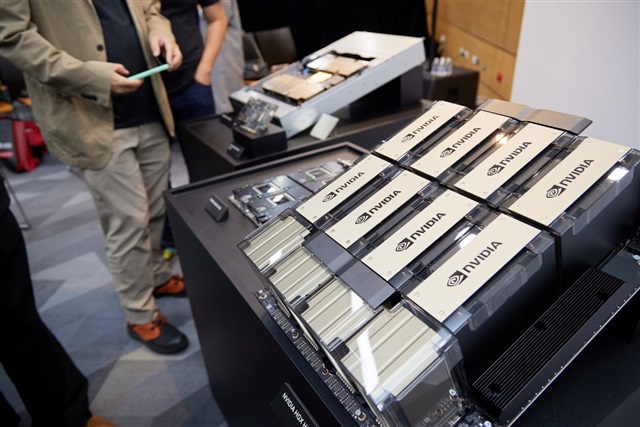
The Bureau of Industry and Security (BIS) now requires licenses for data centers outside the United States supplying more than 12 million TPP of compute capacity to companies based in China, Macau, and other restricted territories. The DIGITIMES report targets a market built on a paradox: Nvidia GPUs could not be sold directly to many Chinese buyers, but could be rented through offshore data centers in Asia and elsewhere. The new BIS rule interpretation aims to close that channel.
This is not just another trade restriction. It marks a shift from controlling hardware as a physical good to controlling compute capacity as a service. A data center aggregating thousands of GPUs and selling training or inference hours to Chinese clients becomes, in effect, an exporter of advanced computational power. The 12 million TPP threshold identifies relevant installations, but the principle is broader: anyone operating AI infrastructure for embargoed markets must verify the end use, even if the servers never cross a border.
For on-premise and self-hosted deployments, the consequences cut both ways. On one hand, organizations that do not want to depend on cloud providers subject to US rules can use direct GPU management to reduce exposure to geopolitical decisions. On the other, compliance becomes a fixed cost: even a regional data center serving Asian customers must implement controls on end use, data location, and access nationality. The line between neutral infrastructure and licensed actor gets thinner.
Losers include offshore data centers and brokers that built their business on arbitrage between Chinese demand and Nvidia supply. Winners, at least in the short term, are domestic Chinese accelerator vendors and local cloud platforms that can absorb demand left without access to foreign rentals. For Western AI service providers, competition for available GPU capacity decreases, but the legal burden in contracts with international clients increases.
Structurally, this story signals that compute sovereignty is no longer only about where LLMs run, but about who can sell access to that processing. TCO evaluations for AI infrastructure must include scenarios where hardware is physically present but the license to serve certain customers is denied. Offshore GPU rental becomes an asset with embedded geopolitical risk, not a simple alternative to capital expenditure.
For those evaluating on-premise deployments, there are trade-offs among direct control, compliance costs, and operational flexibility; AI-RADAR's dedicated frameworks at /llm-onpremise help separate technical constraints from geopolitical ones. The Chinese case does not close the debate: it shows that today's real bottleneck is not only producing GPUs, but deciding who can turn them on and for whom.








💬 Comments (0)
🔒 Log in or register to comment on articles.
No comments yet. Be the first to comment!