
Introduction to the Strategic Context
NoPo Nanotechnologies, an India-based company, is emerging as a key player in the global semiconductor manufacturing landscape. Under the leadership of Co-Founder and CEO Gadhadar Reddy, the company aims to address a critical gap in the chip supply chain by focusing on the development and supply of advanced materials. This initiative is particularly relevant at a time when supply chain resilience and diversification have become absolute priorities for the global technology industry.
The availability of high-quality materials is a fundamental prerequisite for the fabrication of cutting-edge processors, including those essential for Large Language Models (LLM) workloads and other artificial intelligence applications. Bridging this gap not only strengthens India's position in the sector but also helps mitigate global risks associated with reliance on a limited number of suppliers.
The Crucial Role of Advanced Materials in AI Hardware
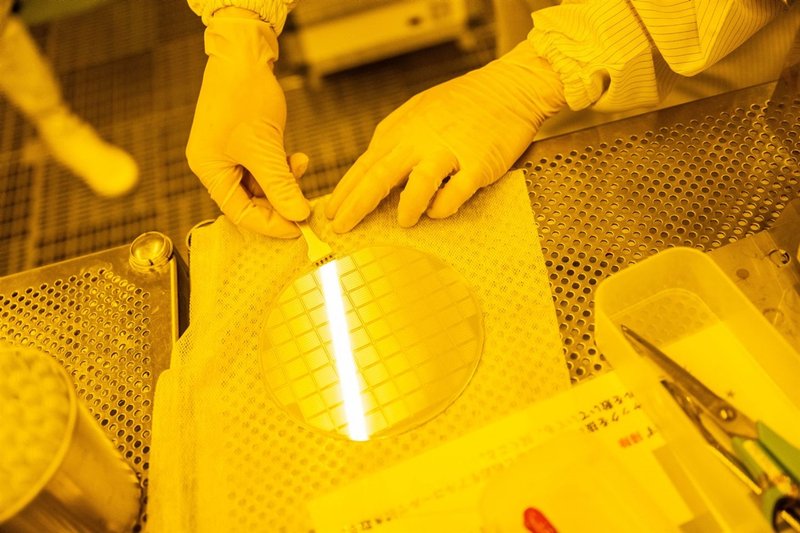
Advanced materials form the foundation upon which modern chips are built, directly influencing their performance, energy efficiency, and reliability. From special alloys to innovative substrates, each component plays a role in determining the ultimate capability of a processor, whether it's a CPU or a GPU. For companies considering on-premise LLM deployment, hardware quality and availability are decisive factors for Total Cost of Ownership (TCO) and for achieving performance objectives.
Innovation in materials can translate into chips with higher transistor density, better heat dissipation, and faster processing speeds. These improvements are vital for LLM inference and training, which demand enormous computing capabilities and VRAM. Research and development in this field, such as that undertaken by NoPo, are therefore directly related to the possibility of having more powerful and efficient AI infrastructures locally.
Implications for Data Sovereignty and On-Premise Deployment
Reliance on a geographically concentrated chip supply chain presents significant risks for data sovereignty and national security. For organizations handling sensitive data or operating in air-gapped environments, the ability to procure hardware from diversified and reliable sources is essential. A more robust and distributed advanced materials ecosystem can reduce vulnerability to geopolitical disruptions or production bottlenecks.
On-premise deployment of LLMs, often driven by compliance needs, data control, and long-term TCO optimization, directly benefits from a more resilient semiconductor supply chain. The availability of critical materials from multiple sources supports the production of hardware necessary to build local stacks, ensuring that companies can maintain full control over their AI infrastructure without compromising security or performance. AI-RADAR, for example, offers analytical frameworks on /llm-onpremise to help companies evaluate these trade-offs and plan their deployment strategies.
Future Outlook and NoPo's Contribution
NoPo Nanotechnologies' commitment to bridging the advanced materials gap for chips is part of a global trend towards greater autonomy and resilience in semiconductor manufacturing. Initiatives like this are crucial to ensure that innovation in artificial intelligence is not hindered by limitations in the availability of basic hardware components.
The work of companies like NoPo helps create a more stable and predictable environment for investments in AI infrastructures, whether it's hyperscale data centers or self-hosted solutions for specific workloads. The ability to produce and access advanced materials is a pillar for the future of AI, enabling organizations to build and scale their computing capabilities with greater confidence and control.







💬 Comments (0)
🔒 Log in or register to comment on articles.
No comments yet. Be the first to comment!