
Nvidia and SK Hynix Join Forces in the Memory Market
Nvidia and SK Hynix have forged a strategic agreement poised to invigorate competition in the high-performance memory sector. This collaboration, as reported by DIGITIMES, emerges within a context of escalating demand for specialized hardware for artificial intelligence and Large Language Models (LLMs), where memory capacity and speed are critical factors.
The understanding between these two tech giants is expected to intensify pressure on other key market players, such as Samsung and Micron. In an era where AI system performance largely depends on the ability to process vast amounts of data rapidly, the availability and innovation in memory solutions represent a fundamental competitive advantage.
The Strategic Role of HBM Memory for AI
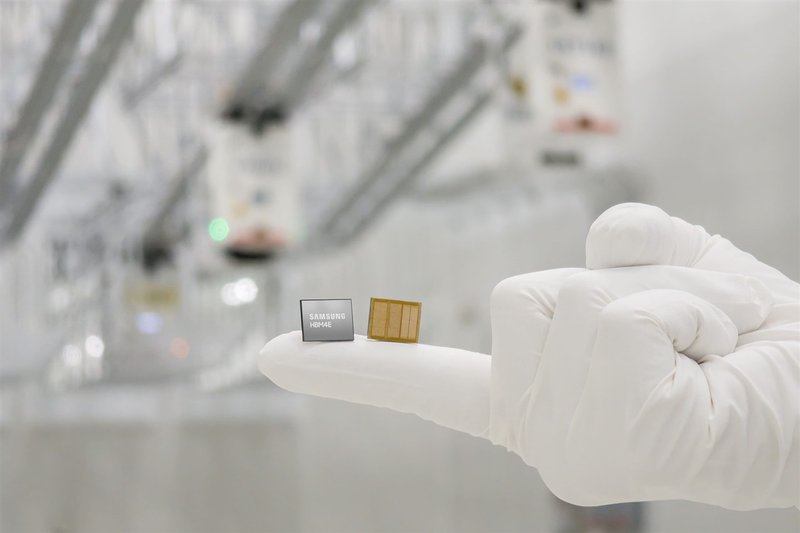
At the core of this "memory race" are High Bandwidth Memory (HBM) modules, a type of high-performance RAM primarily used in graphics accelerators and AI processors. HBM is crucial for powering the latest generation of GPUs, like those produced by Nvidia, which serve as the computational engine behind the training and inference of Large Language Models.
A GPU's ability to handle increasingly larger and more complex models, with extended context windows, directly depends on the available VRAM and its bandwidth. For on-premise LLM deployments, selecting hardware with adequate HBM memory is a decisive factor for throughput, latency, and ultimately, operational efficiency. A more robust and competitive HBM supply can translate into more options for companies seeking to build or expand their local AI infrastructures.
Implications for On-Premise Deployment and TCO
For CTOs, DevOps leads, and infrastructure architects evaluating self-hosted solutions for AI workloads, the evolution of the HBM memory market has direct implications. The availability of key components, such as GPUs with advanced HBM memory, influences not only the ability to scale operations but also the overall Total Cost of Ownership (TCO). A more diversified and competitive supply can lead to more accessible pricing and greater stability in the supply chain.
Enterprises prioritizing data sovereignty, regulatory compliance, and the security of air-gapped environments heavily rely on the ability to acquire and manage powerful hardware on-site. The agreement between Nvidia and SK Hynix could therefore offer new opportunities to optimize procurement and deployment strategies, reducing reliance on a limited number of suppliers and potentially improving delivery times for on-premise AI infrastructures.
Future Outlook and Trade-offs in the Memory Market
The landscape of memory for AI is constantly evolving, with innovations aimed at improving density, bandwidth, and energy efficiency. The partnership between Nvidia and SK Hynix is a clear signal of how major industry players are seeking to consolidate their positions and anticipate future market needs. This competitive dynamic is generally positive for buyers, as it stimulates innovation and can lead to a better cost-performance ratio.
However, deployment decisions for Large Language Models require careful evaluation of trade-offs. The choice between different hardware configurations, managing the training and inference pipeline, and optimizing TCO remain complex challenges. For those considering on-premise deployments, AI-RADAR offers analytical frameworks on /llm-onpremise to evaluate these trade-offs, considering factors such as required VRAM, desired throughput, and latency requirements, without recommending specific solutions but providing tools for informed decisions.







💬 Comments (0)
🔒 Log in or register to comment on articles.
No comments yet. Be the first to comment!