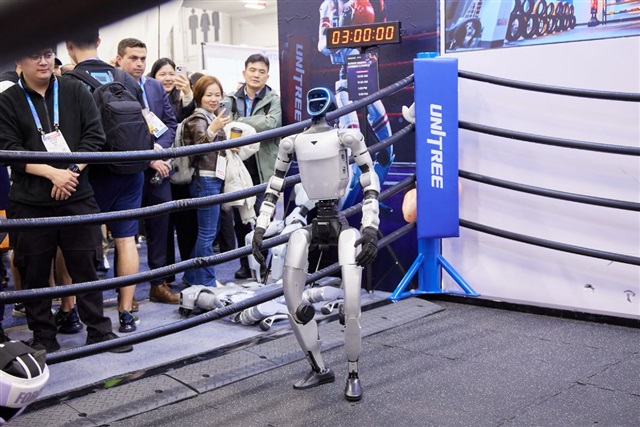
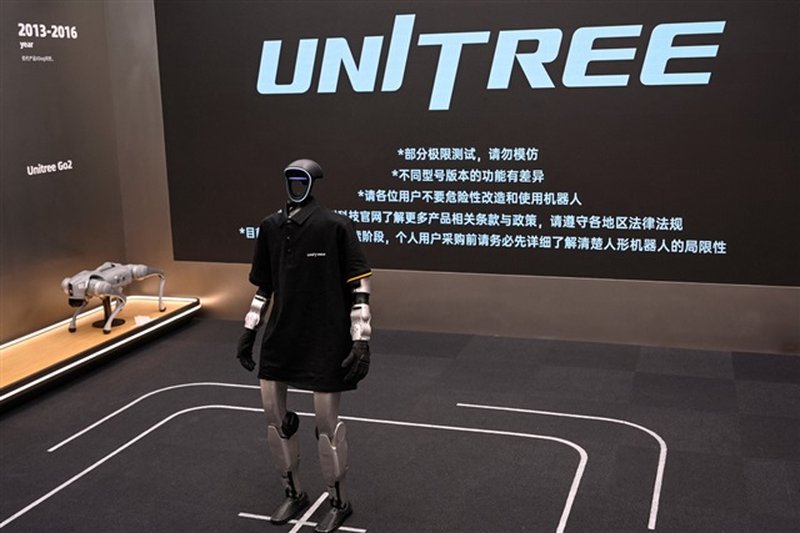
Nvidia and Unitree: Towards a Standard for AI Humanoid Robotics
The collaboration between Nvidia, a leader in AI silicon, and Unitree, a company specializing in robotics, marks a significant step towards standardizing the development of AI-powered humanoid robots. The alliance, which evokes the "Wintel" model for its ambition to define a dominant platform, aims to simplify a currently fragmented ecosystem. This type of partnership is crucial for accelerating innovation in a field that requires deep integration between advanced computing hardware and intelligent software.
The primary goal is to create a common framework that can support the design, programming, and deployment of humanoid robots, making them more accessible and scalable for a wide range of applications. The need for standards in this sector arises from the inherent complexity of humanoid robotics, which combines perception, cognition, and action in dynamic environments, demanding robust and interoperable solutions.
The Challenges of AI for Humanoid Robots and the Role of Hardware
Developing AI humanoid robots presents considerable technical challenges, particularly concerning artificial intelligence processing. These systems require high computing capabilities to handle complex models, such as Large Language Models (LLM) for interaction and vision models for navigation and manipulation. Real-time inference of these models, essential for autonomous behavior, imposes stringent requirements on hardware, especially on GPU VRAM and processing power.
For companies evaluating the deployment of robotic solutions, the choice between cloud and self-hosted infrastructure is critical. Robots operating in sensitive environments or handling proprietary data often benefit from on-premise or edge deployments, ensuring greater data sovereignty and reducing latency. This approach allows for tighter control over the entire AI pipeline, from data collection to inference, and can be fundamental for air-gapped applications or those with strict compliance requirements.
Implications for Deployment and TCO
The creation of a common standard could have a significant impact on the Total Cost of Ownership (TCO) for companies investing in humanoid robotics. A standardized ecosystem can reduce development and integration costs, allowing teams to focus on application-specific innovation rather than resolving hardware-software compatibility issues. Furthermore, the availability of a robust and well-supported framework can facilitate the fine-tuning of AI models for specific tasks, optimizing hardware resource utilization.
For those evaluating on-premise deployment, a standardized approach can simplify infrastructure planning, making silicon requirements and expected performance more predictable. This is particularly relevant for scenarios where robots must operate autonomously, without constant reliance on cloud connectivity, or where latency is a critical factor for safety and operational efficiency. AI-RADAR offers analytical frameworks on /llm-onpremise to evaluate the trade-offs between different deployment architectures.
Future Prospects and Strategic Considerations
The Nvidia and Unitree initiative could accelerate the adoption of humanoid robots in sectors such as logistics, manufacturing, and assistance. However, creating a "Wintel" standard also involves strategic considerations, such as the potential for vendor lock-in and the need to balance ecosystem openness with platform stability. The challenge will be to maintain the flexibility necessary for innovation while ensuring the consistency and reliability that a standard promises.
For technology decision-makers, monitoring the evolution of these partnerships is crucial. The choice to adopt standardized platforms or pursue more customized solutions will depend on the specific constraints of each use case, including performance requirements, TCO budgets, and data sovereignty policies. Neutrality in analyzing trade-offs remains a guiding principle for best evaluating these complex infrastructure decisions.




💬 Comments (0)
🔒 Log in or register to comment on articles.
No comments yet. Be the first to comment!