
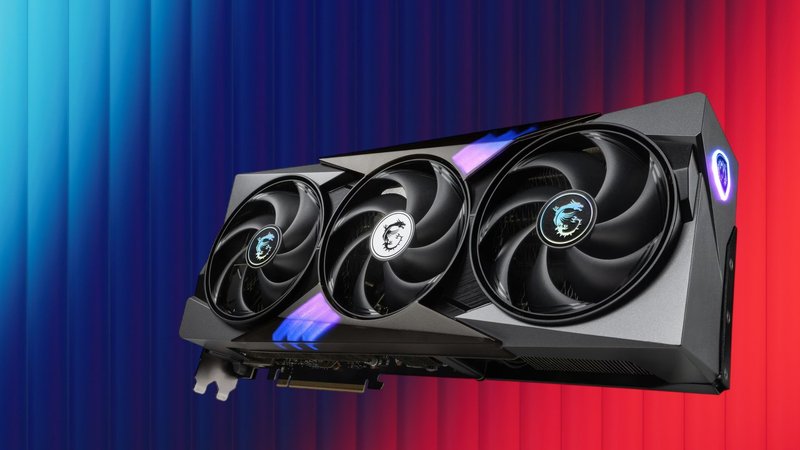
The news bounced from forums to teams planning AI infrastructure: Nvidia reportedly stopped accepting orders for GeForce RTX 5090 cards from board partners and also blocked the option to place backorders. This is not an ordinary retail channel rumor. If confirmed, it indicates that demand exceeds allocation capacity and that Nvidia is rationing supply upstream, not simply delaying deliveries.
For those focused only on gaming benchmarks, the story ends with a supply problem. But for teams building self-hosted stacks for LLMs, a high-end consumer GPU is often the entry point for running local inference without going through the cloud. VRAM and memory bandwidth remain the critical variables: a quantized model in reduced formats can run on a single card, but only if that card physically arrives in the rack or workstation. Blocking orders, with backorders unavailable, breaks procurement predictability and makes TCO calculations far more uncertain.
There is a structural difference between a simple stock-out and refusing future orders. In the first case the market absorbs a spike and returns to equilibrium; in the second, it signals that the vendor is protecting manufacturing capacity for other product lines or that yields do not allow promising volumes. Board partners, used to managing queues and allocations, here have no window to register demand at all. This shifts incentives: anyone who planned a fleet of GeForce cards for an on-premise pilot project must rethink timelines, while those who already hold inventory or have access to enterprise channels gain negotiating power.
The most relevant signal for local deployment is that the consumer category cannot be treated as an infinite reserve of compute capacity. Desktop GPUs offer an interesting price-performance ratio for inference on small models and light fine-tuning, but their supply chain is exposed to the same allocation dynamics as gaming. Those evaluating on-premise deployment must include long-term availability among selection criteria, not just benchmarks. AI-RADAR covers these trade-offs for readers comparing self-hosted options, because data sovereignty means little if the hardware cannot be procured when needed.
The RTX 5090 story, even without official details on specs or volumes, works as an early indicator: rationing in the lower part of the hardware pyramid quickly affects labs, small businesses, and teams trying to avoid cloud dependence.





💬 Comments (0)
🔒 Log in or register to comment on articles.
No comments yet. Be the first to comment!