Nvidia and the Vera Strategy for the Chinese Market
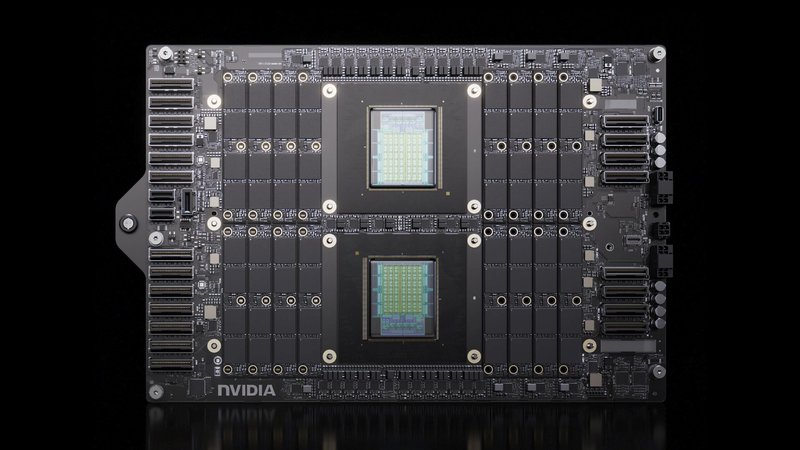
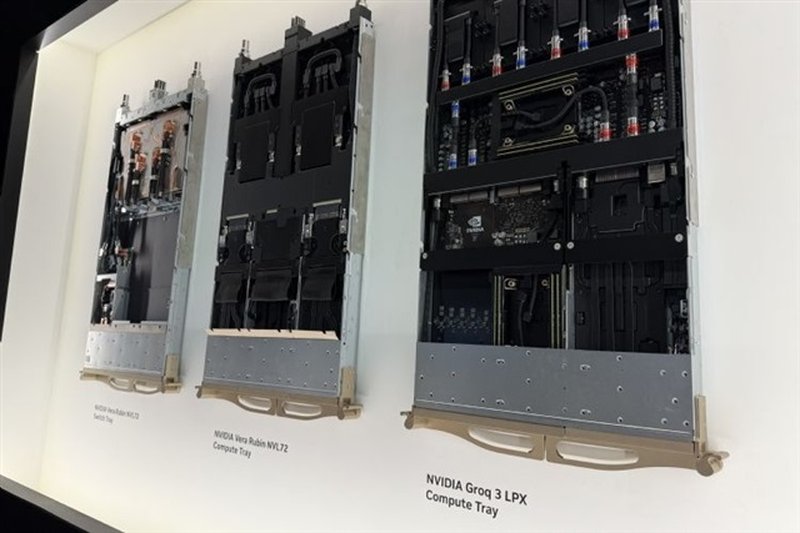
Nvidia is intensifying its efforts to maintain a significant presence in the Chinese market, a goal made complex by stringent US export control regulations. According to Reuters, citing three sources familiar with the discussions, the company has begun pitching its Vera CPU to customers in China. This strategic move would allow orders to start immediately, with initial deliveries expected as early as August.
The decision to introduce the Vera CPU in this context is widely interpreted as an alternative solution, or a "workaround," to navigate the restrictions that have heavily impacted Nvidia's operations in the country. The company's business in China has experienced a significant decline following export control measures, making it essential for Nvidia to explore new avenues to serve one of the most dynamic and important technology markets globally.
The Vera CPU: A New Hardware Approach for AI
While Nvidia is renowned for its GPUs, which are fundamental pillars for accelerating Large Language Models (LLM) and AI workloads in general, the introduction of a CPU like Vera marks an interesting evolution in its offering. CPUs, while not primary accelerators for Inference or Training of LLMs, play a crucial role in the overall architecture of an AI system. They are responsible for operating system management, data pre-processing, coordination among different computing units, and executing tasks that do not directly benefit from the massive parallelism of GPUs.
For companies considering on-premise Deployments, an integrated or complementary hardware solution that includes an Nvidia CPU could offer advantages in terms of optimization and compatibility. In a self-hosted environment, where full control over hardware and software is a priority, the availability of Nvidia components not subject to restrictions can facilitate the construction of robust and performant local stacks, while ensuring data sovereignty and compliance with local regulations.
Export Controls and Implications for On-Premise Deployment
US export controls have created a complex environment for global technology companies operating in China. For Chinese enterprises, access to cutting-edge AI hardware has become a challenge, pushing them to seek solutions that ensure operational continuity and technological independence. In this scenario, on-premise or self-hosted Deployment takes on even greater importance. Local infrastructures allow companies to maintain full control over their data and operations, a crucial aspect in contexts of high geopolitical and regulatory sensitivity.
The evaluation of the Total Cost of Ownership (TCO) for on-premise solutions thus becomes a decisive factor. Beyond the initial hardware acquisition costs, companies must consider expenses for power, cooling, maintenance, and specialized personnel. However, these costs can be balanced by benefits in terms of data security, reduced latency, and the ability to customize infrastructure according to specific needs. For those evaluating on-premise Deployments, AI-RADAR offers analytical Frameworks on /llm-onpremise to assess trade-offs between control, performance, and costs, providing valuable guidance in such strategic decisions.
Future Prospects and Nvidia's Role in the AI Landscape
The introduction of the Vera CPU in China highlights Nvidia's resilience and adaptability in the face of geopolitical challenges. This move not only aims to regain market share but could also influence the strategies of other silicon vendors operating in regions subject to similar restrictions. The ability to offer hardware solutions that comply with regulatory constraints, while maintaining an adequate level of performance, will be critical for long-term success in the AI sector.
The global AI landscape is constantly evolving, with an increasing emphasis on the need for flexible and controllable infrastructures. For companies operating in sensitive contexts, the availability of hardware that supports air-gapped or self-hosted Deployments is a non-negotiable requirement. The Vera CPU, in this sense, could represent an important piece in Nvidia's strategy to remain a key player, providing the necessary hardware foundations for AI innovation, even in environments with significant constraints.






💬 Comments (0)
🔒 Log in or register to comment on articles.
No comments yet. Be the first to comment!