The Arrival of NVIDIA RTX PRO Blackwell for Workstations
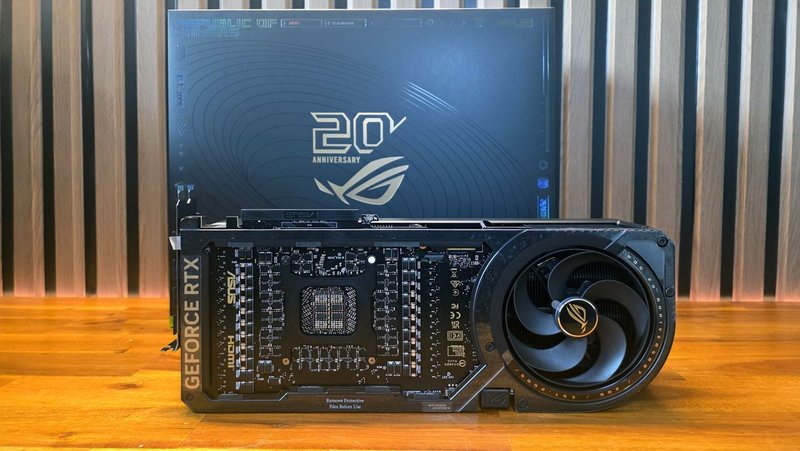
NVIDIA recently unveiled its latest series of professional graphics cards, the RTX PRO based on the "Blackwell" architecture, specifically designed for workstations. These new offerings aim to solidify NVIDIA's position in the professional segment, providing advanced hardware solutions for intensive computational workloads. Particular attention is focused on the performance these GPUs can deliver in a Linux environment, a reference operating system for many professionals and data scientists working with artificial intelligence and machine learning applications.
For companies developing and deploying AI solutions, hardware selection is a critical factor. Workstations equipped with professional GPUs often form the backbone for the development, fine-tuning, and deployment of Large Language Models (LLM) in on-premise contexts. The ability to handle large volumes of data and complex calculations directly on-site is fundamental to ensuring data sovereignty and control over processes.
Technical Details and Implications for On-Premise Deployment
Although the source does not specify precise technical details, professional GPUs like those in the "Blackwell" series are characterized by high amounts of VRAM, memory bandwidth, and a significant number of compute cores. These elements are crucial for efficiency in LLM inference and training, where model size and operational complexity demand considerable hardware resources. Sufficient VRAM availability, for example, determines the maximum size of models that can be loaded and processed without resorting to offloading techniques or more complex multi-GPU configurations.
Optimizing performance on Linux is a non-negligible aspect. A mature software ecosystem, with stable and well-optimized drivers, is essential to fully leverage the hardware's potential. For on-premise deployments, where total control over the infrastructure is a priority, compatibility and efficiency with open source operating systems like Linux are key factors in evaluating the Total Cost of Ownership (TCO). Purchasing decisions are often driven by the need to balance performance, reliability, and long-term operational costs, avoiding the dependencies and variable costs typical of cloud solutions.
The Competitive Landscape: AMD and Intel
The new NVIDIA RTX PRO "Blackwell" cards enter an increasingly dynamic and competitive market. The source indicates that these GPUs will be compared against solutions from AMD Radeon AI PRO and Intel Arc Pro B-Series. This competition is an indicator of the growing demand for specialized hardware for AI and machine learning, which constantly pushes major manufacturers to innovate.
Each vendor offers its own hardware and software ecosystem, with specific strengths and trade-offs. While NVIDIA has historically dominated the AI sector thanks to its CUDA framework, AMD and Intel are investing significantly to offer competitive alternatives, both in terms of hardware and software support. For decision-makers, evaluating these options means considering not only raw performance but also compatibility with existing frameworks, ease of integration into development pipelines, and the availability of technical support. The final choice often depends on the specific workload requirements and the pre-existing IT infrastructure.
Outlook for Professionals and AI Deployments
The introduction of NVIDIA RTX PRO "Blackwell" highlights the continuous evolution in the professional GPU sector. For CTOs, DevOps leads, and infrastructure architects, the availability of high-performing hardware optimized for Linux is positive news. It allows for exploring new possibilities for deploying AI workloads, maintaining control over data, and reducing reliance on external services.
The evaluation of these new GPUs will require in-depth benchmarks in real-world scenarios to fully understand their impact on throughput, latency, and energy consumption. For those evaluating on-premise deployments for LLMs and other AI applications, AI-RADAR offers analytical frameworks on /llm-onpremise to assess the trade-offs between different hardware architectures and deployment strategies, considering factors such as TCO, data sovereignty, and compliance requirements. Choosing the right hardware is a strategic investment that can significantly influence the efficiency and security of an organization's AI operations.









💬 Comments (0)
🔒 Log in or register to comment on articles.
No comments yet. Be the first to comment!