
The frenzy unleashed by Nvidia has shone a spotlight on every link in the AI chain. Wall Street analysts, hunting for the next big story, have found in Micron a name to channel enthusiasm and capital. It is not just a speculative bet: the company, historically known for DRAM and NAND chips, now sits at the crossroads of a structural shift that is redefining hardware for artificial intelligence.
From commodity to bottleneck
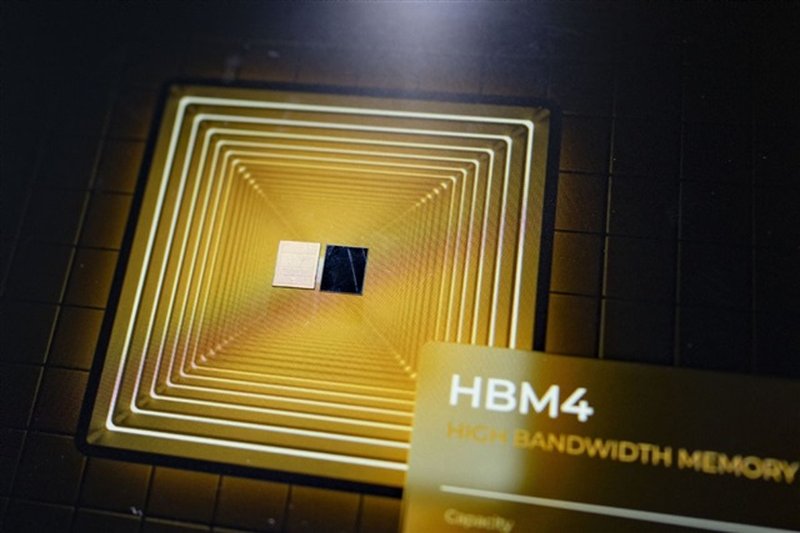
For years, memory was treated as a cyclical commodity, subject to price swings and thin margins. The rise of Large Language Models has flipped the perspective. GPUs like Nvidia's H100, and upcoming accelerator generations, devour memory with ever-increasing bandwidth. HBM (High Bandwidth Memory) technology, where Micron is a key supplier with its HBM3e, has become the new battleground: without enough bandwidth, even the most powerful silicon sits idle waiting for data, nullifying gains in inference and training.
This bottleneck has two faces. On one side, memory makers gain negotiating power and unprecedented margins. On the other, organizations planning on-premise deployments—for sovereignty, privacy, or long-term cost control—must now calibrate investments not only on GPUs but also on how much fast memory they can afford and make available. It is a trade-off that feeds directly into TCO: undersizing memory means strangling the performance of increasingly large models; oversizing it, especially in on-prem contexts, can inflate upfront costs without a proportional return across all workloads.
The ripple effect on on-prem infrastructure
Investor interest in Micron is not just a financial signal: it shows the market recognizes memory as a primary enabling factor for AI. For those building on-prem clusters, this translates into two concrete implications. First, capacity planning must now treat VRAM not as a mere technical parameter but as a recurring cost tied to component availability. Second, the cloud versus self-hosted choice is no longer just a CapEx vs OpEx matter: if memory supply tightens due to excessive AI demand, on-prem projects could face delays or price hikes difficult to absorb.
In this scenario, mitigation strategies emerge: from adopting quantized models, which relieve pressure on bandwidth, to hybrid sizing that shifts only the heaviest workloads onto shared infrastructure. Quantization frameworks become tools not just for technical optimization but for economic planning: an INT8 model, for instance, can halve the memory footprint compared to its FP16 counterpart, making on-prem inference feasible on less demanding hardware.
Beyond the hype: what to watch
Nvidia's trajectory has shown that the market can price the future well in advance, but also that fundamentals matter. Micron is neither a logic chip company nor a GPU manufacturer: its fortune hinges on the ability to scale HBM production without stumbling into classic oversupply cycles. For the AI ecosystem, this means high-bandwidth memory availability will be an independent variable to monitor, alongside process node evolution and model architecture.
For companies evaluating an on-prem path, this centrality of memory suggests not limiting themselves to comparing GPU spec sheets but including supply chain analysis and component distributor contracts in their due diligence. Deployment decisions, in a market where memory has turned into gold, depend on how reliably one can secure access to that raw material. It is not an issue solved with a simple benchmark: it requires an integrated vision that, on AI-RADAR, we have begun to explore with analytical frameworks for those putting LLM on-premise projects into practice.







💬 Comments (0)
🔒 Log in or register to comment on articles.
No comments yet. Be the first to comment!