Powertech Accelerates Investments in AI Packaging
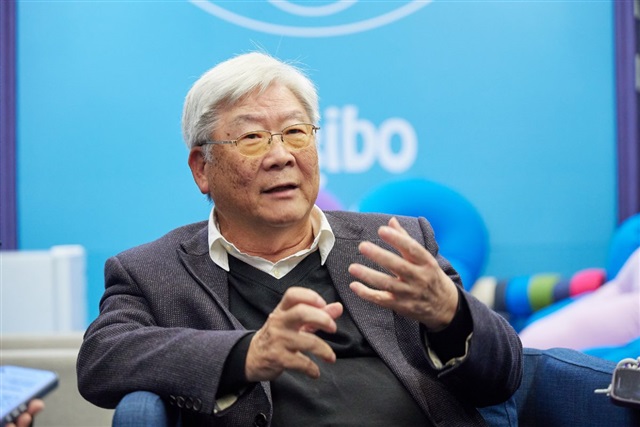
Powertech, one of Taiwan's leading companies specializing in semiconductor assembly and test services (OSAT), has announced a significant expansion of its investment plans. The company has increased its capital expenditure to $1.6 billion, with the stated goal of strengthening its position in the growing artificial intelligence packaging market. This strategic move, as reported by Chairman DK Tsai, underscores the crucial importance of advanced packaging for the evolution and widespread adoption of AI technologies.
The investment reflects a broader trend in the semiconductor industry, where the demand for high-performance AI components, particularly for Large Language Models (LLMs), is pushing suppliers to innovate and scale their capabilities. For companies evaluating on-premise deployments of AI solutions, the availability of cutting-edge hardware is a decisive factor, and packaging is a key element in this equation.
The Critical Role of Advanced Packaging in the AI Era
Semiconductor packaging, often underestimated, is in fact a fundamental pillar for the performance and efficiency of modern chips, especially those dedicated to AI. With the increasing complexity of graphics processing units (GPUs) and AI accelerators, the ability to integrate multiple chips (such as compute logic and high-bandwidth memory, HBM) into a single package becomes essential. Techniques like 2.5D and 3D packaging allow overcoming the physical limits of traditional printed circuit boards, reducing interconnection distances and dramatically increasing bandwidth and power efficiency.
These advancements in packaging are directly related to the ability to execute increasingly complex AI workloads, such as LLM Inference and Fine-tuning, with higher Throughput and lower latency. For CTOs and infrastructure architects, efficient packaging translates into more compact, powerful systems with better thermal control—vital aspects for the scalability and sustainability of on-premise data centers. Without state-of-the-art packaging, even the most powerful chips could not realize their full potential.
Implications for On-Premise Deployments and TCO
Powertech's investment in AI packaging has direct repercussions for organizations choosing to implement AI solutions in self-hosted or air-gapped environments. The availability of components with advanced packaging means access to higher-performing and more reliable hardware, which can reduce the Total Cost of Ownership (TCO) in the long run. More efficient hardware requires less power, generates less heat, and can process more Tokens per second, optimizing resource utilization and minimizing the need for frequent infrastructure expansions.
For those evaluating on-premise deployments, the robustness of the AI packaging supply chain is a key indicator of future hardware availability and cost. The ability of companies like Powertech to meet the growing demand for advanced packaging is crucial to ensure that businesses can build and maintain their AI infrastructures with the necessary data sovereignty and control. AI-RADAR offers analytical frameworks on /llm-onpremise to evaluate the trade-offs between self-hosted and cloud solutions, considering factors such as hardware performance and TCO.
Future Prospects and the Race for Innovation
The increased investment in areas like AI packaging by key players such as Powertech highlights the continuous race for innovation in the semiconductor industry. The demand for AI computing capacity shows no signs of slowing down, pushing the entire supply chain to evolve rapidly. This includes not only chip manufacturing but also all intermediate stages, from design to packaging, to final testing.
For AI-reliant businesses, the ability to access cutting-edge packaging technologies will translate into a competitive advantage, enabling the development and Deployment of increasingly sophisticated models. Powertech's commitment to this strategic segment is a clear signal that the underlying hardware infrastructure for AI will continue to be a crucial battleground for innovation and investment in the coming years.





💬 Comments (0)
🔒 Log in or register to comment on articles.
No comments yet. Be the first to comment!