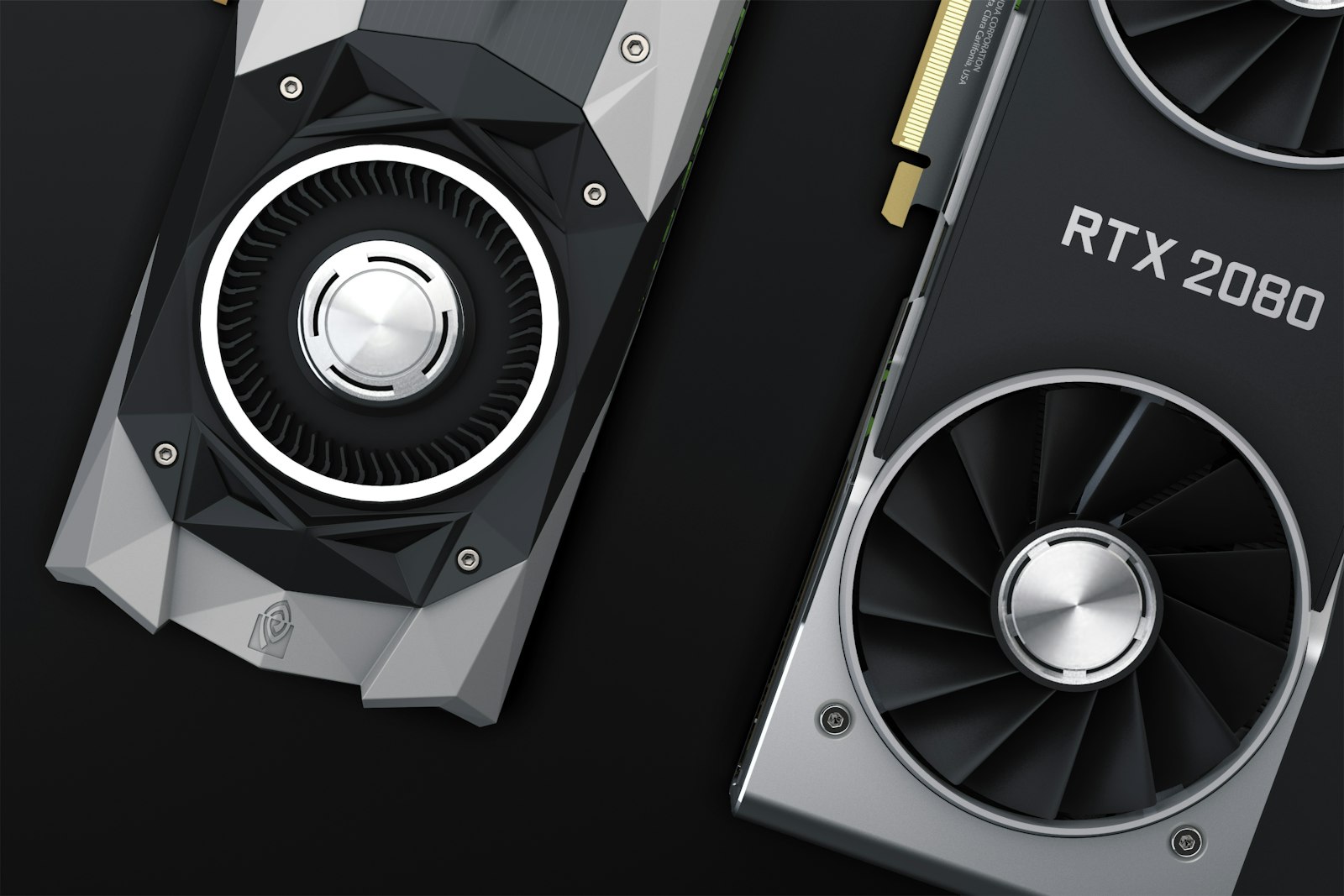
There is a gaming card that is becoming the symbol of a small DIY AI rush: the GeForce RTX 5060 Ti in its 16GB variant. The signal comes from a Reddit thread where a user comments, almost surprised, "Oh look, that's us!", in front of evidence of bulk buying. There are no official numbers, but the fact that the news spreads this way is already an indicator: demand for accessible VRAM to run LLMs locally is changing the profile of consumer hardware buyers.
The VRAM bottleneck
The reason 16GB makes a difference is simple. In local inference pipelines, video memory determines not only which models can be loaded, but also how much context can be handled and what level of quantization can be sustained. A card with 16GB of VRAM opens the door to mid-sized quantized models, contexts sufficient for many prototyping tasks, and some experimentation with light fine-tuning. It is not a matter of raw power; it is a matter of how much can fit in memory without degrading output quality.
This threshold has an immediate practical effect. It shifts AI demand from the cloud toward the consumer segment, because it lowers the entry cost for individual developers and small teams that want to test self-hosted stacks without depending on external services. But it also creates a short circuit in classic vendor segmentation: a gaming GeForce ends up competing with entry-level professional cards that, on paper, should preside over exactly that kind of workload. When users buy a product designed for other purposes in bulk, the message to hardware makers is that the boundaries between gaming and local AI are now porous.
Who wins and who loses
In the short term, the winners are users who can build local machines capable of running models without sending data to external servers. This has direct implications for data sovereignty: the ability to keep prompts, documents, and outputs inside one's own perimeter is a concrete advantage for those with compliance constraints or simply for those who do not want to depend on third-party APIs.
The losers, or at least those who must revise their plans, are professional GPU vendors and cloud platforms that base their value on the scarcity of local capacity. If a 16GB consumer card becomes sufficient for a relevant slice of experimentation, the marginal cost of staying on-premise drops and the TCO calculation shifts. It does not mean data centers will disappear, but that a portion of light workloads can remain closer to those who generate them.
The structural signal is clear: demand for local AI is no longer confined to labs with large budgets. It is entering the consumer market with the same logic once applied to buying gaming components. The difference is that the constraint here is not clock frequency or core count, but the amount of available video memory and its bandwidth. Those evaluating on-premise deployment can use this phenomenon as a litmus test: if a 16GB card triggers bulk buying, the question is not whether local inference makes sense, but how far it can push beyond the current compromise. AI-RADAR offers analytical frameworks in its /llm-onpremise section for evaluating these trade-offs, but the final answer always depends on the specific workload.




💬 Comments (0)
🔒 Log in or register to comment on articles.
No comments yet. Be the first to comment!