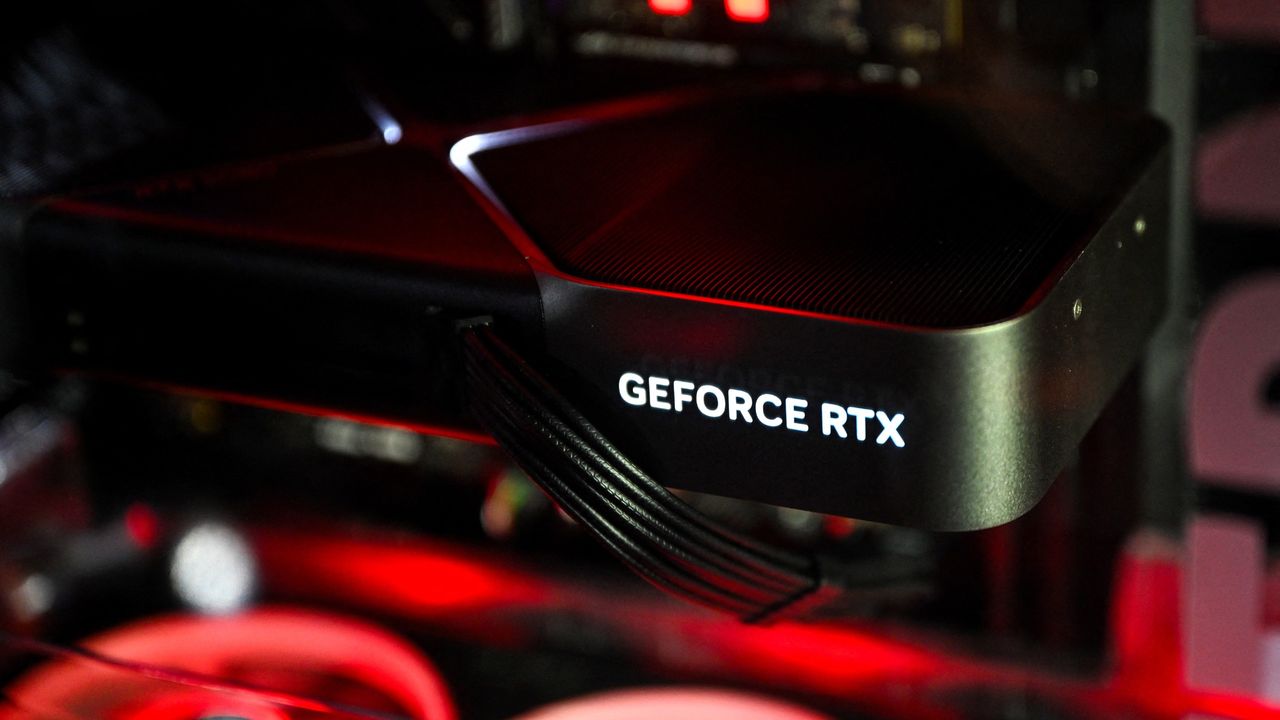
The RTX 5090 has disappeared from US online retail listings. When it appears at all, it is through third-party sellers asking up to $9,500 for what Nvidia calls its fastest GPU. This is not weak demand—it is the opposite. The card has become hard to find, and the secondary market has turned scarcity into a pricing mechanism, with quotes that effectively exclude most buyers.
For those working on local infrastructure for LLMs, this dynamic is not a gaming curiosity. High-end GPUs are increasingly used for self-hosted inference: they offer a compromise between entry cost, VRAM availability, and the ability to keep data within one's own systems. When retail supply dries up, that compromise breaks. The effective cost of a GPU for a small lab or a team wanting to experiment with local models is no longer the list price, but the price set by secondary sellers. And that price is volatile, opaque, and rarely compatible with serious CapEx planning.
Beyond gaming: the race for VRAM
The phenomenon produces second-order implications. First, it pushes those who need local compute toward enterprise channels or cloud solutions, even when the on-premise choice would be preferable for data sovereignty or cost predictability. Second, it selects buyers: the winner is not the one with the most interesting project, but the one willing to pay the markup. This risks slowing the adoption of self-hosted LLMs precisely among the actors who would benefit most in terms of control and privacy.
Structurally, the disappearance of the RTX 5090 from official channels is a leading indicator: demand for local compute does not end with gaming, but absorbs the same production capacity that serves the consumer market. If this trend consolidates, flagship GPUs will stop being a programmable purchase and become an asset subject to speculative spikes, with ripple effects on those building on-premise infrastructure.
For those evaluating on-premise deployment, trade-offs between availability, cost, and control cannot be ignored; AI-RADAR dedicates a section to these comparisons at /llm-onpremise. Meanwhile, in official US listings, the card is no longer there.







💬 Comments (0)
🔒 Log in or register to comment on articles.
No comments yet. Be the first to comment!