
Samsung has yet to receive a volume production order for HBM4 memory from Nvidia, according to a deal-reporting site. Far from being mere industry gossip, the news suggests that the leading designer of AI GPUs might be tightening relations with a smaller pool of memory suppliers, just as demand for memory bandwidth reaches unprecedented levels. For organizations building on-premise compute infrastructure for Large Language Models (LLMs), this deserves attention before it escalates into a tangible obstacle.
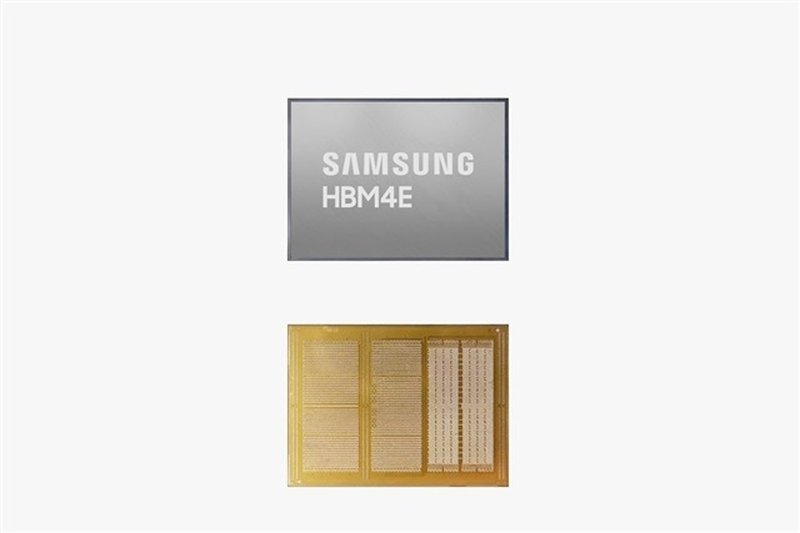
HBM4 is the latest generation of high-bandwidth memory, designed to pair with the parallel processing architectures of next-gen GPUs. Its ability to move massive amounts of data at low latency is critical for both inference and training of ever-larger models. If Samsung struggles to secure Nvidia's trust for volume production, the market would be left with an even narrower set of qualified suppliers — primarily SK hynix and potentially Micron — capable of meeting stringent technical and volume requirements.
This dynamic is far from neutral. It creates a bottleneck that tends to favor large cloud operators, which can place billion-dollar orders and absorb rising costs, while enterprises evaluating on-prem deployment — for data sovereignty, latency, or total cost of ownership control — risk being pushed to the back of the line, facing higher prices and uncertain timelines. The concentration of AI hardware supply deepens the divide between those who can afford to wait and those who need certainty.
If the rumor holds and Samsung remains sidelined from HBM4 production, the domino effect would extend to on-prem cluster design. Those sizing self-hosted LLM systems today must factor in not just GPU performance, but the real-world availability of critical components. A server builder unable to guarantee timely HBM4 delivery becomes a weak link, further shifting bargaining power toward Nvidia and its established partners.
There's also a sovereignty dimension. In Europe, the AI Act and the push to keep sensitive data within known legal boundaries are driving businesses and public bodies toward local hosting. But if high-performance memory is controlled by a supplier oligopoly, dependency merely shifts from software to hardware. The risk is building islands of autonomy that remain vulnerable to supply shocks.
Of course, the situation could still evolve: Samsung might close the technology gap and secure the order at a later stage. Yet the mere delay — or the perception of one — is enough to drive up prices and make local AI infrastructure investments more cautious.
For those viewing the landscape through an on-prem deployment lens, it's useful to have evaluation frameworks that account not only for theoretical performance but also for supply chain risks. AI-RADAR provides analytical tools to assess these trade-offs, helping to separate signal from noise in a rapidly shifting market.





💬 Comments (0)
🔒 Log in or register to comment on articles.
No comments yet. Be the first to comment!