The memory that powers artificial intelligence
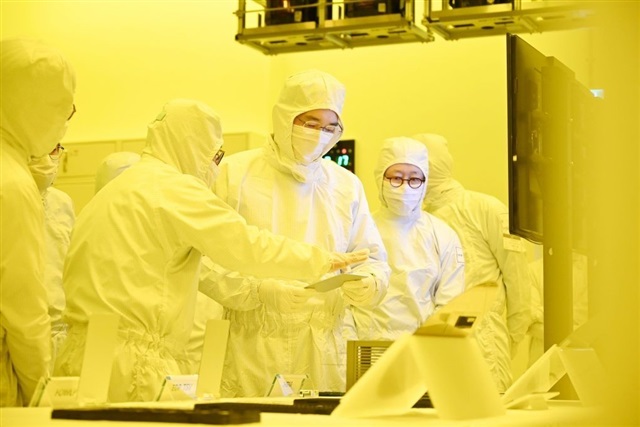
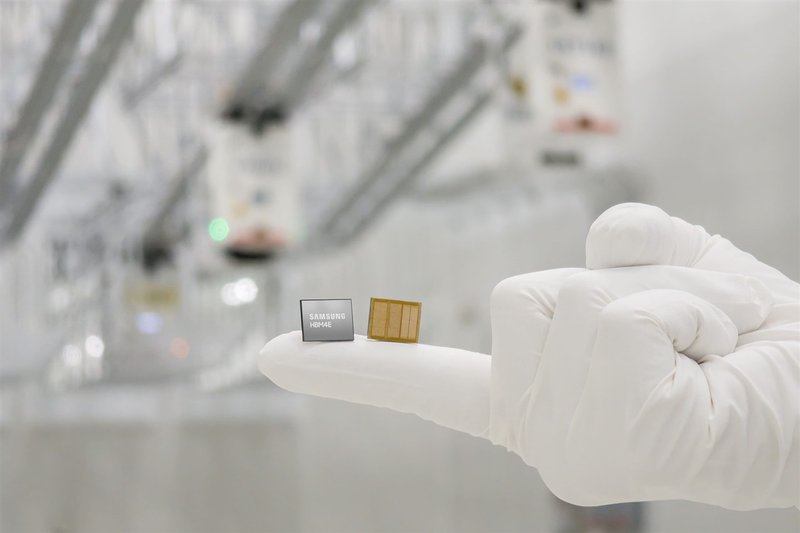
The news comes from South Korea: Samsung’s chairman convened a meeting with semiconductor executives to review the supply status of HBM4, the next generation of high-bandwidth memory. Meanwhile, the division surpassed one billion dollars in revenue, a milestone that reflects the huge demand from GPU and accelerator manufacturers for training and inference of Large Language Models. This is not just a financial announcement: control over the HBM4 supply chain is now a strategic linchpin for the entire AI ecosystem, including on-premise environments where VRAM availability determines which models can be run locally.
What changes with HBM4
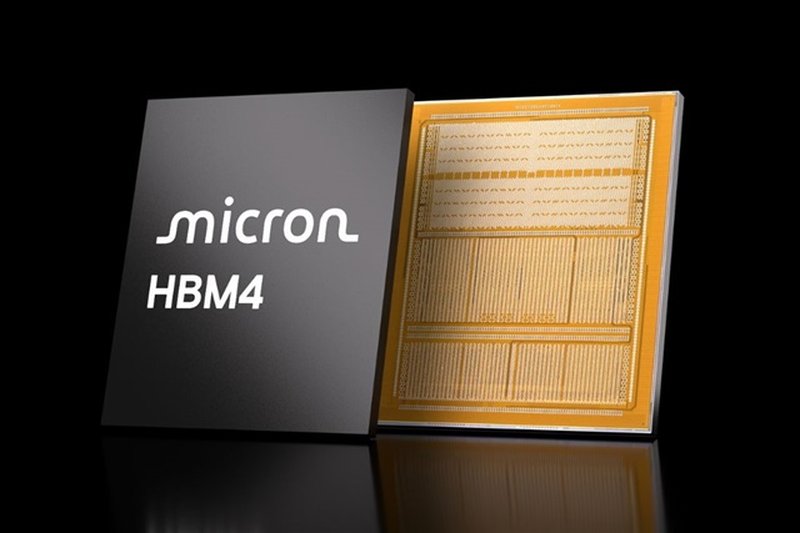
Compared to previous generations, HBM4 promises a leap in bandwidth and capacity, needed to handle increasingly large context windows and model architectures like mixture of experts. In an on-premise server, using HBM4 in upcoming NVIDIA or AMD boards would allow entire models with tens of billions of parameters to be loaded without resorting to aggressive quantization or multi-node partitioning. Those evaluating self-hosted deployments know that memory is the real bottleneck: having available and reliable HBM4 chips means being able to plan low-latency inference workloads and local fine-tuning without depending on cloud APIs. However, the costs of this memory remain high, and its integration requires adequate cooling systems.
A market under strain
The fact that Samsung has already generated over a billion dollars from the HBM segment signals demand outstripping supply. Major foundries like TSMC and SK hynix compete for production capacity, while hyperscale data centers absorb most of the volumes. For companies operating on-premise, this translates into longer hardware lead times and a Total Cost of Ownership (TCO) that must be carefully calibrated. The alternative is to fall back on GPUs with HBM3 or HBM3e, still performant but less suited for next-generation workloads. In this context, the Samsung chairman’s review sounds like a warning: the Korean giant wants to avoid bottlenecks and reassure partners.
Beyond the cloud: sovereignty rests on memory
HBM4 availability is not just a cloud issue. In regulated sectors such as healthcare, finance, or defense, where data cannot leave corporate or national boundaries, on-premise infrastructure must support up-to-date models. HBM4 thus becomes a piece of technological sovereignty: more fast memory means being able to run larger LLMs locally, reducing reliance on external providers. Those designing air-gapped or hybrid environments would do well to monitor the production evolution of Samsung and its competitors, because server fleet refresh cycles depend heavily on the availability of this critical component. For organizations assessing on-premise deployments, the trade-offs between hardware cost and operational independence call for a careful TCO analysis.







💬 Comments (0)
🔒 Log in or register to comment on articles.
No comments yet. Be the first to comment!