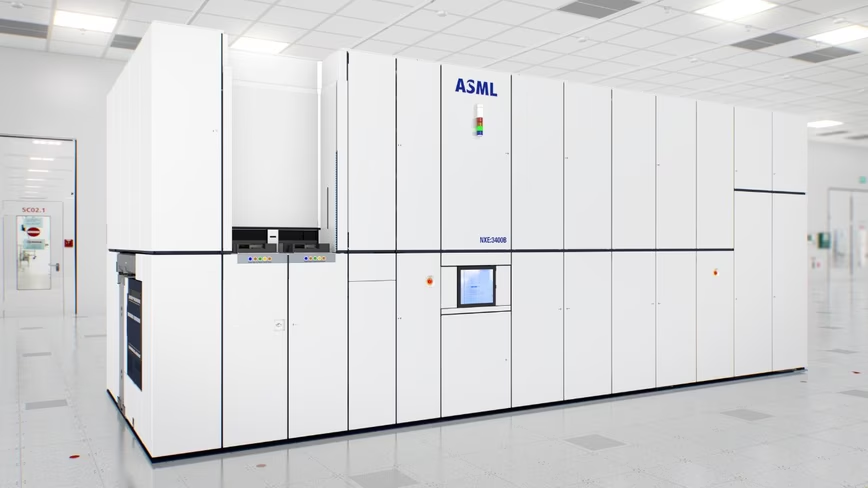
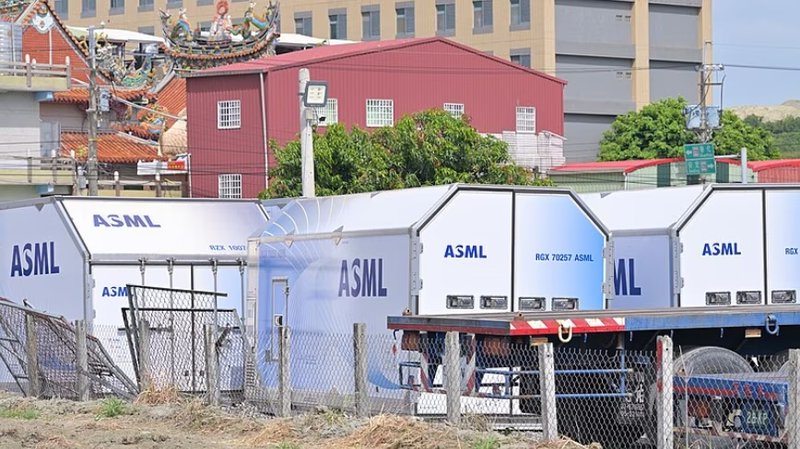
The statement came directly from US Commerce Secretary Howard Lutnick: Washington believes that one of ASML’s most advanced tools has ended up in China, skirting international restrictions on the sale of leading-edge chipmaking technology. The Dutch company, the only one in the world building next-generation lithography machines, flatly denies the charge. The accusation, made without public evidence, has already triggered a new geopolitical short circuit.
The machine in dispute
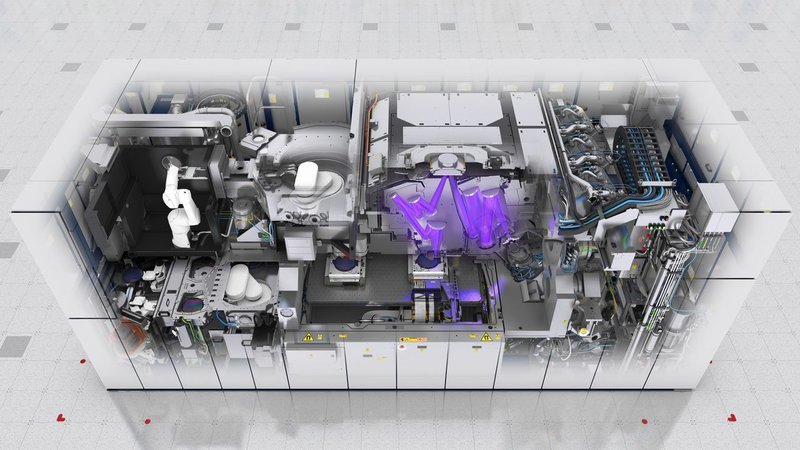
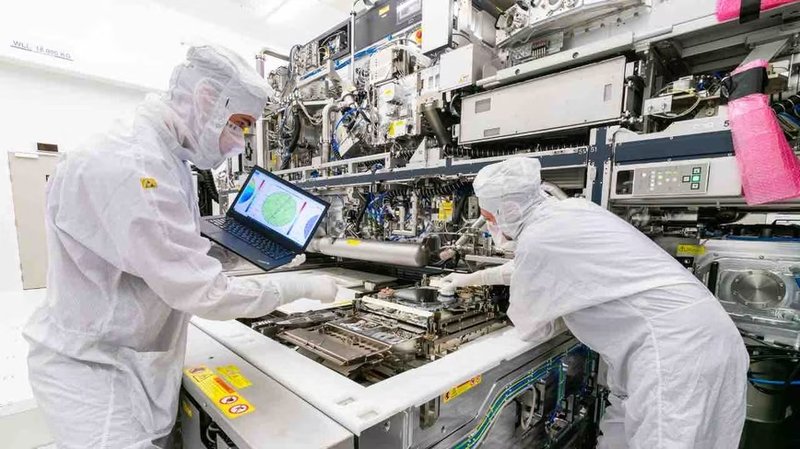
ASML produces extreme ultraviolet (EUV) lithography machines, essential for printing integrated circuits at nodes below 7 nanometers. They are equipment as complex as a bus, requiring constant maintenance and subject to strict export controls coordinated through the Wassenaar Arrangement and unilateral regulations by the US and the Netherlands. Without them, chip manufacturers cannot produce the fastest, most efficient processors—the kind used in data centers, supercomputers, and training systems for large language models.
But what exactly does the US mean by a “top tool”? It probably refers to an immersion DUV (deep ultraviolet) system or a first-generation EUV machine, perhaps transferred before a regulatory tightening. The most delicate scenario is that it involves equipment capable of producing chips at 5 or 7 nanometers—precisely the technology Beijing aims to master to sidestep sanctions. ASML has publicly stated it never breached compliance obligations, but the climate of suspicion risks having concrete consequences.
A game beyond semiconductors
This dispute is not isolated. It is part of a broader US strategy to curb China’s technological rise, extending to artificial intelligence. Advanced chips are the fuel for generative AI and for training large-scale models. Every hardware restriction, both upstream (lithography) and downstream (GPUs and accelerators), impacts the ability to deploy on-premise systems for inference or fine-tuning. For organizations now evaluating on-premise deployment for data sovereignty or TCO reasons, the uncertainty over future supply of cutting-edge silicon is a tangible risk factor.
From the AI-RADAR perspective, where we track technologies for those operating in self-hosted mode, the ASML affair is a wake-up call about the fragility of the global supply chain. Any escalation in the tech trade war could translate into delivery delays for servers equipped with NVIDIA H100s or B200s, or for alternatives like AMD or Intel chips, forcing companies to revise their expansion plans.
The European side and the sovereignty knot
The Netherlands finds itself in an uncomfortable position: on one side, American pressure to tighten rules; on the other, the immense commercial value of the Chinese market for ASML (in 2023, China represented more than 25% of orders). The Dutch government had already extended restrictions on advanced DUV systems, but every new squeeze is negotiated painfully. In this context, Washington’s undocumented accusation also looks like a move to force a clearer European stance, perhaps paving the way for even stricter multilateral control.
Meanwhile, for IT decision-makers in European companies, the dilemma grows: wait for the storm to pass, accepting the risks of dependence on foreign suppliers, or invest in hybrid solutions that reduce exposure to geopolitical bottlenecks. We are not offering easy advice: on AI-RADAR we provide analysis and frameworks to evaluate trade-offs, but the truth is that the game has just begun, and the rules change month by month.





💬 Comments (0)
🔒 Log in or register to comment on articles.
No comments yet. Be the first to comment!