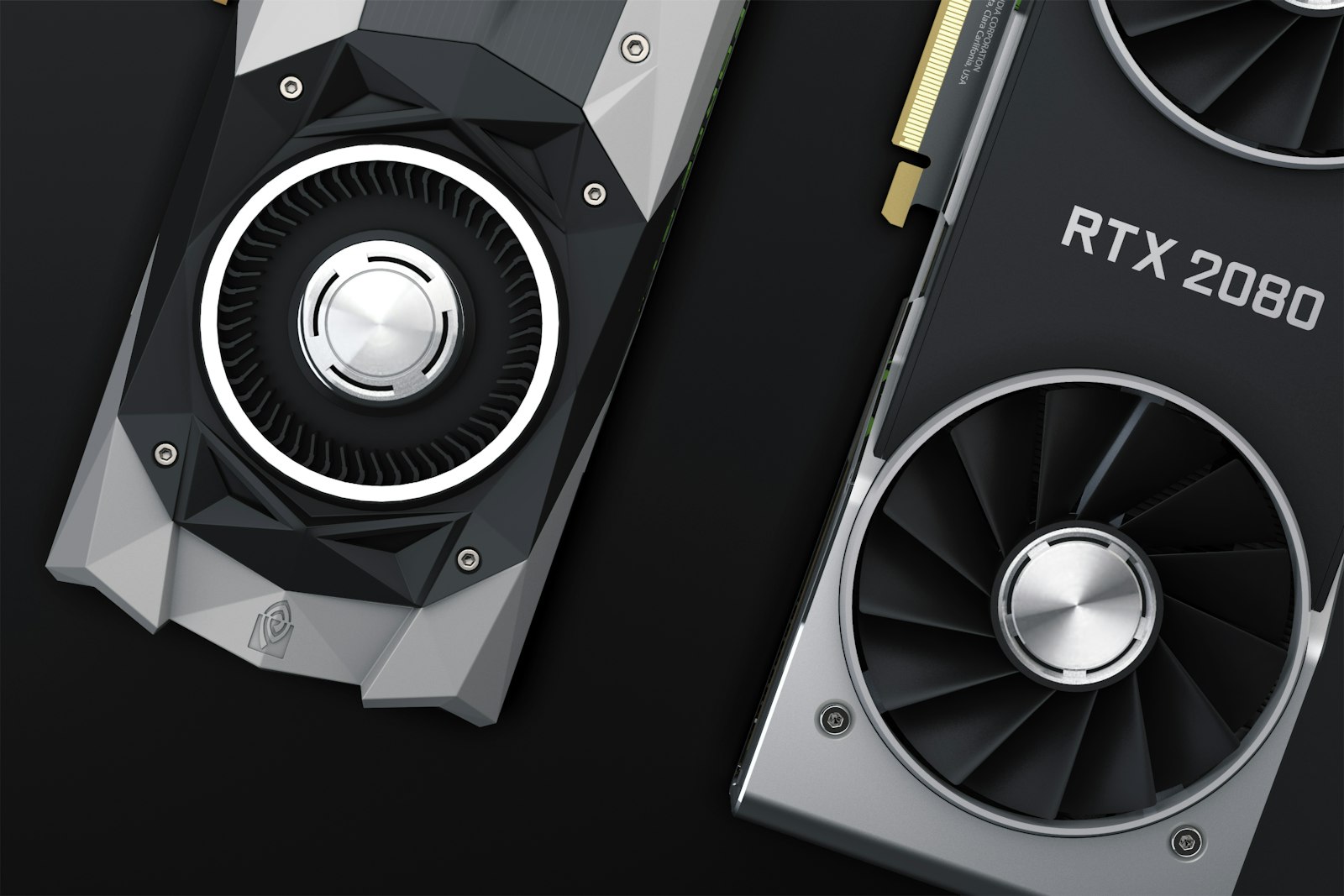
The Reddit post was as laconic as it was revealing: "When you don't have a data center GPU." A lament – or perhaps a plea not to flood the thread with the longest fine-tune-merge names in history – that captures a common trait among those experimenting with self-hosted LLMs: the vast distance between the resources of an enterprise lab and the desk of a developer, a small team, or a company that wants to keep control of its data.
The implicit question, however, is far from trivial: what can you actually do when you lack a card with dozens of gigabytes of VRAM and inference pipelines hit the limits of consumer hardware?
Outside the data center: the real hardware landscape
The conversation almost always revolves around memory. Data-center GPUs (A100, H100, MI300X) offer VRAM starting from 80 GB and up, memory bandwidth on the order of terabytes per second, and dedicated interconnects like NVLink. The consumer world, by contrast, is dominated by GeForce RTX 3090/4090 with their 24 GB, or by Apple Silicon systems which, thanks to a unified architecture, can reach 128 GB of shared memory (albeit with significantly lower real-world bandwidth).
This gap shapes every decision: a 70-billion-parameter model in FP16 occupies about 140 GB just for the weights. The honest approach, when you lack enterprise GPUs, inevitably goes through quantization – INT8, INT4, even 2-bit – and partial offloading techniques to system RAM and NVMe drives.
Frameworks like llama.cpp, Ollama, vLLM, and TensorRT-LLM allow you to spread workloads across multiple consumer GPUs, but with PCIe bottlenecks and higher latencies. On the CPU side, the latest AVX-512 and AMX instructions enable inference on modern Xeon processors or Apple M2 Ultra, delivering tokens per second that, while far from GPU levels, become acceptable for batch applications or low-concurrency chatbots.
The trade-off between control and compute power
Those who choose to stay on-premise without HPC hardware almost always do so for a precise reason: sovereignty. Healthcare data, legal documents, proprietary code cannot leave corporate servers, and the cloud – however agnostic – introduces a vector of regulatory risk and an unpredictable, variable operational cost.
TCO analysis shifts radically: an RTX 4090 costs less than €2,000 and draws around 450 W at peak; an 80 GB A100 costs fifteen times as much and demands a cooling, power, and management ecosystem that belongs in a data-center infrastructure. For sporadic workloads or prototypes, the break-even point arrives very late. However, you pay in terms of a reduced context window, fine-tuning limited to PEFT/LoRA, and a time-to-solution that stretches iterative cycles.
This trade-off is not linear: a small consumer rig can handle quantized 7-to-13-billion-parameter models, enough for internal document RAG or code assistants, but it quickly becomes a dead end if the goal is a generalist LLM with hundreds of billions of parameters or multi-node training.
When the cloud becomes the only sensible alternative
There is a threshold beyond which homegrown hardware crumbles under physical constraints. For full fine-tuning of medium-to-large models, or for inference with sub-10-millisecond latencies under sustained traffic, the cloud – with on-demand GPUs – remains the most pragmatic lever, especially if you use orchestration layers that abstract infrastructure and allow local fallback for lighter loads.
The most flexible architecture today is hybrid: data and models reside on-premise for low-volume requests, while traffic spikes or training jobs are offloaded to cloud instances with enterprise GPUs, with stringent data deletion mechanisms at the end of processing. This path mitigates lock-in risks and preserves sovereignty over data at rest, but it requires mature governance of network flows and identity management.
The outlook: more democratic silicon, smarter software
Looking ahead, the trend is clear: on one side, consumer GPUs are increasing VRAM (RTX 5000 might bring 32–48 GB into the enthusiast segment), while on the other, research into sparsity, mixture-of-experts, and dynamic quantization is reducing the minimum footprint to run capable models.
Meanwhile, dedicated FPGAs and NPUs – integrated in mobile SoCs or on PCIe cards – are carving out a niche for ultra-low-power inference, even if development frameworks remain less mature.
The point is not to ask whether a data-center GPU is necessary in absolute terms, but to accurately map one's own need space: workload, acceptable latency, power budget, and request volume. That map – not the latest NVIDIA card – is the real decision-making asset. You don't need yet another as-a-service, kilometer-long list of exotic model names: you need constraint engineering and a sober understanding of the tools at hand.








💬 Comments (0)
🔒 Log in or register to comment on articles.
No comments yet. Be the first to comment!