
RISC-V has tried to find space in data centers before, but with BigSky SiFive makes explicit a different positioning: not trying to displace Nvidia, but integrating into its ecosystem. The move, from the company led by Patrick Little, lines up three elements that define its perimeter: RISC-V processors, connections with Nvidia GPUs and CUDA, and an enterprise Linux foundation.
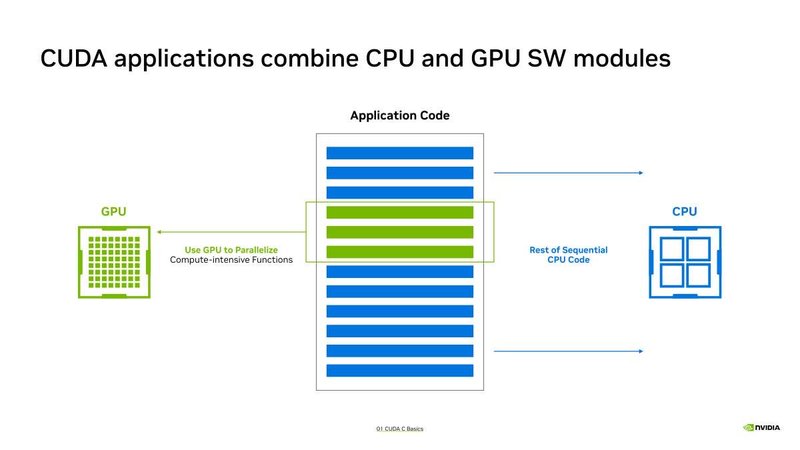
The underlying thesis is that RISC-V's entry into high-performance computing is not played on the plane of pure architecture, but on integration with the dominant software and hardware stack. CUDA is not just a programming language: it is an ecosystem that shapes libraries, tooling, optimizations and skills. Presenting with CUDA compatibility and Nvidia connections means accepting this hierarchy, but also using it to make RISC-V a plausible choice for AI workloads, including LLMs.
For those evaluating on-premise deployments, this is not a side issue. Servers running LLM inference and fine-tuning depend on a combination of host CPU, GPU and orchestration software. Today the host CPU is often x86, sometimes Arm. A RISC-V alternative with enterprise Linux support could reduce dependence on a single silicon supplier and open more favorable TCO margins, while keeping access to Nvidia GPUs. But the real value does not lie in the CPU alone: it lies in the ability to assemble self-hosted infrastructure without giving up CUDA, which remains the glue of much of the GPU fleet.
There is also a structural signal: RISC-V's maturation in the data center does not threaten CUDA's monopoly; it actually consolidates it as a de facto standard. The winners are system integrators and operators that want to diversify CPU supply without rewriting their GPU stack. The ones at risk are x86 and Arm suppliers that dominated the host CPU role in AI servers: if RISC-V reaches sufficient maturity, their role shrinks. In this sense BigSky is not a revolution, but an evolution that makes the market more modular.
On the software side, enterprise Linux support is an essential prerequisite. Without a stable distribution, security updates and certified packages, no data center adopts a new architecture for critical workloads. SiFive's move aims to reduce adoption friction, especially in contexts that require audit and compliance. For those operating air-gapped environments or with data sovereignty constraints, the arrival of an alternative CPU with a mature Linux ecosystem can change make-or-buy calculations, even though real performance will need to be validated case by case. AI-RADAR offers analytical frameworks at /llm-onpremise to weigh these trade-offs, without prescriptive advice.




💬 Comments (0)
🔒 Log in or register to comment on articles.
No comments yet. Be the first to comment!