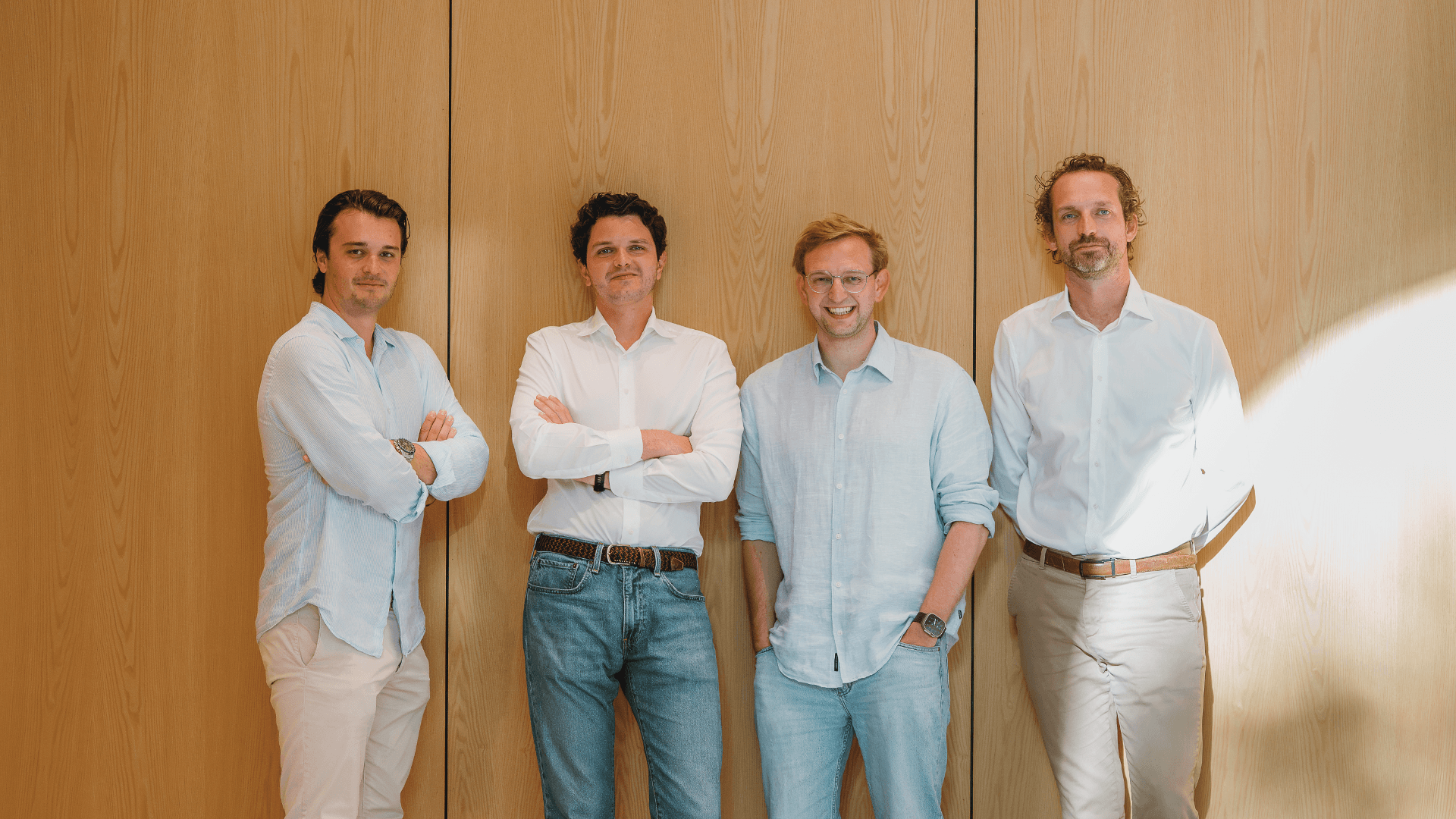
The operation carries the classic profile of a biotech seed round: Sightera Biosciences, a spin-off from the University of Antwerp, closed a €3 million pre-seed funding led by Entourage, Anacura and QBIC. The amount – modest compared to the hypertrophic rounds of generative AI companies – will finance the expansion of the platform and the advancement of an oncology program focused on so-called ‘molecular glues’. Yet the element that turns this news into a structural signal for those tracking on-premise AI is not the technology itself, but the provenance of the data fueling the models.
Sightera trains its systems on proprietary datasets generated from biological samples taken from patients with advanced, therapy-resistant disease. These samples are used to build preclinical models – organoids – that replicate human disease biology and produce large-scale drug-response data. There are no public datasets or generic surrogates: the predictive core of the platform is rooted in real clinical information, collected under informed consent, and therefore subject to stringent privacy, data residency and auditability constraints.
Such a premise radically shifts the infrastructure equation. When we talk about personal health data in Europe, the General Data Protection Regulation (GDPR) does not only demand valid consent; it requires appropriate technical and organizational measures, data minimization, purpose limitation and, often, strict control over the jurisdictions where data is processed. In a cloud-first scenario, ensuring that every training, inference and data preparation operation happens within compliant boundaries can become an exercise in complexity and high hidden costs. Hence the push – still quiet but increasingly clear – towards self-hosted or hybrid architectures, where the computational race moves to dedicated hardware managed directly by the research team or the hospital institute.
The economics are not neutral. The Total Cost of Ownership of a cloud approach handling continuous sensitive data flows can grow non-linearly: egress fees, multi-region replication for disaster recovery, granular audit trails and custom service agreements quickly erode the savings promised by elastic scalability. In parallel, the GPU market for workstations and servers is now producing units with VRAM capacity and bandwidth sufficient to handle training pipelines for tabular and molecular data, without requiring the tens-of-thousands-of-cards clusters typical of large foundation models. This lowers the technical and economic threshold for bringing training directly into laboratories, making the on-premise choice not only a compliance matter but also a pure competitive advantage in the speed of experimental iteration.
Sightera itself does not disclose its computing infrastructure specifics, yet its data approach is a perfect case study of how sovereignty is not a legal ornament but an architectural constraint that shapes hardware and software investments. If the pharmaceutical sector truly wants to harness AI power without exposing patient data to risks or jurisdictional ambiguity, it will have to multiply local installations of systems that can be audited, physically locked down and updated without external dependencies. It is a script already seen in finance and defense, where the AI race has accelerated the demand for air-gapped solutions and on-premises deployments. The difference here is that the ‘model’ is not just a software artifact, but the digital analogue of human tissue: its integrity and lawfulness are inseparable from the place where it is computed.
Beyond this single round, Sightera’s case signals that the European deep tech startup ecosystem is embedding data sovereignty directly into platform design, rather than sticking it on later with compliance-washed cloud services. For those evaluating on-premise deployment decisions, the lesson is that the differential value lies not so much in the model itself, but in the tight alignment among data origin, the hardware that processes it and the governance that protects it. A convergence that makes the local server not an ancillary cost, but the first brick of a defensible advantage.







💬 Comments (0)
🔒 Log in or register to comment on articles.
No comments yet. Be the first to comment!