The signal: matrix math enters the phone perimeter
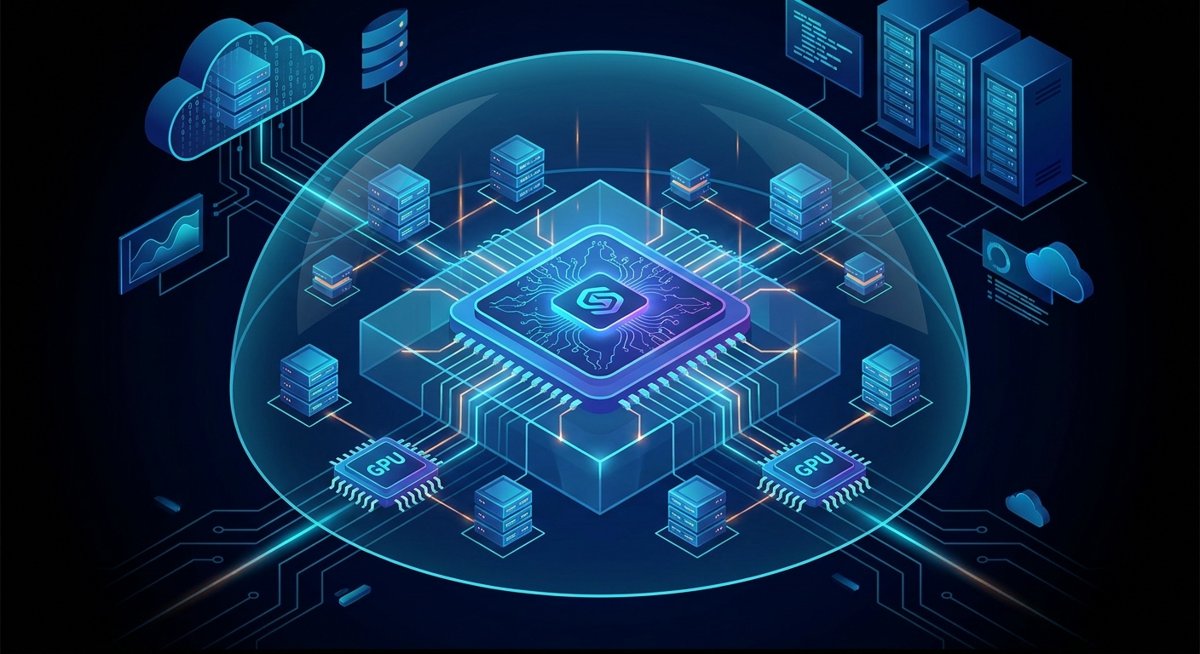
Qualcomm has introduced Snapdragon 8 Elite Gen 6 and Elite Extreme Gen 6. The announcement still lacks full data on memory and power, but two technical elements define the perimeter: Oryon CPU cores and GPU matrix cores, alongside LPDDR6 support. Matrix multiplication, central to LLM workloads, moves into the SoC's GPU, not just a separate accelerator. This changes how a phone can run local Inference.
The message is not 'more power.' The benchmark race is a reductive frame. A deeper shift is visible: the mobile chip becomes a compute node for compressed models, with less dependence on round-trips to remote servers. For AI-Radar, which tracks on-premise and self-hosted deployments, the phone is not an isolated object: it is the first link in a chain where sensitive data can stay on device.
GPU matrix cores point to convergence between graphics and LLM workloads. Not entirely new, but the generation and LPDDR6 support make the signal sharper: mobile silicon is preparing to run quantized models without delegating everything to the cloud. Capacity and software questions remain, but the direction is clear.
The real constraint is not power: it is memory
LPDDR6 improves bandwidth, but the announcement does not resolve the maximum capacity constraint. The critical question is not how fast the chip executes an operation, but how large a model can reside in memory without choking the system. Without official numbers, Quantization becomes the critical variable.
A local FP16 model requires far more memory than one compressed to 4 or 8 bits. Quality can degrade, but privacy and latency advantages may remain. For anyone evaluating on-premise or edge deployments, this trade-off is not theoretical: it is the core of architecture decisions. A model that is too large does not fit, one that is too compressed loses value. Oryon cores and GPU matrix cores are not enough by themselves: drivers and runtimes must avoid bottlenecks between CPU, GPU, and NPU.
A mobile SoC's unified memory differs from discrete VRAM on a server card. The phone shares memory among system, graphics, and inference. This can simplify some steps but introduces contention. Anyone working on-premise knows this problem: bandwidth is not everything; capacity and concurrent access management determine real feasibility.
Data sovereignty and TCO: the shifting calculation
The boundary of data sovereignty is moving into users' pockets. A phone capable of running quantized LLMs locally reduces dependence on round-trips to remote servers. For those evaluating on-premise or edge deployments, the point is not just speed: it is the ability to keep sensitive data on device, with smaller exposure surfaces and, at least in theory, a different TCO from a cloud API for repeated tasks.
Cloud APIs for short, repetitive inferences risk becoming a superfluous cost when the device can handle the job itself. It is not about price per token, but architecture: if an app can process a request locally, the marginal cost is device energy consumption, not a remote service call. For companies managing device fleets, TCO shifts from the cloud bill to battery life and model maintenance.
There is also a second-order effect: lower data exposure reduces the attack surface. Data that never leaves the device does not cross public networks or reside on third-party servers. This interest is not only about individual privacy: air-gapped environments, corporate devices, and regulated contexts can find local Inference a concrete alternative.
Who loses and who gains: pressure on the ecosystem
The market message is clear. Apple and MediaTek can no longer treat on-device AI as a marginal feature. GPU matrix cores and LPDDR6 support raise the bar for competitors. Developers designing privacy-focused apps, air-gapped environments, or enterprise devices may gain more room to run LLMs locally.
The losers are cloud services for short, repetitive inferences. Not an immediate condemnation, but selective pressure: tasks requiring very large models or continuous updates will stay in the cloud; repetitive, low-latency tasks will migrate to the device. This shifts value from the API to silicon and runtime software.
For model providers, the game gets harder. A model must be small enough to run locally, yet effective enough to remain useful. Quantization is no longer a technical detail: it is a distribution strategy. Those who can optimize an LLM for mobile SoC execution have an advantage, but must live with memory and power constraints.
Beyond the smartphone: the edge lab for on-premise deployments
The game is not only about smartphones: it is about the point where data stops leaving. A mobile chip with matrix cores and LPDDR6 is a laboratory for edge computing. Lessons learned on a phone—unified memory management, drivers across CPU, GPU, and NPU, aggressive quantization—apply to industrial devices, gateways, and on-premise nodes.
For those evaluating self-hosted deployments, Qualcomm's signal indicates that consumer hardware anticipates solutions that will later arrive in other segments. It is not a linear path, but the convergence between GPUs and LLM accelerators is narrowing the distance between a phone and an edge server. The analytical frameworks AI-Radar proposes on /llm-onpremise help distinguish these trade-offs, avoiding reduction to spec sheets.
The software side remains underestimated. Oryon cores and matrix cores are insufficient without drivers and runtimes that balance loads across CPU, GPU, and NPU. A bottleneck in any of these components cancels theoretical benefits. Those designing for on-premise know that hardware is only part of the equation: orchestration and monitoring tools are also needed.
What to watch in the coming months
Before drawing conclusions, we need the numbers Qualcomm has not yet released: maximum supported memory capacity, sustained Inference power consumption, real performance with quantized LLMs. LPDDR6 bandwidth is an indicator, but without the capacity limit one cannot calculate the maximum size of a resident model.
Also watch runtime and framework support. A powerful SoC without a mature software ecosystem does not shift workloads. Compatibility announcements with major inference engines and quantization libraries will be more concrete signals than the spec sheet alone.
Finally, the market will show whether local Inference becomes a differentiation lever or a niche feature. Pressure on Apple and MediaTek, the response of cloud providers, and the evolution of compression techniques are variables to monitor. For AI-Radar, the signal is clear: the data perimeter is shrinking, and mobile silicon is the new boundary.







💬 Comments (0)
🔒 Log in or register to comment on articles.
No comments yet. Be the first to comment!