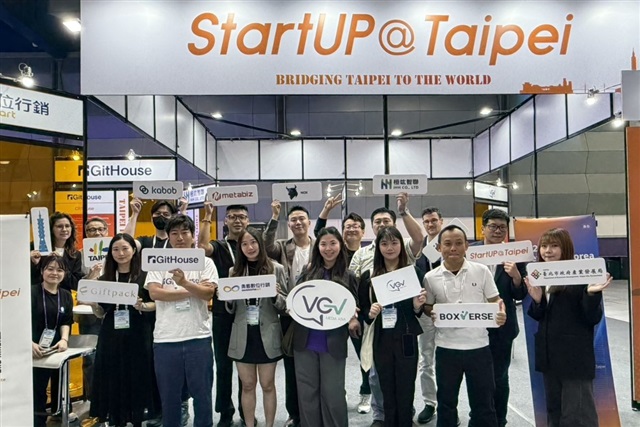
Taipei startups brought their AI martech and fintech tools to NextRise 2026 in Seoul, a showcase event where Korean companies and investors seek technology partnerships. But beyond the business deals, a larger issue is at stake: data control and trust.
In martech, LLM-based tools promise to automate content creation and customer analytics; in fintech, AI tackles risk assessment and compliance. For Korean conglomerates handling sensitive data, model performance alone isn't enough. The critical question becomes: where do these algorithms run?
The data sovereignty knot
The tension between cloud convenience and data sovereignty is nothing new, but generative AI has intensified it. Cloud APIs are simple and scalable, yet marketing data and financial transactions are among the most heavily regulated. GDPR, Korean data protection laws, and residency requirements push many organizations to consider on-premise or hybrid deployment. Self-hosting an LLM means total control over inference and fine-tuning, but demands technical expertise and infrastructure.
Hardware constraints and practical trade-offs
Those opting for local deployment immediately face hardware constraints: uncompressed state-of-the-art models require prohibitive VRAM. Techniques like quantization—going from FP16 to INT8—can shrink memory footprint without excessive quality loss. AI-RADAR readers find in-depth analysis of these trade-offs, but the key point is that no universal solution exists: each case requires a Total Cost of Ownership assessment covering CapEx for GPUs, energy consumption, and maintenance.
Korean enterprises' demand for flexibility
Startups at NextRise often push cloud-first approaches, but to win the Korean market they must address growing demand for flexibility. Companies want to know if the model can run on-premise, what the maximum context window is, and whether fine-tuning with proprietary data is possible without data leaving the corporate perimeter. In regulated industries, compliance is non-negotiable.
Outlook: distributed ecosystems and proximity
In the wider picture, such fairs signal a shift in AI innovation centers: not just Silicon Valley, but distributed ecosystems where geographic and cultural proximity matter. South Korea, with its mature tech industry, is an ideal testbed for Taipei startups. Success will hinge not only on algorithm quality, but on the ability to meet the concrete needs of those deploying AI under security and sovereignty constraints.








💬 Comments (0)
🔒 Log in or register to comment on articles.
No comments yet. Be the first to comment!