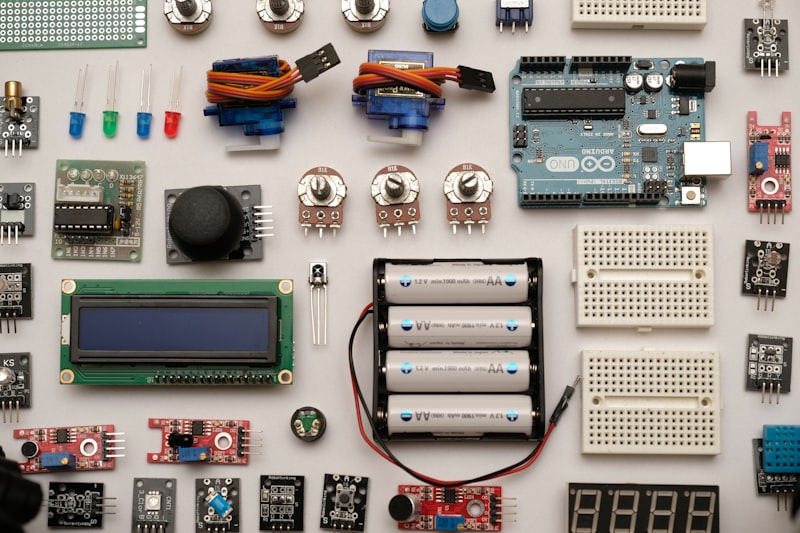
An eBay listing offers a used AI supercomputer for $60 million: 9,600 Nvidia A100 GPUs, 4,200 AMD EPYC CPUs and 300 racks, shipping included. It looks like an unusual ad, but it is more than that: it is the meeting point between surplus from large operators and demand for on-premise capacity.
The first reaction is to look at the price. Sixty million dollars for a used fleet is a serious figure, but it needs to be read in the context of the data center GPU market. Nvidia A100 GPUs have long been a reference for training Large Language Models and for high-intensity inference workloads. They are no longer the latest generation, and that makes them natural candidates for remarketing: those who have already refreshed their infrastructure decommission them, while those who want to build their own capacity buy them at a discount.
The listing does not provide details about the condition of the cards, the network configuration or the cooling options. That absence is not secondary. A cluster of this size does not power on from a home outlet: it requires adequate electrical infrastructure, heat dissipation systems, high-bandwidth switching and a monitoring pipeline. The sale price, with shipping included, may be the least problematic part of the operation.
For this reason the real audience is not made up of individual enthusiasts. Potential buyers are specialized hosting companies, alternative GPU cloud providers, research labs or enterprises with already equipped data centers. Anyone buying 300 used racks needs the skills to test them, replace defective components and maintain a fleet without direct manufacturer support. The savings compared with new hardware can be significant, but the operational risk is not zero.
From a structural standpoint, the listing signals that the hardware lifecycle for AI is shortening. High-end GPUs move quickly from the most ambitious training projects to inference fleets and then to the secondary market. This rotation creates opportunities for those who want to keep workloads on-premise and for those who want to avoid variable cloud costs, but it also changes the economic calculation: the residual value of used GPUs becomes a budget variable, not an unknown to be liquidated. In a sector where the availability of new accelerators is often constrained, the used market can become a release valve.
The second-order effect is on prices and expectations. If a fleet of 9,600 A100 GPUs can be purchased on a generalist platform, cloud providers have to justify their premiums not only with access to newer models, but with managed services, scalability and compliance. At the same time, companies evaluating self-hosted deployments can more transparently compare the acquisition cost of used hardware with cloud services. Used hardware is not automatically a better deal, but the fact that it is visible changes the terms of the negotiation.
It remains to be seen who will actually buy it. The free shipping, in this case, is a curious detail: moving 300 racks requires trucks, insurance and probably teams of technicians. The price covers transport, but not the burden of making them work.






💬 Comments (0)
🔒 Log in or register to comment on articles.
No comments yet. Be the first to comment!