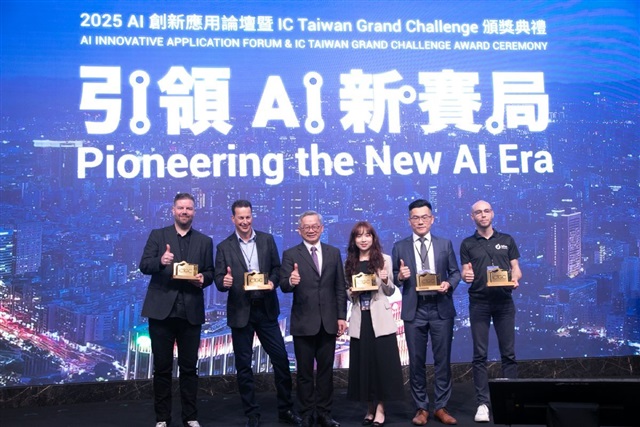
Taiwan Strengthens AI Silicio Leadership
Taiwan, a key player in the global semiconductor industry, has initiated an ambitious program that includes over 200 high-end devices. The primary goal of this initiative is to enhance talent in advanced integrated circuit (IC) design, a strategic sector for the future of artificial intelligence and global technological infrastructures. This effort underscores the island's commitment to maintaining its dominant position in silicio production, a fundamental element for innovation across all fields, from consumer electronics to data centers.
The availability of highly skilled engineers in chip design is a critical factor for technological evolution. In an era where the demand for computing power for AI, particularly for Large Language Models (LLMs), is growing exponentially, the ability to design and produce increasingly powerful and efficient chips becomes an invaluable competitive advantage. Taiwan's program fits into this context, aiming to train the next generation of specialists who will drive the development of cutting-edge hardware solutions.
The Crucial Role of Advanced Silicio for Large Language Models
Advanced integrated circuit design is the backbone of innovation in AI. For LLM inference and training, extremely sophisticated hardware architectures are required, capable of handling enormous volumes of data and complex calculations with low latency and high throughput. Components such as GPUs with high VRAM, dedicated AI accelerators, and high-speed interconnects are essential to support models that require tens or hundreds of gigabytes of memory to operate effectively.
A program that invests in talent for designing these high-end devices has a direct impact on companies' ability to implement robust AI solutions. The availability of silicio optimized for specific LLM workloads can significantly reduce the Total Cost of Ownership (TCO) for on-premise deployments, improving energy efficiency and performance. This is particularly relevant for organizations that need to maintain control over their data and infrastructure, opting for self-hosted or air-gapped environments.
Implications for On-Premise Deployments and Data Sovereignty
For CTOs, DevOps leads, and infrastructure architects, the Taiwanese initiative has significant implications. The ability to access cutting-edge silicio is a prerequisite for building high-performance and scalable local AI stacks. On-premise deployments offer advantages in terms of data sovereignty, regulatory compliance, and security, but they require careful hardware and infrastructure planning. Training talent in chip design helps ensure that the market can access components increasingly suited to these needs.
The choice between self-hosted and cloud solutions for AI workloads often boils down to an analysis of trade-offs between flexibility, operational costs, and control. A robust and innovative chip design ecosystem supports the creation of hardware that can make on-premise deployments more competitive, offering performance comparable to or superior to their cloud counterparts, with the added benefit of complete control over the environment. For those evaluating on-premise deployments, analytical frameworks are available at /llm-onpremise to help assess these trade-offs in detail.
Future Prospects and the Race for Hardware Innovation
Taiwan's investment in advanced chip design talent reflects a deep understanding of the direction in which the technology industry is moving. The race to develop the most powerful and efficient silicio for AI is in full swing, and the ability to innovate at the design level is a determining factor. This program not only ensures a continuous flow of experts but also stimulates research and development of new architectures that could redefine the current limits of computing capabilities.
In an increasingly competitive global landscape, where the demand for AI computing power continues to outpace supply, initiatives like Taiwan's are crucial. They not only consolidate a nation's leadership position but also help shape the future of AI, enabling more efficient, secure, and controlled deployments for businesses worldwide. The availability of talent and high-end devices is, and will remain, a fundamental pillar for technological advancement.







💬 Comments (0)
🔒 Log in or register to comment on articles.
No comments yet. Be the first to comment!