The Expansion of AI Cameras: Beyond Traditional Security
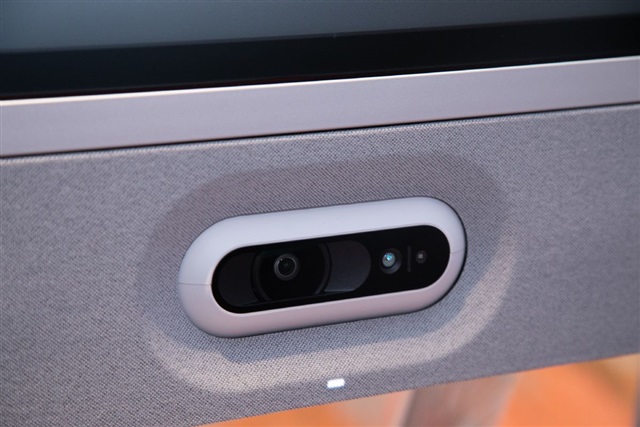
AI-powered cameras are undergoing a significant evolution, moving beyond their traditional role in corporate surveillance and security. The metaphor "from boardrooms to bedside" effectively captures this trend, indicating an expansion into more delicate and high-value application areas. This shift implies that computer vision technologies are no longer confined to general contexts but are finding use in sectors where precision, timeliness, and ethical data management are fundamental parameters.
This ascent in the value chain reflects progress in the capabilities of computer vision algorithms, which can now perform more complex and contextualized analyses. The integration of AI directly into devices or into infrastructure close to the data source, such as the edge, is a crucial enabler. This allows addressing challenges ranging from early diagnosis in medical fields to assisted monitoring in critical environments, where every second and every detail can have a significant impact.
Technical Details and Requirements for Critical Deployments
The adoption of AI cameras in sensitive contexts, such as healthcare, imposes stringent technical requirements. The need to process large volumes of video data in real-time, often with low latency, drives solutions towards local or edge inference. This approach reduces reliance on constant, high-bandwidth network connectivity to the cloud, ensuring immediate responses and minimizing the risks of service interruption.
Hardware plays a key role in supporting these operations. Graphics Processing Units (GPUs) with high VRAM are often indispensable for running Large Language Models (LLM) or complex vision models directly on-site. The choice of architectures like A100 or H100, with their memory and throughput capabilities, becomes a primary consideration. Furthermore, the ability to perform model quantization can optimize hardware resource utilization, enabling more efficient deployments even on devices with power or memory constraints.
Context and Trade-offs for Deployment Decisions
The expansion of AI cameras into critical domains brings the discussion on deployment models to the forefront. The choice between a self-hosted or on-premise approach and cloud-based solutions is not just a matter of cost, but also of control, security, and regulatory compliance. In sectors like healthcare, data sovereignty and compliance with regulations such as GDPR are absolute priorities. Processing sensitive video data within the organization's boundaries, potentially in air-gapped environments, offers a level of control and protection that cloud solutions might not fully guarantee.
However, on-premise deployment also involves Total Cost of Ownership (TCO) considerations, including initial capital expenditure (CapEx) for hardware, infrastructure management, and energy consumption. Organizations must balance these investments against the benefits in terms of security, latency, and autonomy. For those evaluating on-premise deployments, analytical frameworks available on /llm-onpremise can help assess these complex trade-offs, considering the specific needs of each use case.
Future Prospects and Strategic Challenges
The evolution of AI cameras towards high-value applications is an unstoppable trend, set to reshape numerous sectors. However, this transition is not without its challenges. Organizations will need to address complex strategic decisions regarding infrastructure, data management, and the ethical governance of AI. The ability to fine-tune models for specific contexts and create robust data pipelines will be essential to maximize the value of these technologies.
The future will likely see a further push towards distributed processing and edge AI, where computing power moves ever closer to the data source. This will require careful planning to ensure that adopted solutions are scalable, secure, and compliant with current regulations, allowing AI cameras to continue their ascent in the value chain responsibly and effectively.










💬 Comments (0)
🔒 Log in or register to comment on articles.
No comments yet. Be the first to comment!