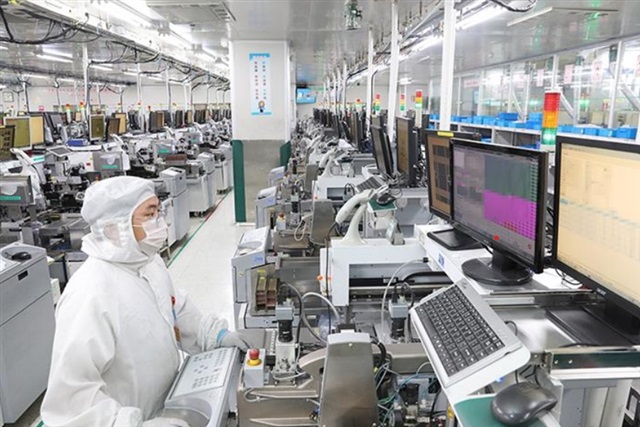
Tongfu Microelectronics' Profit Surge
Tongfu Microelectronics (TFME), a key player in the semiconductor packaging and testing sector, has announced a significant increase in its profits. This positive financial outcome is primarily attributed to two converging factors: the rising demand for packaging services for artificial intelligence chips and robust orders from AMD, one of the world's leading manufacturers of processors and GPUs.
The expansion of the AI market, particularly for Large Language Models (LLM) and other machine learning applications, is placing unprecedented pressure on the semiconductor supply chain. Companies like TFME are at the heart of this dynamic, providing essential services that enable chips to achieve the performance and reliability required by the most demanding workloads.
The Critical Role of Advanced Packaging for AI
AI chip packaging is not merely an assembly process; it is a sophisticated technical procedure that directly impacts performance, power efficiency, and component density. Advanced packaging solutions, such as 2.5D and 3D stacking, are crucial for integrating multiple dies (chips) into a single package, allowing for higher memory bandwidth (VRAM) and reduced communication latencies between various silicio elements.
For LLM inference and training workloads, the ability to process large amounts of data quickly is essential. Efficient packaging helps overcome the physical limitations of traditional chips, facilitating the integration of high-performance GPUs with HBM (High Bandwidth Memory) and ensuring adequate heat dissipation. This is particularly relevant for self-hosted and on-premise infrastructures, where space and power consumption optimization are priorities.
Market Context and Implications for On-Premise Deployments
AMD's increasing demand reflects its aggressive strategy in the AI market, with the introduction of dedicated GPUs like the Instinct series, designed to compete directly with market-leading solutions. AMD's success in this segment translates into increased demand for packaging services from partners like TFME, underscoring the interdependence within the technological supply chain.
For companies evaluating on-premise deployments of LLMs and other AI solutions, the availability and reliability of hardware components are critical factors. The expansion of manufacturing capacity and innovation in chip packaging, such as those offered by TFME, help ensure that the necessary hardware to build robust and high-performing AI infrastructures is accessible. This has a direct impact on the Total Cost of Ownership (TCO) and the ability to maintain data sovereignty, fundamental aspects for many organizations. For those evaluating on-premise deployments, AI-RADAR offers analytical frameworks on /llm-onpremise to assess the trade-offs between different architectures and vendors.
Future Outlook in the AI Supply Chain
Tongfu Microelectronics' profit increase is an indicator of the health and sustained growth of the semiconductor industry, driven by innovation in artificial intelligence. As LLMs become more complex and computing demands rise, the role of companies specializing in packaging and testing will become even more crucial. These companies not only enable the performance of next-generation chips but also help mitigate supply chain risks, ensuring that essential hardware is available to meet global demand.
The collaboration between chip manufacturers and packaging service providers is fundamental to pushing the boundaries of computational capabilities. This interconnected ecosystem is the backbone of the AI infrastructure that companies are building today, both in the cloud and, increasingly, in self-hosted environments for reasons of control, security, and TCO.






💬 Comments (0)
🔒 Log in or register to comment on articles.
No comments yet. Be the first to comment!