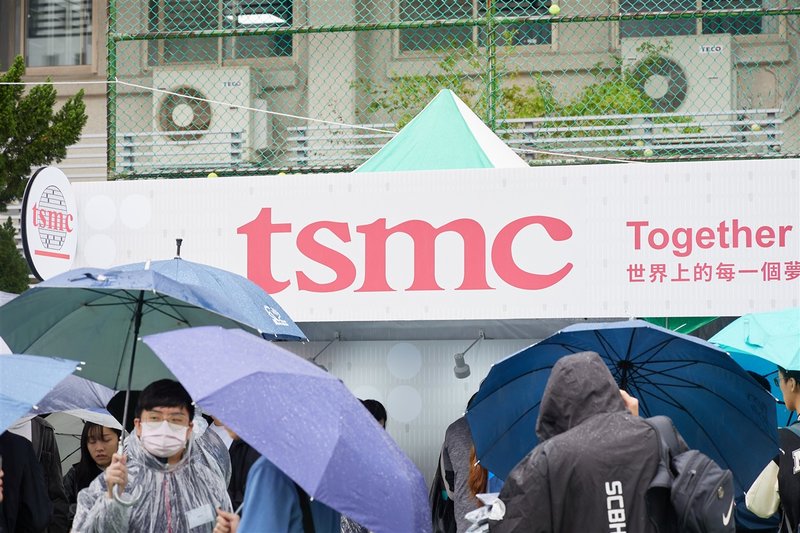
This isn't a passing crunch. The signal coming from TSMC is structural: the Taiwanese foundry, almost the sole linchpin of advanced chip production, is creating a bottleneck that reshapes the geography of AI semiconductor demand. It's not just about missed deliveries — it's the trigger for a chain reaction that forces the entire supply chain to rethink deeply held assumptions.
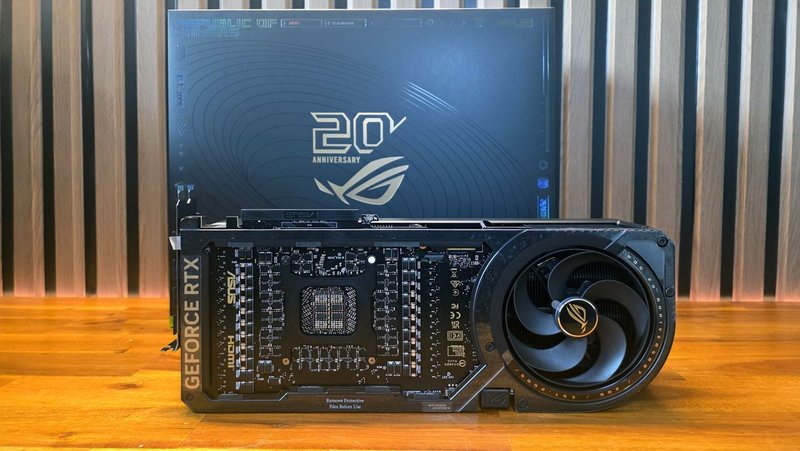
For those building infrastructure for LLMs, the pinch has a direct, measurable impact. Leading-edge GPUs, essential for large-scale training and inference, become scarcer. That stretches procurement lead times, pushing organizations evaluating on-premise or self-hosted deployments to reconsider their plans. The immediate effect is upward pressure on previous-generation accelerators, which once again become contested not just on the secondary market but for new installations as well.
But focusing only on prices misses the point. The real cost to watch is platform TCO: with extended lead times, projects suffer delays that translate into higher operational costs and less predictability. In this scenario, quantization and fine-tuning of smaller models are no longer niche crafts — they become strategic levers for anyone who can't wait for TSMC's production cycles. Boosting inference efficiency, even at the cost of a few percentage points of accuracy, can be the difference between a feasible rollout and one stuck waiting for hardware.
The demand that spills over to alternative suppliers — Samsung Foundry, Intel IFS, or Chinese fabs on less advanced nodes — is not a simple transfer. Each option brings trade-offs: software compatibility, ecosystem maturity, VRAM limits, and memory bandwidth constraints. Those designing on-premise clusters find themselves evaluating not just peak performance but the robustness of the entire production and maintenance pipeline. In many cases, the choice falls on hybrid configurations, where only the most critical workload runs on top-tier silicon while the rest is distributed across more accessible hardware.
An underlying theme goes beyond the immediate conjuncture: over-reliance on a single geographically concentrated supplier is accelerating technological sovereignty projects. Europe, with initiatives like the IPCEI on microelectronics, and the United States, with the CHIPS Act, are trying to reduce supply chain vulnerability. But the gap to bridge is wide and measured in years. Meanwhile, negotiating power shifts upstream: large cloud providers and system integrators that locked in orders far in advance find themselves in a position of strength, while smaller players — or those who postponed purchasing decisions — risk being left out.
For companies weighing an on-premise deployment, the message is clear: silicon availability can no longer be taken for granted. Planning today means precisely mapping VRAM requirements, throughput, and latency, then cross-referencing them with realistic delivery windows, not promised ones. It also means investing in optimization skills — from pruning to quantization — to squeeze the most out of whatever hardware actually makes it into the rack.
The long wave of the TSMC bottleneck doesn't just reshuffle foundry market shares. It is profoundly altering how the AI sector thinks about the relationship among hardware, software, and execution timelines. In this new equilibrium, efficiency ceases to be an ancillary goal and becomes the only true capacity multiplier.





💬 Comments (0)
🔒 Log in or register to comment on articles.
No comments yet. Be the first to comment!