The Evolution of Advanced Packaging and its Impact on AI
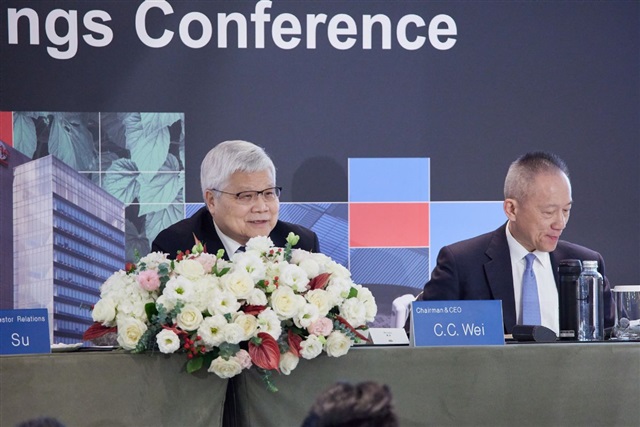
TSMC's chairman recently stated that CoPoS (Chip-on-Wafer-on-Substrate) advanced packaging technology is set to achieve significant scalability within a few years. This announcement comes as the company downplays potential risks from Terafab projects, signaling a clear strategic direction in the semiconductor manufacturing landscape. For enterprises evaluating on-premise deployments of Large Language Models (LLM), these developments are not minor details but critical factors directly influencing the availability, performance, and Total Cost of Ownership (TCO) of the necessary hardware.
The semiconductor industry is in constant flux, driven by the exponential demand for computing power for artificial intelligence. The ability to produce increasingly complex and high-performing chips, with ever-tighter integration, is fundamental to supporting the evolution of AI models, which require growing amounts of VRAM and throughput for inference and training. TSMC's statements offer insight into the priorities and challenges that major silicon manufacturers are addressing to meet these needs.
CoPoS: The Core of Packaging Innovation for AI
CoPoS represents one of the most advanced frontiers in semiconductor packaging. This technology allows for the integration of multiple chips, such as GPUs and HBM (High Bandwidth Memory), onto a single interposer substrate. The result is extremely high component density and, crucially, significantly higher memory bandwidth compared to traditional architectures. For LLM workloads, VRAM and its access speed are critical parameters. Models with billions of parameters require tens, if not hundreds, of gigabytes of VRAM and very high throughput to minimize latency and maximize tokens per second during inference.
TSMC's projected scalability of CoPoS within a few years implies that future generations of AI accelerators will benefit from even greater memory capacities and bandwidths. This is an enabling factor for running increasingly large and complex LLMs in self-hosted environments, reducing the need for aggressive quantization techniques that can compromise model accuracy, or complex distributed architectures that increase latency and operational complexity.
Terafab and the Global Manufacturing Context
While CoPoS focuses on advanced integration and packaging, the concept of Terafab refers to massive-scale semiconductor factories, highly automated and with immense production capacities. TSMC's statement to "downplay the risk" from Terafab suggests an evaluation of the technological maturity and competitiveness of such approaches. It could indicate that, for TSMC, packaging innovation like CoPoS offers a more immediate and sustainable competitive advantage compared to merely expanding production capacity via Terafab, at least in the short to medium term.
These dynamics in the silicon manufacturing sector are vital for the global AI hardware supply chain. TSMC's ability to scale technologies like CoPoS will directly influence the availability of next-generation GPUs, such as future iterations of the H100 or B200 series, which are pillars for on-premise deployments. Strategic decisions by chip manufacturers reflect on delivery times, costs, and the technical specifications of accelerators that companies can purchase for their AI infrastructures.
Implications for On-Premise LLM Deployments
For CTOs, DevOps leads, and infrastructure architects considering self-hosted alternatives to the cloud for AI/LLM workloads, packaging innovations like CoPoS are of primary importance. The availability of GPUs with high VRAM and exceptional throughput, made possible by these technologies, is a prerequisite for maintaining data sovereignty, ensuring compliance, and operating in air-gapped environments. A robust on-premise infrastructure, based on cutting-edge hardware, can offer unprecedented control over data and models, as well as a potentially lower TCO in the long run compared to recurring cloud operational costs.
However, reliance on a limited number of silicon suppliers and the complexities of the global supply chain remain significant challenges. TSMC's ability to bring CoPoS to mass scalability is a positive signal for the future of AI hardware, promising more powerful and efficient accelerators. For those evaluating on-premise deployments, complex trade-offs exist between initial CapEx, OpEx, flexibility, and control. AI-RADAR offers analytical frameworks on /llm-onpremise to evaluate these trade-offs, helping to make informed decisions based on concrete hardware specifications and infrastructure requirements.







💬 Comments (0)
🔒 Log in or register to comment on articles.
No comments yet. Be the first to comment!