Software Optimization Unlocks Performance for AMD Ryzen AI Max "Strix Halo" APUs
The hardware and software ecosystem for artificial intelligence continues to evolve rapidly, with increasing focus on solutions that enable processing directly on devices. In this context, AMD's APUs (Accelerated Processing Units), particularly the Ryzen AI Max "Strix Halo" series, represent a significant point of interest for those seeking high performance in a compact form factor. One year after their market debut, targeting high-end laptops and desktops, a clear picture emerges of their performance progress, especially regarding CPU efficiency under Linux operating systems.
Technical Details: Zen 5 and Ubuntu 26.04 at the Core of Evolution
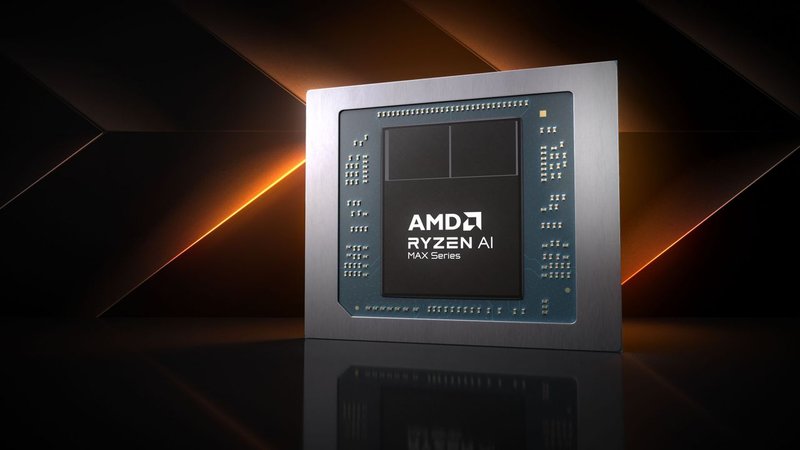
Recent analyses have quantified the evolution of the integrated Radeon 8060S graphics performance within AMD "Strix Halo" APUs. Now, attention shifts to the CPU capabilities, specifically the Zen 5 architecture present in the flagship Ryzen AI Max+ 395 processor. Benchmarks conducted under Linux have revealed notable optimization. The adoption of Ubuntu 26.04, in particular, has shown tangible benefits in CPU performance, complementing the gains already recorded on the graphics front. This underscores how software and operating system optimization are crucial for unlocking the full potential of hardware.
Implications for Local Deployments and Edge Computing
These performance improvements are not just numbers on a benchmark; they have direct implications for system architects and decision-makers evaluating AI solutions. For workloads requiring local processing, such as Large Language Models (LLM) inference on edge devices or in self-hosted environments, APU efficiency becomes a critical factor. The ability to run complex AI models directly on high-end laptops or desktops, with performance optimized by an operating system like Ubuntu 26.04, offers advantages in terms of data sovereignty, reduced latency, and potential containment of the Total Cost of Ownership (TCO) compared to purely cloud-based solutions. This approach is particularly relevant for sectors with stringent compliance requirements or for air-gapped environments.
Future Prospects and the Role of Continuous Optimization
The performance evolution of AMD Ryzen AI Max "Strix Halo" APUs and the Ryzen AI Max+ 395 processor highlights a key trend in the industry: the importance of continuous optimization at the software and operating system level. As hardware becomes more powerful, the software's ability to fully leverage these resources determines the actual value for end-users and enterprise implementations. This virtuous cycle of hardware and software improvement promises to further expand the possibilities for on-premise AI and edge computing, offering increasingly robust and performant solutions for a wide range of applications.






💬 Comments (0)
🔒 Log in or register to comment on articles.
No comments yet. Be the first to comment!