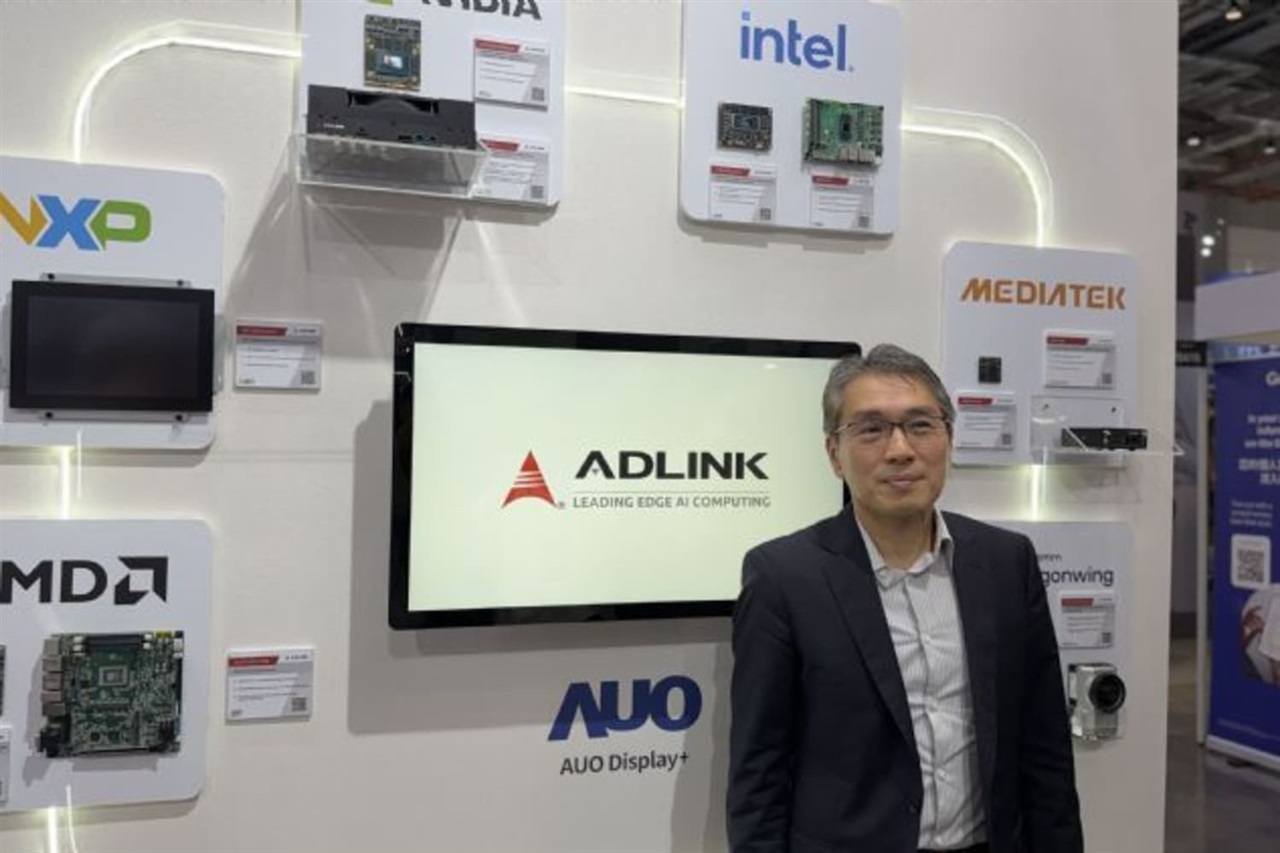
Adlink Strengthens its Robotics and Edge AI Strategy
Adlink, a recognized player in the embedded solutions and industrial automation landscape, has announced a significant acceleration in its expansion strategy. The company is decisively focusing on the robotics and edge artificial intelligence sectors, identifying the US market as the primary driver of this growth. This move underscores a clear direction towards integrating advanced computing capabilities directly into devices, away from traditional cloud data centers.
Adlink's initiative reflects a broader trend in the technology sector, where the need for real-time processing and data sovereignty are becoming critical factors. Edge AI, in particular, promises to unlock new possibilities for automation and predictive analytics in industrial, logistics, and manufacturing contexts, where latency and network connectivity can represent significant constraints.
The Strategic Importance of Edge AI for Robotics
Edge artificial intelligence represents a fundamental pillar for the evolution of modern robotics. Executing AI models directly on robots or IoT devices allows data to be processed locally, drastically reducing latency and dependence on cloud connectivity. This is crucial for applications requiring immediate responses, such as autonomous navigation, precision manipulation, or safety monitoring in industrial environments.
Edge AI solutions enable robotic systems to make real-time decisions, improving operational efficiency and safety. Furthermore, local data processing helps strengthen data sovereignty and regulatory compliance, increasingly relevant aspects for companies operating with sensitive information or in regulated sectors. The ability to perform complex inferences without having to send every single byte to the cloud is a significant competitive advantage.
Implications for On-Premise Deployment and TCO
The expansion into edge AI and robotics has profound implications for on-premise deployment strategies and the Total Cost of Ownership (TCO) of AI infrastructures. Companies adopting edge solutions can reduce operational costs associated with data transfer and storage in the cloud, as well as mitigate risks related to network outages or external security issues. Deploying AI hardware directly on-site, on self-hosted or bare metal infrastructures, offers granular control over the execution environment.
This approach requires careful hardware evaluation, considering factors such as available VRAM, computing power (throughput), energy efficiency, and robustness for often challenging operating environments. While the initial investment (CapEx) for edge hardware can be significant, the long-term benefits in terms of performance, security, and data control can justify the choice. For those evaluating on-premise deployment, AI-RADAR offers analytical frameworks on /llm-onpremise to assess the trade-offs between initial costs and operational benefits.
Future Prospects and Industry Trade-offs
The future of robotics and edge AI is intrinsically linked to the ability to develop increasingly efficient and specialized hardware and software. Adlink's expansion into this segment highlights the growing demand for solutions that can balance computing power, energy consumption, and compact size. Trade-offs are constant: greater precision of AI models often means greater computational complexity, which in turn requires more powerful hardware.
Companies must navigate between the need for advanced models and the reality of physical and cost constraints. The choice between different silicon architectures, the adoption of quantization techniques to optimize models, and the selection of efficient deployment frameworks are critical decisions. The goal is to maximize throughput and minimize latency, while ensuring economic sustainability and compliance with data sovereignty requirements, central aspects for technical decision-makers.







💬 Comments (0)
🔒 Log in or register to comment on articles.
No comments yet. Be the first to comment!