
Berlin's Tech Landscape: AI Innovation Amidst Salary Challenges
The fourth edition of the annual Berlin tech salary trends report, published by Handpicked Berlin in collaboration with Ravio and Factofly, offers a detailed insight into a rapidly evolving market. Based on 4,627 responses from Berlin tech professionals, of whom 4,138 are full-time employees, the 2026 study highlights a dynamic sector, yet not without its tensions. The analysis delves into the impact of artificial intelligence, salary dynamics, gender disparities, and the growing expectations of the workforce.
The report underscores how Berlin's tech sector, while being a crucial economic engine for the city, is facing a complex combination of factors. On one hand, AI-driven innovation is creating new opportunities and redefining pay hierarchies. On the other hand, salary stagnation and new company policies are fueling a wave of dissatisfaction and a marked propensity for change among professionals.
The Rise of AI and Its Implications for the Workforce
Compensation data clearly highlights the central role of AI. AI & Machine Learning Engineering debuts among the top three highest-paid positions, with a median salary of €95,000, surpassed only by Engineering Leadership (€115,000) and Legal & Compliance roles (€99,000). General Software Engineering stands at €88,000. The median full-time salary across the dataset climbed to €80,000, a 4.6% increase from €76,500 in 2025.
Despite the salary increases for AI roles, one of the report's most surprising findings concerns the adoption of AI by workers. 87.5% of Berlin tech professionals report personally using AI tools, and 84.7% state that these have improved their productivity. However, this increased efficiency does not translate into greater security. 61.2% of workers are worried that AI will affect their job security, while only 22% are unconcerned. This scenario presents a significant trade-off for companies evaluating AI solutions, especially in on-premise contexts where control and data sovereignty are priorities, but human capital management remains a critical variable.
Salary Dynamics, Disparities, and Staff Mobility
For the first time, the report includes comparative European benchmark data provided by Ravio, positioning Berlin as a “comparable, not premium” market. At the median, Berlin aligns with Europe for executives (€179,515 vs €182,160) and managers (€115,345 vs €114,195), while Berlin professionals earn slightly less than the European median (€83,950 vs €86,595). This context clashes with a local reality where the average gross salary is significantly lower, fueling concerns about the city's affordability.
Disparities also persist in the gender pay gap, which has narrowed but not closed. Women earn €70,000 at the median versus €85,000 for men, a raw gap of 17.6%. Although a deeper analysis reduces the gap to 6.6%, the report cautions that much of this reduction is due to a larger and cleaner sample, rather than an actual labor market shift. Furthermore, a curious correlation is observed between German language skills and salaries: native or C2-level German speakers earn a lower median salary (€75,000) than A1 beginners (€82,500), a dynamic attributed to differences in role and industry composition. At the same time, there is a growing demand for C1-level German language skills for tech roles, even in startups founded by non-Germans.
Return-to-Office and the Future of Berlin's Ecosystem
Another significant finding concerns return-to-office (RTO) mandates. Among employees potentially affected by an RTO mandate, 20.2% stated they would leave within six months, and 46.4% would stay but immediately start job-hunting if their employer mandated four or more office days a week. Overall, 68.8% of workers would walk or are already looking. This represents a direct signal for companies considering an RTO push, indicating a potential talent exodus, particularly among those with the most options.
In this uncertain scenario, one-third of Berlin tech professionals (33.0%) plan to change jobs in 2026, with significantly higher compensation as the main driver (45.2%). This occurs in a context where 45% received no raise in the past year, and another 37% received only a 1-5% increase. Merten Wulfert, co-founder and CEO of Ravio, emphasizes that “when 45% of the market went without a raise last year, the fact that a third of workers are now actively looking for a new job shouldn't really surprise anybody.”
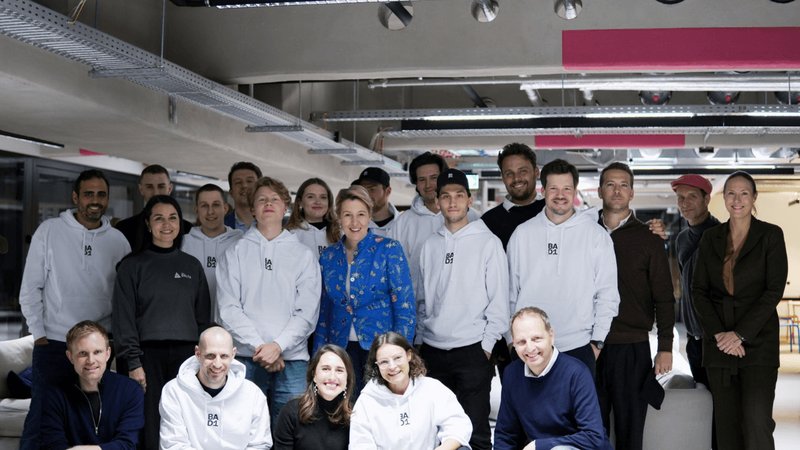
Despite these challenges, Berlin's startup ecosystem continues to grow, contributing 10-12% of the city's GDP and generating over 150,000 jobs. Berlin remains Germany's primary funding hub, attracting €2.2 billion in venture capital in 2024, and positions itself as a leading AI cluster with 283 startups in the field. Initiatives like Berlin auf die Eins (BAD1), EWOR, and Deep Tech Momentum attest to the vitality and organization of the local ecosystem, aiming to make Berlin the most builder-friendly tech city in Europe within the next 12-24 months.







💬 Comments (0)
🔒 Log in or register to comment on articles.
No comments yet. Be the first to comment!