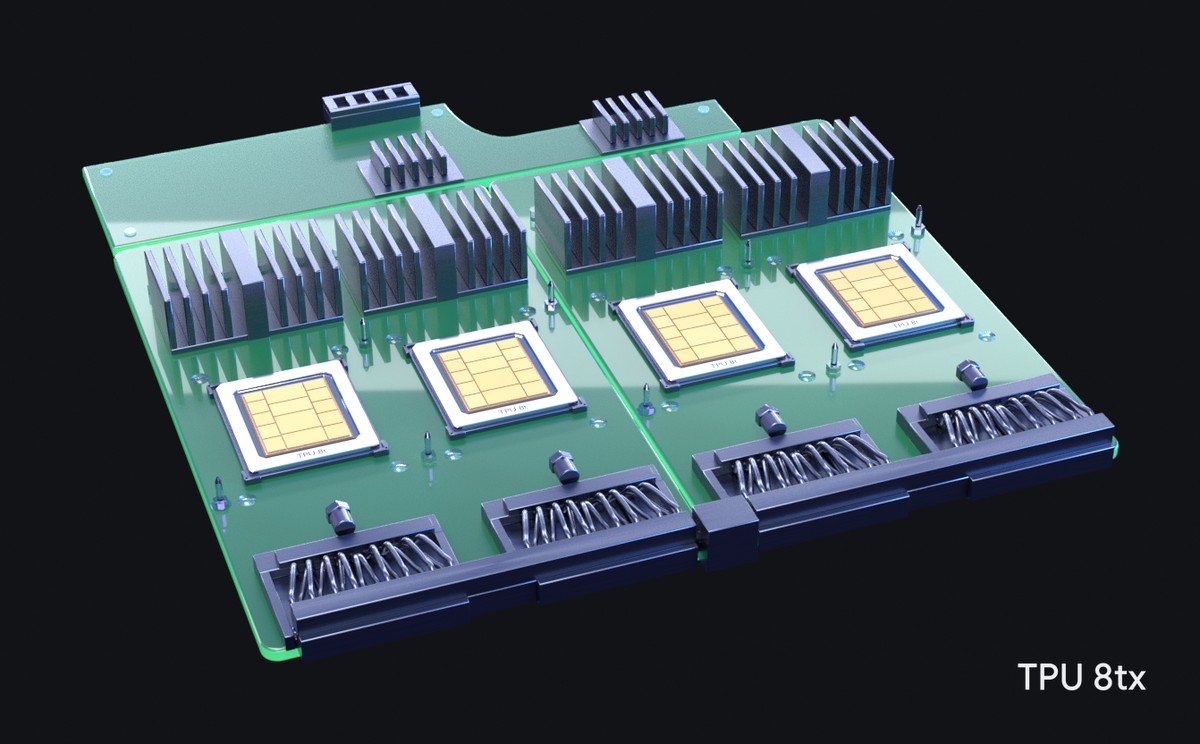
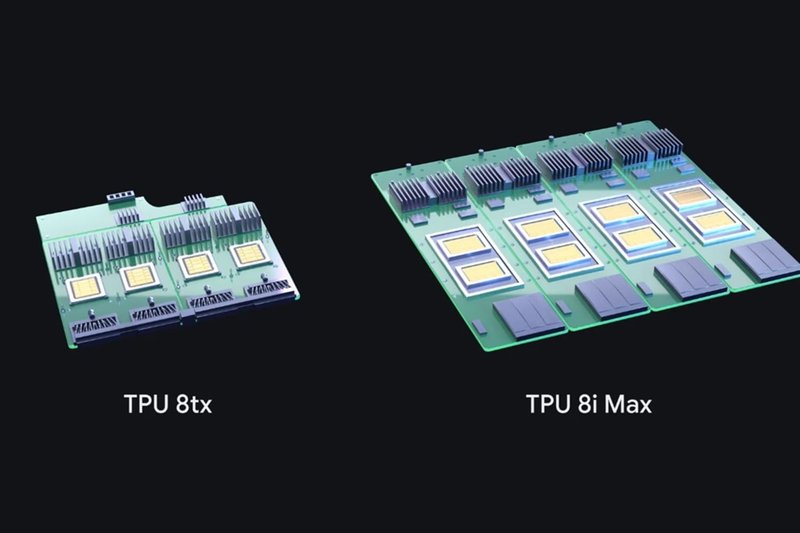
The news is spare but dense with signals: Google has paired the new TPU 8tx with AMD EPYC Turin hosts and introduced confidential computing capabilities; in parallel, the TPU 8i Max doubles memory bandwidth aimed at inference. This is not a simple hardware refresh. Choosing AMD as the host for custom accelerators signals that in the AI server game, silicon specialization does not remove the role of general-purpose processors. Confidential computing also shifts the comparison from performance to security of data in use, a theme with growing weight for cloud-managed LLM workloads.
For language model practitioners, the doubled memory bandwidth on the TPU 8i Max matters more than it might seem. Inference, especially on large LLMs, is often limited by the ability to move model weights and state between memory and compute units. Increasing bandwidth without changing the compute architecture is a direct way to improve the sustainability of services that generate tokens in real time. In a market where inference-related operating costs are becoming the dominant component of cloud TCO, a bandwidth jump can reduce pressure on larger instances or on overly aggressive optimizations such as quantization.
The picture for those evaluating self-hosted deployments is more nuanced. TPUs remain a technology that Google offers primarily through its own cloud infrastructure, not as a component that can be bought for an on-premise data center. This constraint is structural: the integration among TPU, EPYC host and confidential computing is designed to improve managed service offerings, not to open an independent hardware supply chain. For organizations that cannot move sensitive data to the cloud, the news does not provide a direct answer, but it indicates the direction the comparison will take when they must justify the trade-off between high-performance cloud and local control. For those evaluating on-premise deployments, the analytical frameworks at /llm-onpremise help weigh such trade-offs without offering ready-made recipes.
There is also a second-order effect on the processor market. AMD enters a top-tier AI infrastructure not with a GPU, but with the host CPU. This strengthens AMD's position in the data center and underscores that a supplier's value is not measured only on accelerators. For Intel, which is trying to regain ground in server CPUs, the message is clear: hyperscaler customers no longer take host processor selection for granted, even when the accelerator is proprietary.
Data sovereignty remains an open question. Confidential computing solves part of the problem — it protects data during processing — but it does not remove the constraint of where that data resides and who can access the infrastructure. For workloads governed by European regulations, this distinction is often more relevant than raw compute power. The combination of TPU, AMD host and hardware security raises the bar for cloud offerings, but leaves intact the issue of physical control for those who cannot accept a perimeter managed by third parties.








💬 Comments (0)
🔒 Log in or register to comment on articles.
No comments yet. Be the first to comment!