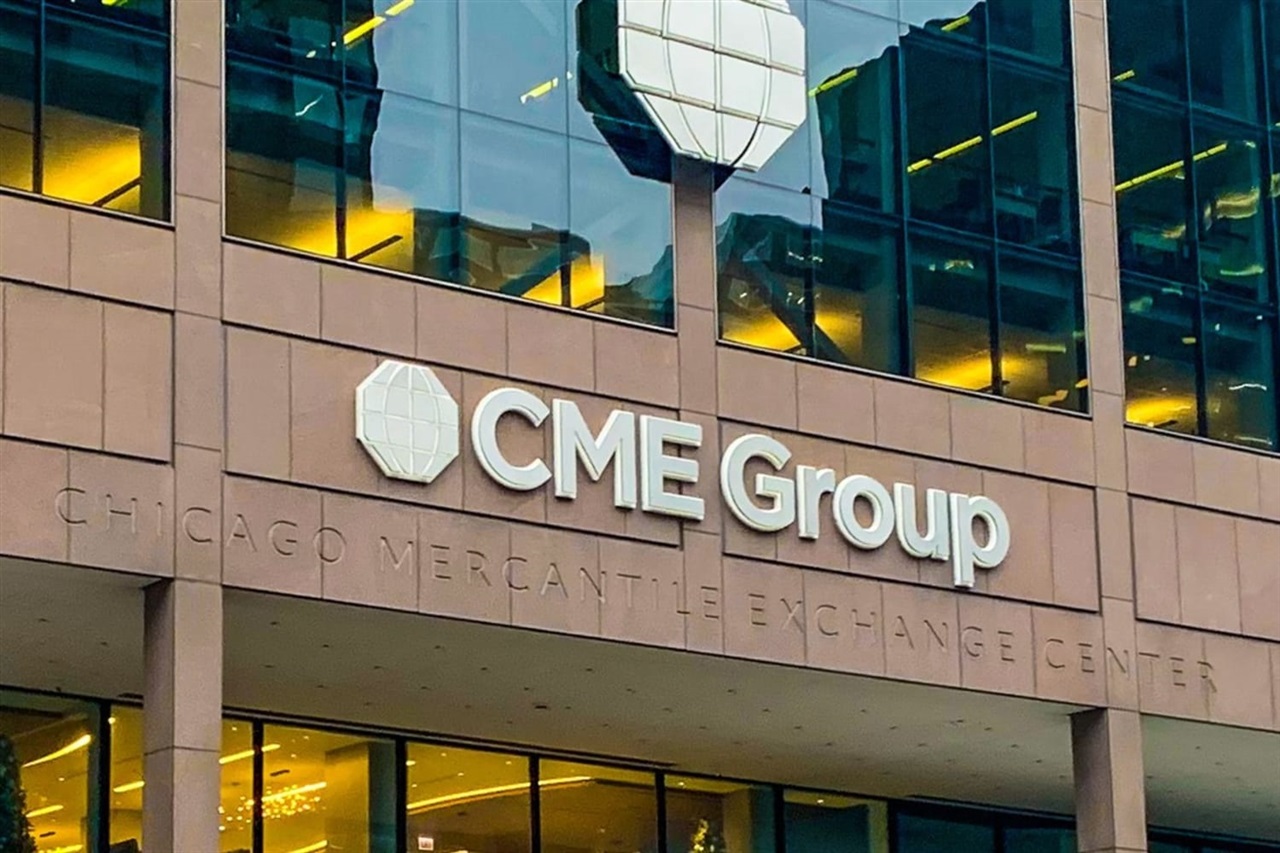
The news is stark: CME Group, one of the main regulated derivatives platforms, has seen the debut of its GPU futures come to a halt. The Commodity Futures Trading Commission (CFTC), the US authority overseeing futures markets, has raised concerns, and the project has stalled, as reported by CoinDesk. For those who do not follow financial markets, it might seem far from operational AI. It is not.
GPUs have become the bottleneck for the entire Large Language Models sector. Demand for training and inference has grown asymmetrically relative to supply, and market prices swing sharply. In this context, a standardized futures contract would have allowed buyers of hardware for on-premise and self-hosted clusters to lock in today the cost of a future supply, turning an unpredictable CapEx item into a more manageable input for TCO calculation. The fact that this route has stalled before even starting signals that the GPU market, however large, is not yet treated as a mature commodity.
The second-order implications are concrete. Without the ability to hedge price risk, organizations evaluating on-premise deployments must accept cost swings that make it harder to rigorously compare total cost of ownership with cloud or hybrid solutions. This does not mean cloud automatically becomes cheaper, but that the comparison is less stable: whoever signs today a contract for a self-hosted cluster assumes a price risk that cannot be transferred to a regulated market. In many cases, this leads to delaying infrastructure investments or shifting resources toward multi-year supply agreements with manufacturers, which shift negotiating power elsewhere.
There is also a third-order consequence concerning data sovereignty and infrastructure control. If GPU prices remain volatile and without hedging instruments, cautious enterprises may be tempted to postpone building on-premise capacity, relying on cloud services where spending is operational and more predictable in the short term. But this choice has a cost in terms of data control, latency, and technological independence. The stall in GPU futures, therefore, is not only a financial problem: it is a signal that the AI hardware ecosystem has not yet found a balance that allows planning investments with the same confidence as other critical infrastructure.
For those evaluating on-premise deployments, there are complex trade-offs between cost, control, and predictability. AI-RADAR offers analytical frameworks at /llm-onpremise to evaluate these trade-offs in a structured way, without shortcuts.



💬 Comments (0)
🔒 Log in or register to comment on articles.
No comments yet. Be the first to comment!