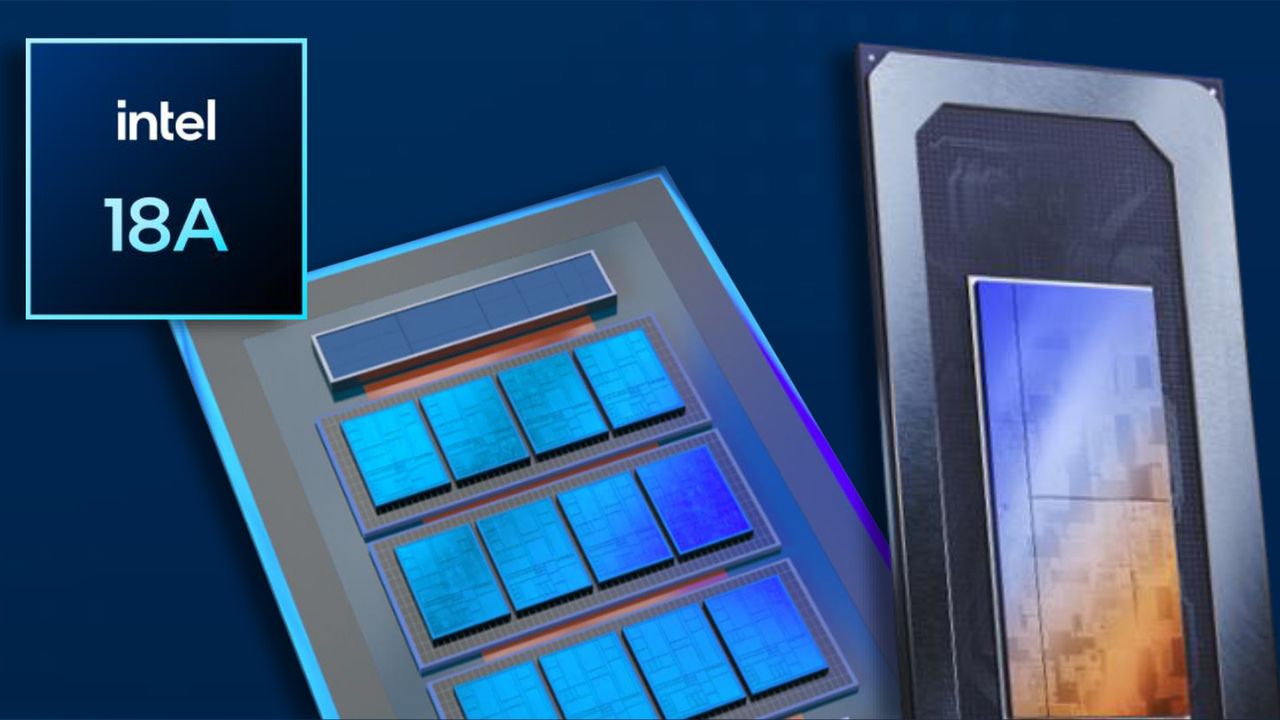
A new report claims Intel has solved the wafer-to-wafer yield issues that were holding back its 18A process node, ramping production to around 15,000 wafers per month across both manufacturing sites. Although not officially confirmed by the company, the news would mark a turning point for a technology expected to return Intel to the forefront of advanced lithography, with direct implications for hardware handling artificial intelligence workloads.
Intel's 18A node introduces innovations such as RibbonFET (gate-all-around transistors) and PowerVia (backside power delivery), delivering density and energy efficiency on par with TSMC's competition. For organizations running on-premise infrastructure for LLM inference, a maturing 18A means a more reliable pipeline of future Xeon processors and AI accelerators, potentially lowering total cost of ownership.
Yield under control: what changes
Wafer-to-wafer yield is the Achilles' heel of any experimental node. Low percentages of functional die per wafer inflate costs and delay the volumes OEMs require. The reported fix lets Intel accelerate volume production, cutting waste and improving supply chain predictability. The stated 15,000 wafers per month – split across two fabs – provide a solid, if modest, base to launch initial product lines.
Impact on self-hosted environments
For enterprises that prefer on-premise deployments for data sovereignty or latency reasons, sourcing up-to-date hardware is a strategic pain point. Servers built on future Xeon Clearwater Forest processors (expected on 18A) could deliver better LLM inference performance, allowing larger models to run locally without resorting to external clouds. Moreover, adequate volumes of an advanced node reduce the risk of the bottlenecks that have historically inflated server CPU and GPU pricing.
Intel's own AI-focused accelerators, like the Gaudi family, could also benefit. While nothing is confirmed, a mature node makes an ecosystem of custom silicon for on-premise inference and fine-tuning more plausible – a development AI-RADAR tracks closely.
Competition and cost dynamics
The race with TSMC remains open. Advancing 18A doesn't erase the scale gap, but it signals that Intel can become a credible alternative supplier for private datacenter designs. With demand for LLM compute growing relentlessly, a reliable second source helps contain costs and diversify supply. Infrastructure managers know that single-vendor dependency is risky; volume 18A output could positively influence CapEx budgets and speed adoption of hybrid architectures.
It remains to be seen how the first commercial batches perform, especially on the large dies crucial for server chips. But if the report holds, Intel's on-premise AI roadmap gains a dose of technical credibility the market will not overlook.





💬 Comments (0)
🔒 Log in or register to comment on articles.
No comments yet. Be the first to comment!