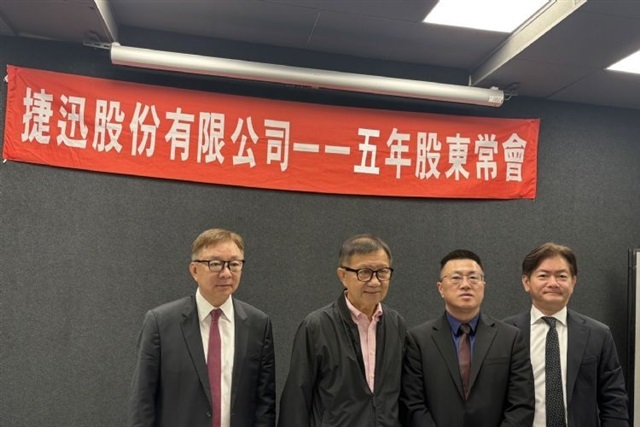
The announcement came quietly but captures a concrete shift. Jeter, a logistics operator specialized in enterprise hardware, will open a warehouse in Dallas in July 2026, with the stated goal of serving the US AI hardware ecosystem. A seemingly peripheral piece, which instead tells how much the race for AI infrastructure is reshaping the physical geography of data centers and, further upstream, the distribution of components.
The choice of Dallas is no accident. Texas has become a magnet for server farms and inference facilities, thanks to competitive energy costs, available land, and a robust network backbone. Yet the last mile of the supply chain – the one that delivers GPUs, network cards, racks, and cooling systems from the factory to the cluster – remains a bottleneck. With lead times for certain components (such as NVIDIA H100 models or interconnect solutions) having peaked at weeks or even months, the proximity of a sizable warehouse can be the difference between an on-premise rollout that starts in three days and one that slips by a quarter.
Inside the AI hardware ecosystem: beyond silicon
When discussing AI distribution, attention almost always zeroes in on chips. But the ecosystem is broader: high-efficiency power supplies, NVMe storage, liquid cooling systems, low-latency switches. All elements that, if ordered separately, multiply complexity and costs. A single logistics hub enables shipment consolidation, reducing TCO for those building on-premise clusters, and simplifies inventory management for system integrators. This is no minor detail: according to industry analysts, logistics alone accounts for a non-negligible share of the CapEx of a private deployment, especially when demand outstrips supply and equipment travels on international routes with minimal stockpiles.
What changes for those bringing AI in-house
For a company evaluating a self-hosted LLM, local hardware availability is not a negotiable plus – it is a prerequisite. Reliable delivery times and fast replacement parts allow precise planning of fine-tuning windows or model upgrades. Moreover, knowing that a national warehouse can be tapped simplifies customs procedures and aligns cash flows with actual project progress. AI-RADAR notes that, in a scenario where data sovereignty is pushing more and more organizations toward private clusters, the maturation of the distribution chain is a strong signal: AI is no longer just a software game, but an industrial supply chain requiring physical investments and carefully weighed deployment choices. Those designing an on-premise infrastructure today must look not only at GPU specs or tokens per second, but also at the logistical resilience that underpins it.




💬 Comments (0)
🔒 Log in or register to comment on articles.
No comments yet. Be the first to comment!