
Evolving Global Supply Chains: A Reflection for AI
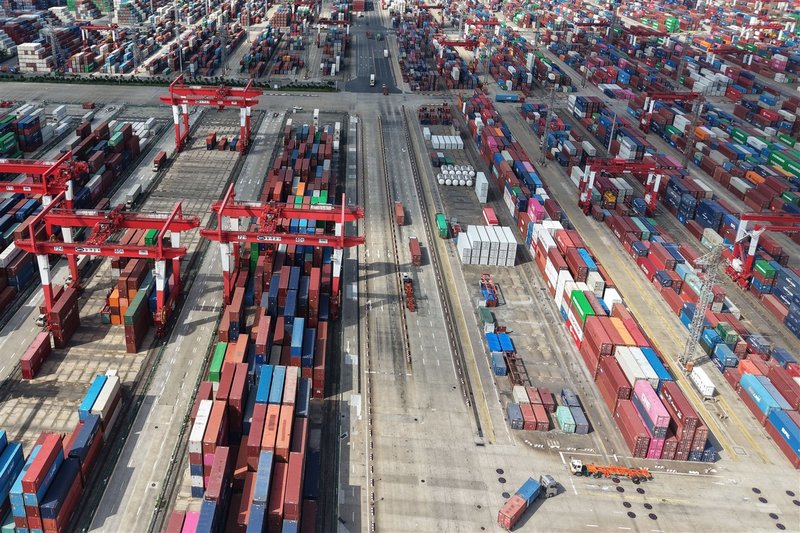
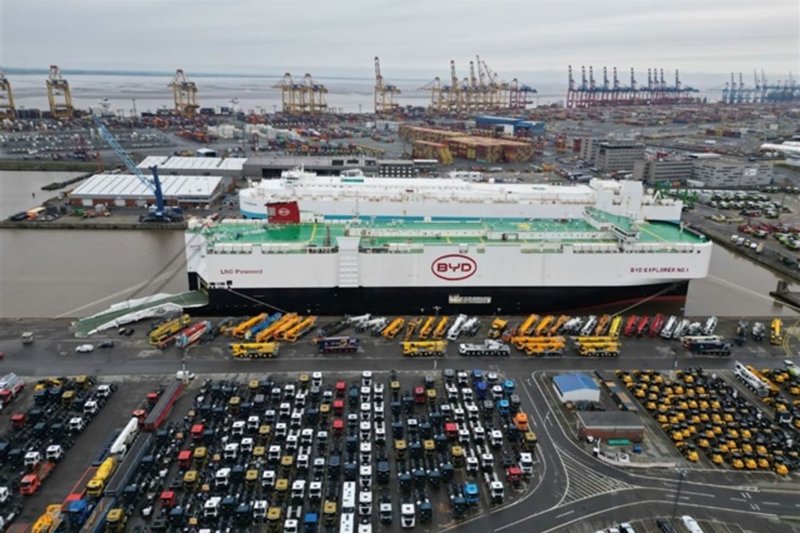
The announcement of Aleees' expansion, a Taiwanese company with ties to Tesla, underscores the profound and continuous transformations affecting global supply chains, particularly in the battery sector. This development, while focused on a specific industry segment, offers significant insight into the challenges and opportunities characterizing the worldwide procurement of critical components. The repercussions of such dynamics are not limited to the energy sector alone but extend to every industry that relies on a complex and interconnected supply chain, including artificial intelligence infrastructure.
For companies evaluating the deployment of Large Language Models (LLM) on-premise, the stability and predictability of supply chains represent a crucial factor. Access to specific hardware, such as high-performance GPUs with adequate VRAM, is essential to ensure the required performance. Disruptions or delays in deliveries can have a direct impact on implementation timelines and overall costs, making strategic planning even more complex in a rapidly evolving technological landscape.
The Impact on On-Premise AI Infrastructure Planning
The volatility of global supply chains introduces elements of uncertainty into CapEx planning for AI infrastructure. The acquisition of servers, GPUs, and networking components necessary for a self-hosted environment requires a clear view of delivery times and prices. Significant fluctuations can alter the projected Total Cost of Ownership (TCO) for an on-premise deployment, making it more difficult to compare this option with cloud-based alternatives, where hardware availability is often perceived as more immediate, albeit with different operational costs.
Hardware decisions, such as choosing between different GPU generations (e.g., A100 80GB vs H100 SXM5) or configuring clusters for LLM training or inference, heavily depend on the ability to source the desired components. Scarcity of silicon or other strategic materials can impose compromises on technical specifications, directly impacting expected performance, latency, and throughput of models. For those operating in air-gapped environments or with stringent data sovereignty requirements, the ability to build and maintain local infrastructure without excessive reliance on external supplies becomes a strategic imperative.
Data Sovereignty and Resilience: The Role of Supply Chains
In a context where data sovereignty and regulatory compliance (such as GDPR) are absolute priorities, the ability to control the entire technology stack, from hardware to software, is fundamental. An on-premise deployment offers this level of control, but its effectiveness is intrinsically linked to supply chain resilience. If the procurement of critical components becomes problematic, even the local control strategy can be compromised. This pushes organizations to diversify suppliers, consider strategic inventories, or explore more localized production options, where possible.
Companies must carefully weigh the trade-offs between cost optimization and guaranteed availability. An approach that prioritizes resilience might involve higher initial investments or the need to maintain a larger inventory, but it can mitigate risks associated with future disruptions. For those evaluating on-premise deployments, AI-RADAR offers analytical frameworks on /llm-onpremise to assess the trade-offs between costs, performance, and control, also considering uncertainties related to supply chains.
Future Outlook and Mitigation Strategies
The dynamics observed in supply chains, such as those highlighted by Aleees' expansion, suggest that volatility will remain a constant in the near future. Geopolitical tensions, trade policies, and logistical challenges will continue to shape the availability and costs of technological components. For organizations investing in on-premise AI infrastructures, this means adopting a proactive approach to risk management.
Strategies such as hardware standardization, collaboration with multiple suppliers, and investment in internal maintenance capabilities can contribute to building greater resilience. A deep understanding of one's supply chain dependencies and the ability to adapt quickly to changes are essential to ensure that AI projects, particularly those requiring tight control over infrastructure, can proceed without significant interruptions. The ability to navigate this complex landscape will be a distinguishing factor for success in the age of artificial intelligence.






💬 Comments (0)
🔒 Log in or register to comment on articles.
No comments yet. Be the first to comment!