
Murata's Innovation for the Automotive Sector
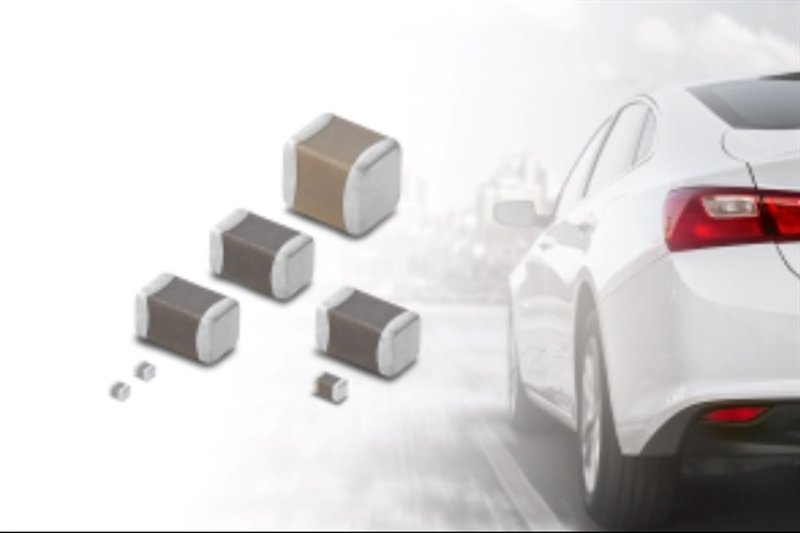
Murata, a recognized leader in the electronic components industry, has recently introduced a new series of Multi-Layer Ceramic Capacitors (MLCCs) distinguished by their significantly reduced dimensions. This innovation is strategic, aiming to meet the growing demands of the automotive industry, particularly for electric vehicles (EVs) and autonomous driving systems. Component miniaturization is a key factor in enabling the integration of increasingly complex and dense electronic systems within the limited space available in modern vehicles.
Next-generation vehicles require an ever-increasing amount of power electronics and processing capabilities, essential for advanced functionalities such as ADAS (Advanced Driver-Assistance Systems) and autonomous driving. These systems, often relying on artificial intelligence algorithms that perform Inference directly on board, demand stable and reliable power delivery. Murata's introduction of smaller MLCCs directly addresses this need, offering automotive designers greater flexibility and the ability to optimize electronic board layouts.
The Critical Role of MLCCs in Onboard Electronics
Multi-Layer Ceramic Capacitors (MLCCs) are fundamental passive components found in almost all electronic circuits. Their primary function is to store and rapidly release electrical energy, as well as to filter noise and stabilize power supply voltages. In high-density environments like automotive electronics, where AI processors and other high-performance chips operate at high frequencies and with variable power consumption, the quality and stability of the power supply are crucial to prevent malfunctions or performance degradation.
The reduction in MLCC size, while maintaining or improving their electrical capabilities, allows vehicle manufacturers to integrate more functionalities into smaller spaces, simultaneously reducing overall weight and improving thermal management. This is particularly relevant for edge AI systems, where every millimeter and every gram counts. Smaller, more reliable components contribute to creating more robust and durable systems, a fundamental aspect for the safety and longevity of autonomous vehicles.
Implications for Edge AI Deployments
For CTOs and infrastructure architects evaluating AI solutions, hardware-level component reliability is a prerequisite for any Deployment, whether on-premise, cloud, or, as in this case, at the edge. AI systems integrated into vehicles represent a prime example of edge Deployment, where processing occurs locally for reasons of latency, data sovereignty, and connectivity. The power supply stability provided by high-quality MLCCs is directly correlated with the performance and reliability of the chips running Large Language Models or other AI models for perception and control.
The optimization of passive components like MLCCs has an indirect but significant impact on the Total Cost of Ownership (TCO) of systems. More reliable components reduce the likelihood of failures, minimizing maintenance costs and ensuring greater operational availability. Furthermore, in the context of autonomous vehicles, where safety is paramount, hardware robustness at every level is non-negotiable. The ability to perform AI Inference stably and predictably onboard the vehicle is crucial for the trust and adoption of these technologies.
Future Prospects and the Foundation of AI
The evolution of electric and autonomous vehicles is closely linked to advancements in power electronics and passive components. As the computational requirements for onboard AI increase, with increasingly complex models demanding more processing power and VRAM, the need for efficient and compact power solutions will become even more pressing. Murata's initiative to develop smaller MLCCs is an example of how innovation at the fundamental component level is essential to enable emerging technologies.
These advancements not only support the current generation of vehicles but also lay the groundwork for future iterations, where edge AI will play an even more dominant role. For companies designing and implementing AI solutions in critical and distributed environments, understanding the importance of every link in the hardware chain, from silicon chips to the smallest capacitors, is crucial to ensuring the robustness, efficiency, and data sovereignty of their Deployments.





💬 Comments (0)
🔒 Log in or register to comment on articles.
No comments yet. Be the first to comment!