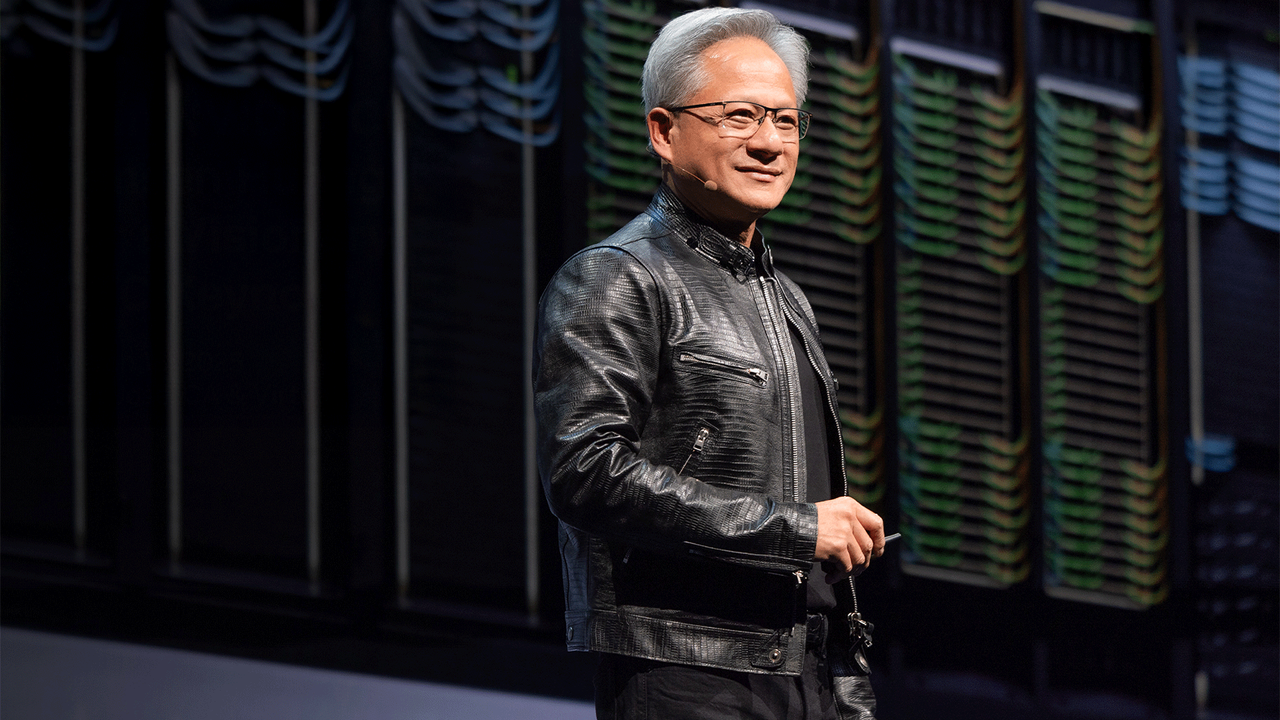
Nvidia's Computex 2026 Keynote: A Crucial Event for AI
On May 31, the tech world's attention will turn to Computex 2026 and GTC Taipei, where Jensen Huang, Nvidia's CEO, will deliver a highly anticipated keynote. This event traditionally marks a pivotal moment for the company, offering a privileged glimpse into its future strategies and the innovations that will shape the artificial intelligence sector.
For professionals working with LLMs and AI infrastructures, Nvidia's presentations are fundamental. They often outline the hardware and software trends that will directly influence training and inference capabilities, especially for those evaluating on-premise deployments or hybrid solutions.
Nvidia and the On-Premise Ecosystem for LLMs
Nvidia positions itself as a central player in enabling AI capabilities, providing the silicon and software frameworks that power a large portion of Large Language Model workloads. Its leadership in the GPU sector is crucial for companies choosing to maintain control over their data and operations through self-hosted deployments.
The choice of on-premise infrastructures for LLMs necessitates robust hardware, with particular attention to VRAM, throughput, and computational capacity. Innovations presented by Nvidia at events like Computex can therefore have a direct impact on TCO planning, the scalability of AI pipelines, and the ability to manage increasingly complex models in air-gapped environments or those with stringent data sovereignty requirements.
Strategic Implications for CTOs and Architects
For CTOs, DevOps leads, and infrastructure architects, Nvidia's announcements are not just product news but strategic indicators. Decisions regarding the adoption of new GPU generations or the optimization of software stacks for LLM inference require a deep understanding of the trade-offs between performance, cost, and flexibility.
The ability to fine-tune proprietary models, manage large volumes of tokens, and ensure low latency for critical applications is directly dependent on the underlying infrastructure. On-premise solutions offer unparalleled control over these aspects but require significant investments in hardware and expertise. For those evaluating on-premise deployments, AI-RADAR offers analytical frameworks on /llm-onpremise to assess these trade-offs in an informed manner.
Future Prospects and Deployment Decisions
Jensen Huang's keynote at Computex 2026 will be an opportunity to anticipate the next technological evolutions that will influence the entire AI ecosystem. From chip architectures to advancements in software frameworks, every announcement can redefine the possibilities for companies aiming to fully leverage the potential of LLMs.
Continuous innovation in silicon and development platforms is essential to support the growing demand for computational capabilities, both for large-scale model training and distributed inference. Understanding these directions is crucial for making strategic decisions that balance performance, security, and TCO, ensuring that AI infrastructures are ready for future challenges.








💬 Comments (0)
🔒 Log in or register to comment on articles.
No comments yet. Be the first to comment!