
A Strategic Partnership for AI Memory
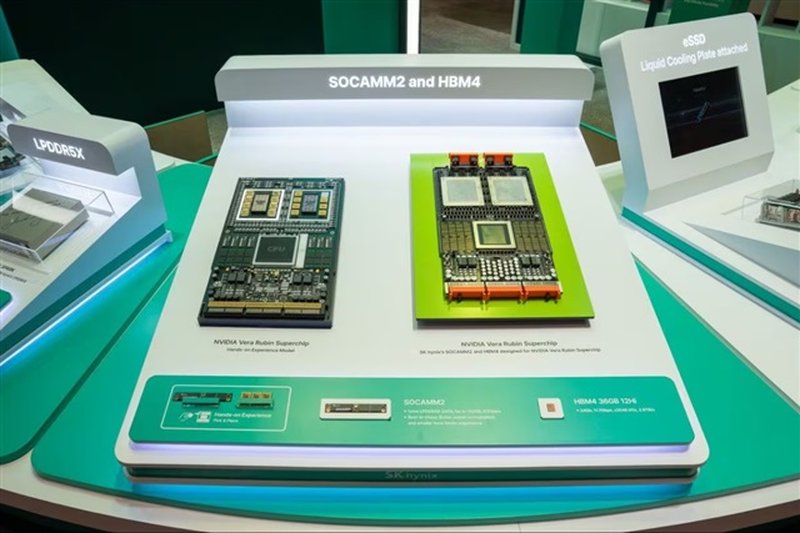
Nvidia, an undisputed leader in GPUs for artificial intelligence, and SK Hynix, one of the world's leading semiconductor manufacturers, have announced the signing of a multi-year agreement. This strategic understanding focuses on the co-development and supply of memory solutions, a critical component for advancing AI computing capabilities. The primary goal of the collaboration is to address and reduce the extended development cycles that characterize advanced memory technologies.
The demand for specialized hardware for training and inference of Large Language Models (LLMs) is constantly growing, and High-Bandwidth Memory (HBM) represents a fundamental bottleneck. Ensuring a steady flow of innovation and production in this segment is vital for the entire AI ecosystem. This agreement underscores the need for close collaboration between chip providers and memory manufacturers to overcome technological and market challenges.
The Importance of HBM for Large Language Models
The performance of modern LLMs largely depends on the ability of GPUs to quickly access enormous amounts of data. HBM, with its stacked architecture and extremely high-bandwidth interface, has become the de facto standard for high-end AI accelerator cards. However, the development and production of HBM are complex processes, requiring significant investment in research and development, as well as long and delicate production cycles.
Co-development between Nvidia and SK Hynix indicates a willingness to more deeply integrate their respective expertise, optimizing memory design for future GPU architectures and vice versa. This approach can lead to more efficient solutions with reduced latencies and higher throughput, essential elements for improving LLM performance and reducing training and inference times. For companies evaluating on-premise deployments, the availability and efficiency of these memories directly translate into a more favorable TCO and greater operational agility.
Implications for On-Premise Deployments and Data Sovereignty
For organizations choosing to implement LLMs and AI workloads in self-hosted or air-gapped environments, the availability of cutting-edge hardware is a critical factor. Agreements like the one between Nvidia and SK Hynix have a direct impact on the GPU supply chain, influencing the availability and cost of accelerator cards equipped with HBM. Greater stability in supply and accelerated development can mitigate risks related to component scarcity and price fluctuations.
The ability to access high-performance and reliable hardware is fundamental for data sovereignty and compliance strategies, which often drive the choice towards on-premise solutions. Companies that wish to maintain full control over their data and models, avoiding cloud dependencies, require a robust and predictable hardware ecosystem. This partnership helps strengthen that ecosystem, offering greater certainty in infrastructure planning for CTOs and system architects. For those evaluating on-premise deployments, AI-RADAR offers analytical frameworks on /llm-onpremise to assess specific trade-offs.
Future Prospects in the AI Landscape
The agreement between Nvidia and SK Hynix reflects a broader trend in the technology sector: the increasing interdependence among different players in the value chain to address complex challenges. With the evolution of LLMs and the emergence of new computing paradigms, memory will continue to be a crucial limiting factor. Partnerships of this kind are essential not only to keep pace with innovation but also to ensure the scalability and sustainability of AI infrastructures globally.
Looking ahead, the joint optimization of GPUs and memory could unlock new possibilities for even larger and more complex models, with extended context windows and advanced multimodal capabilities. For infrastructure specialists and technical decision-makers, understanding these market and development dynamics is crucial for making informed decisions about their AI hardware investments and long-term deployment strategies.






💬 Comments (0)
🔒 Log in or register to comment on articles.
No comments yet. Be the first to comment!