The Future of On-Premise AI: NVIDIA Vera Rubin NVL72
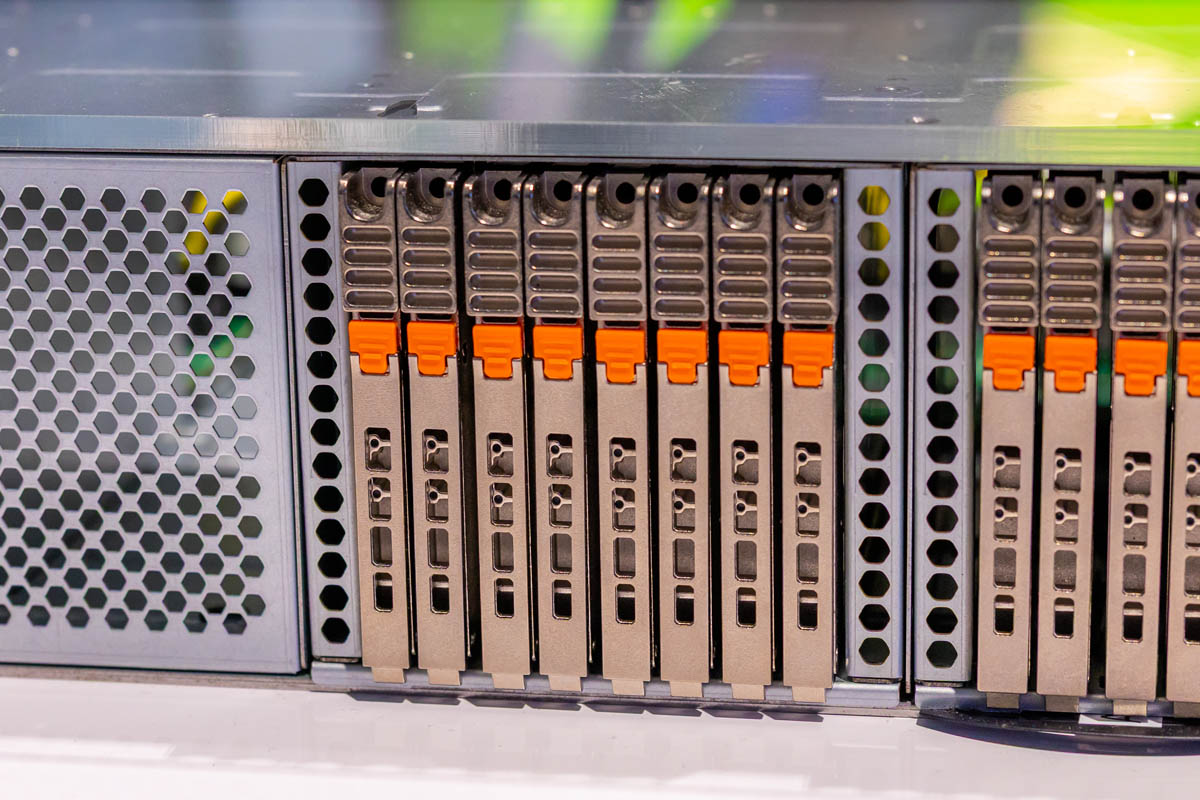
During NVIDIA GTC 2026, attention was drawn to several innovations, including the sighting of the NVIDIA Vera Rubin NVL72 rack at the Pegatron booth. This presentation offers a significant glimpse into the future directions of AI infrastructure, particularly for the most demanding workloads. The Vera Rubin NVL72 solution is not limited to a single component but is configured as an integrated system comprising CPUs, GPUs, networking, and storage—fundamental elements for building high-performance computing environments.
The integration of these components into a single rack is a clear signal of the evolution towards more cohesive and optimized AI architectures. For companies operating with Large Language Models (LLMs) and other intensive workloads, the availability of pre-integrated solutions can significantly simplify the deployment and management process, reducing the complexity and potential bottlenecks that often arise from assembling heterogeneous components.
Technical Details and Hardware Implications
The concept of a rack like the Vera Rubin NVL72, which includes CPUs, GPUs, networking, and storage, is crucial for addressing the computational challenges posed by modern LLMs. GPUs, in particular, are the beating heart of AI acceleration, requiring massive amounts of VRAM and high-bandwidth interconnects to handle models with billions of parameters and voluminous training datasets. The presence of an integrated networking architecture is equally vital to ensure high throughput and low latency between different compute units, essential for parallelism strategies such as tensor parallelism or pipeline parallelism.
In an on-premise deployment context, the ability to scale infrastructure efficiently is a decisive factor. A pre-configured rack like the NVL72 aims to provide a solid and scalable foundation, reducing the time and resources needed for design and implementation. This approach is particularly relevant for organizations that need to maintain direct control over hardware and data while ensuring the performance required for LLM training and inference operations.
Deployment Context and TCO
The choice of an on-premise deployment for AI workloads, supported by solutions like the Vera Rubin NVL72, is often driven by strategic considerations related to data sovereignty, regulatory compliance, and Total Cost of Ownership (TCO). Keeping data and models within one's own data centers offers unparalleled control over security and privacy, critical aspects for regulated sectors such as finance or healthcare. Furthermore, for consistent, long-term AI workloads, an initial investment in proprietary hardware can result in a lower TCO compared to the recurring operational costs of cloud solutions.
The role of partners like Pegatron, a prominent OEM/ODM, is fundamental in this scenario. They facilitate the transition from core technology (like NVIDIA chips) to complete, ready-to-deploy system solutions for enterprise environments. This collaboration model allows companies to access cutting-edge AI infrastructure without having to manage the entire hardware supply chain and integration internally, focusing instead on optimizing their AI models and pipelines.
Future Prospects for AI Infrastructure
The introduction of integrated systems like the NVIDIA Vera Rubin NVL72 at GTC 2026 highlights a clear industry trend towards complete and optimized hardware solutions for AI. For CTOs, DevOps leads, and infrastructure architects, evaluating these self-hosted options is crucial. They offer a path to balance performance needs with control, security, and cost management requirements.
While cloud solutions offer flexibility and on-demand scalability, on-premise systems continue to represent a strategic choice for those requiring granular control, air-gapped environments, or predictable long-term cost management. The availability of integrated racks like the NVL72 simplifies this decision, providing a robust foundation for AI innovation within corporate boundaries. AI-RADAR continues to monitor these evolutions, offering analysis on the trade-offs and constraints that drive deployment decisions for Large Language Models.






💬 Comments (0)
🔒 Log in or register to comment on articles.
No comments yet. Be the first to comment!