Introduction to Offshore Innovation
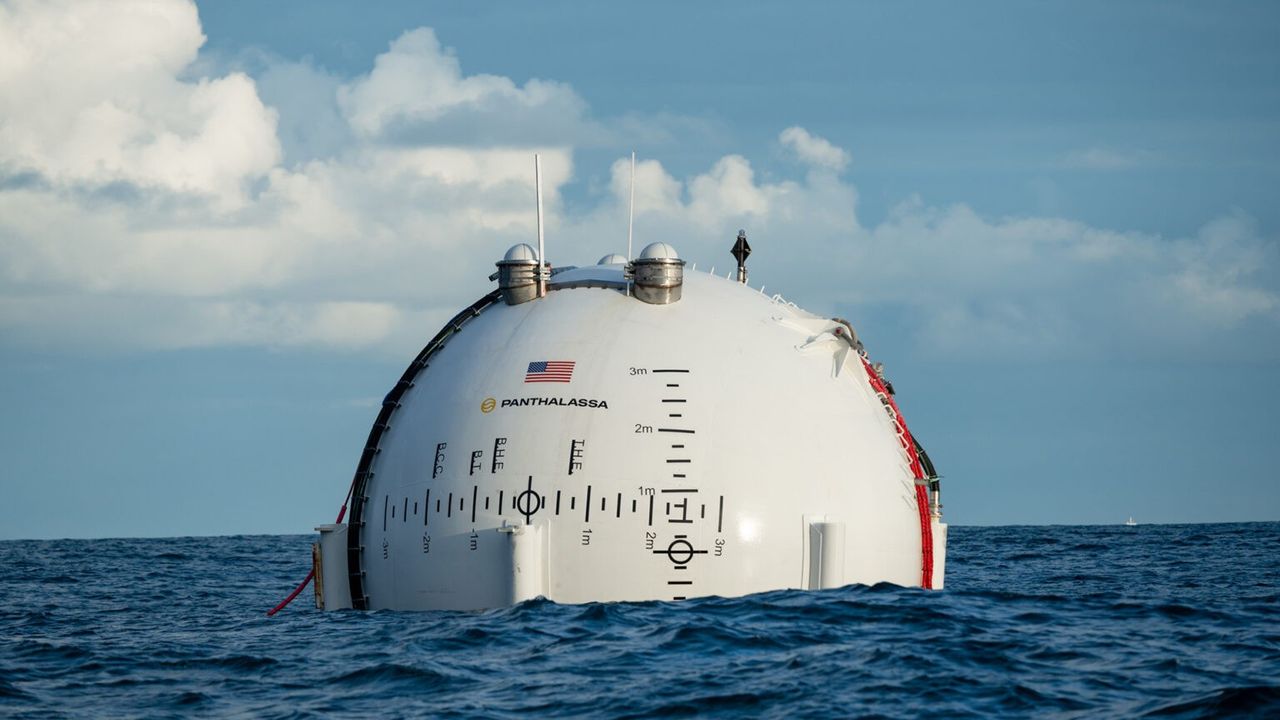
The artificial intelligence infrastructure landscape is constantly evolving, pushing the boundaries of traditional solutions. In this context, Panthalassa emerges, a startup that has recently attracted a significant investment of $140 million, with the backing of Peter Thiel, co-founder of Palantir. The company aims to revolutionize how AI workloads are managed by developing floating data centers powered by ocean wave energy.
This initiative represents a bold approach to the growing demand for AI computing capacity, seeking to leverage the ocean's natural resources to power offshore compute nodes. The idea of a floating data center is not entirely new, but the integration with wave energy and the emphasis on AI workloads positions it as a distinctive proposition in the sector.
Technical Details and Potential Advantages
The concept of a floating data center, as proposed by Panthalassa, offers several intrinsic advantages, particularly for the energy-intensive workloads typical of AI and Large Language Models (LLMs). The marine environment provides a natural opportunity for cooling, reducing the need for complex and expensive air conditioning systems, which represent a significant cost item in traditional data centers. Seawater can be used for passive or semi-passive cooling, helping to maintain optimal operating temperatures for servers and GPUs.
Powering through wave energy is another pillar of this innovation. Data centers, especially those dedicated to AI, require enormous amounts of energy. Harnessing a renewable and constant source like ocean waves could not only reduce the carbon footprint but also offer greater energy stability in remote locations, far from congested terrestrial power grids. This approach could improve the overall TCO, reducing operational costs related to energy and cooling.
Context and Implications for AI Deployment
For organizations evaluating the deployment of AI workloads, solutions like Panthalassa's introduce new considerations. The ability to manage offshore compute nodes offers an an alternative to traditional on-premise or cloud-based models. This type of infrastructure could be particularly appealing for sectors requiring high data sovereignty or operating in air-gapped environments, where network connectivity is limited or absent, or where physical proximity to data is crucial.
While the deployment of offshore infrastructure entails unique challenges, such as maintenance, physical security, and connectivity, the potential benefits in terms of energy costs, cooling, and environmental impact are significant. For those evaluating on-premise deployments, there are complex trade-offs between CapEx and OpEx, space requirements, energy access, and latency considerations. A floating data center could shift the balance, offering an option to locate computing near renewable energy sources and, potentially, closer to specific data sources or end-users in particular contexts.
Future Prospects and Challenges
Panthalassa's initiative is part of a broader trend of seeking innovative solutions for AI infrastructure. The scalability, reliability, and resilience of such offshore systems will be critical factors for their long-term success. Managing complex infrastructure in a marine environment requires specialized expertise and robust engineering solutions to address the challenges posed by extreme weather conditions, corrosion, and logistics.
The $140 million funding and the support from figures like Peter Thiel underscore confidence in the potential of this vision. Although the challenges are considerable, the concept of wave-powered AI data centers represents a step forward towards a future where computing infrastructure is more sustainable, distributed, and adapted to the specific needs of modern AI workloads. Its evolution will be closely monitored by industry professionals seeking innovative solutions for the deployment of LLMs and other artificial intelligence applications.






💬 Comments (0)
🔒 Log in or register to comment on articles.
No comments yet. Be the first to comment!