PhysicsX Raises $300 Million, Valuation Hits $2.4 Billion
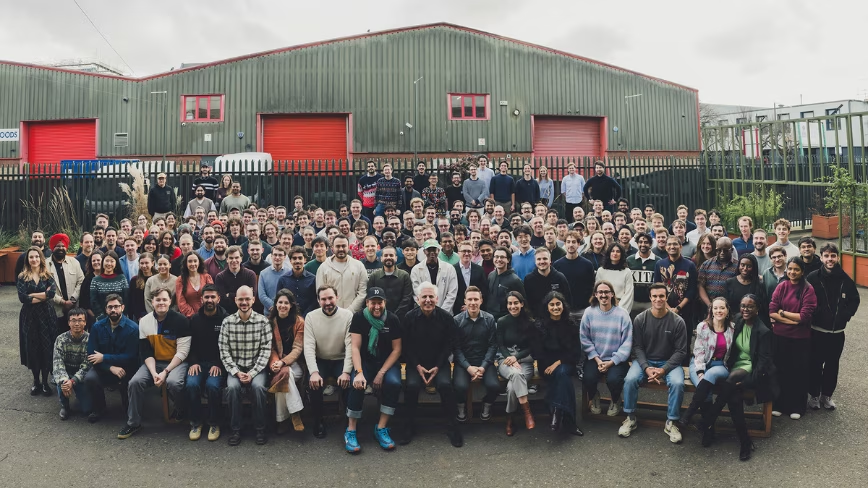
PhysicsX, a London-based artificial intelligence startup, has announced a significant Series C funding round, raising $300 million. The operation, led by Singaporean sovereign wealth fund Temasek, has pushed the company's valuation to $2.4 billion. This increase represents more than double the valuation obtained less than a year ago, when a Series B round had positioned the company just under $1 billion.
The success of the round, which was oversubscribed, underscores the growing interest in AI solutions that promise radical operational efficiencies. Temasek, an existing investor in PhysicsX, has strengthened its position, highlighting confidence in the market potential of the technology developed by the startup.
The Technological Core: Accelerated Simulations with AI
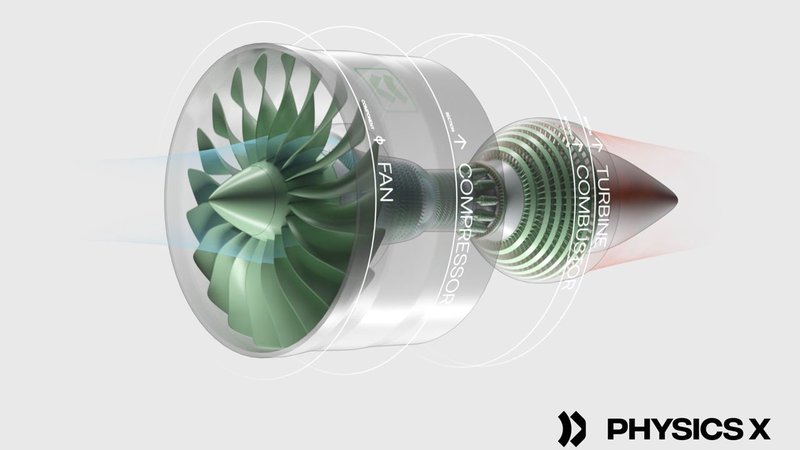
The distinctive value of PhysicsX lies in its ability to drastically reduce complex simulation times, from days to mere seconds. This acceleration stems from the application of advanced artificial intelligence techniques, likely based on predictive models and algorithmic optimization. In sectors such as engineering, scientific research, and new material development, numerical simulations represent a significant bottleneck, requiring substantial computational resources and prolonged processing times.
Adopting Large Language Models (LLM) or specific AI models for simulation can transform these processes. For companies operating with sensitive data or requiring granular control over their infrastructures, running AI workloads for on-premise simulations becomes crucial. This approach ensures data sovereignty and allows for targeted hardware optimization, for example, by selecting GPUs with specific VRAM and computing capabilities for the inference or training needs of simulation models. The choice between on-premise deployment and cloud solutions for these workloads often depends on a thorough analysis of the Total Cost of Ownership (TCO) and compliance requirements.
Implications for the Industry and Deployment
The success of PhysicsX reflects a broader trend in the AI market: the search for solutions that not only automate but revolutionize existing processes through computational efficiency. The ability to accelerate simulations has direct repercussions on the speed of innovation and the reduction of operational costs for businesses. However, implementing such AI systems, especially those handling large volumes of data or complex models, presents significant infrastructure challenges.
For organizations evaluating the deployment of similar AI solutions, the decision between a self-hosted infrastructure and using cloud services is fundamental. On-premise deployments offer complete control over data and hardware, essential for air-gapped environments or for complying with stringent data sovereignty regulations. On the other hand, they require a higher initial investment in terms of CapEx and more complex infrastructure management, including selecting appropriate GPUs and configuring local stacks. TCO analysis thus becomes a discriminating factor, considering not only direct costs but also indirect ones related to maintenance and upgrades. For those evaluating on-premise deployment, AI-RADAR offers analytical frameworks on /llm-onpremise to assess these trade-offs.
Future Prospects of AI for Simulations
Temasek's investment in PhysicsX highlights confidence in AI's potential to transform computationally intensive industrial sectors. As the capabilities of LLMs and domain-specific AI models continue to evolve, the demand for infrastructures capable of supporting efficient inference and training will grow. PhysicsX's ability to generate results in seconds rather than days is not just a competitive advantage but an indicator of the direction AI innovation is heading: towards greater speed, precision, and accessibility, with profound implications for enterprise-level technology deployment strategies.






💬 Comments (0)
🔒 Log in or register to comment on articles.
No comments yet. Be the first to comment!