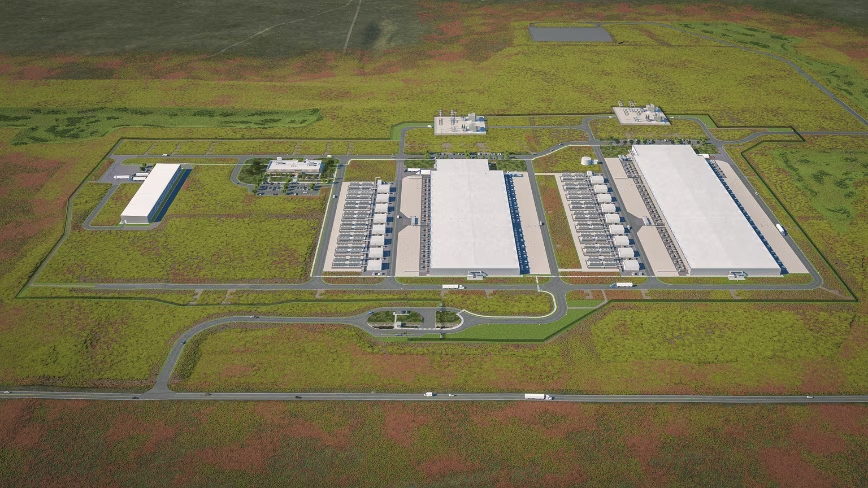
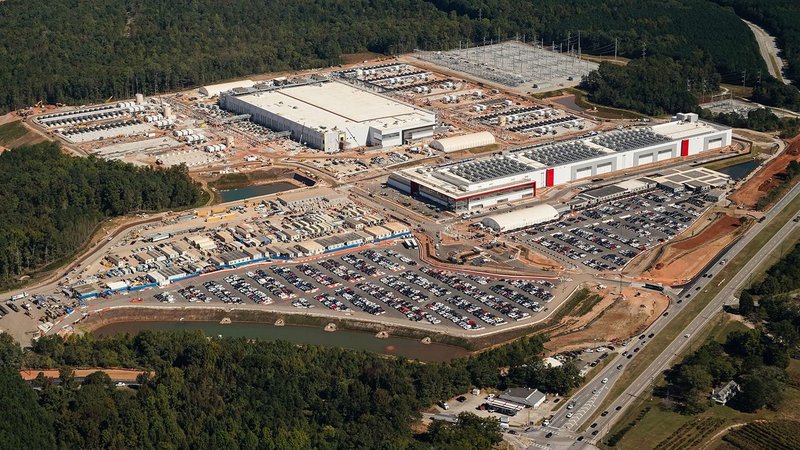
A rare and potentially deadly bacterium ended up in Cheyenne, Wyoming's water system, released by a contractor working on Meta's AI campus. The city's response was swift: a halt on all industrial wastewater discharge from data centers, effectively freezing further permits. This is not just an environmental mishap – it is a symptom of a growing rift between the thirst of on-premise AI infrastructure and local communities' pushback.
Large-scale training and inference data centers devour water. Every rack of GPUs running large language models demands cooling systems that often tap into public water supplies, returning heated or, as in this case, contaminated water. When a facility is on-premise, it doesn't just consume electricity; it directly competes with agriculture and residential use, inserting itself into fragile local balances. Cheyenne chose to protect its water network, and it won't be the last.
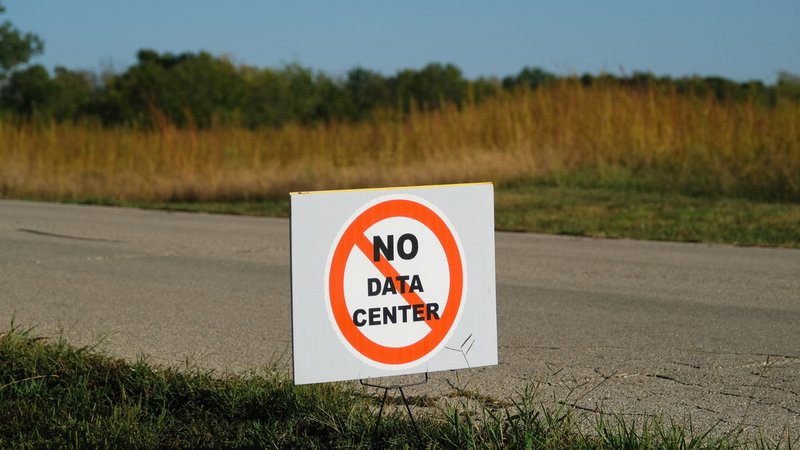
The issue is not merely technical; it is about sovereignty. Local authorities are realizing that authorizing a data center means ceding a significant share of a finite resource. In on-premise ecosystems, site control is a deployment factor that goes far beyond latency. If a municipality can block discharge, the TCO of an AI cluster includes a hard-to-quantify regulatory risk. For those evaluating on-premise strategies – from Italian banks with sensitive data to manufacturing SMEs – the Cheyenne incident shifts the spotlight to an often overlooked parameter: social license.
Meta's response is still generic, but the precedent is clear: local jurisdictions have tools to halt operations even after contracts are signed. Water dependence thus becomes a structural friction vector for the hyperscale model. It's not just about energy consumption, but a delicate loop: more compute power requires more water for heat dissipation; the more infrastructure is concentrated on a single site, the more water footprint becomes unsustainable for the area.
Two paths emerge. One pushes toward closed-loop or dry cooling solutions that zero out intake from the water main but raise capital costs and lower thermal efficiency – a trade-off every on-premise cluster designer will need to budget for. The other leads to fragmenting deployments: many smaller nodes, spread across areas with water abundance or where wastewater reuse is already the norm, as in some Nordic regions. This relieves pressure on individual communities and aligns with edge computing logic, but complicates distributed training management.
The Cheyenne episode is a signal of something deeper: the local-scale AI race is hitting real walls, made of pipes and treatment plants. Those building on-premise infrastructure can no longer treat water as an accessory cost; it is now a primary constraint for site selection and operational continuity.







💬 Comments (0)
🔒 Log in or register to comment on articles.
No comments yet. Be the first to comment!