The parallel GPU market is a gap in the local AI supply chain
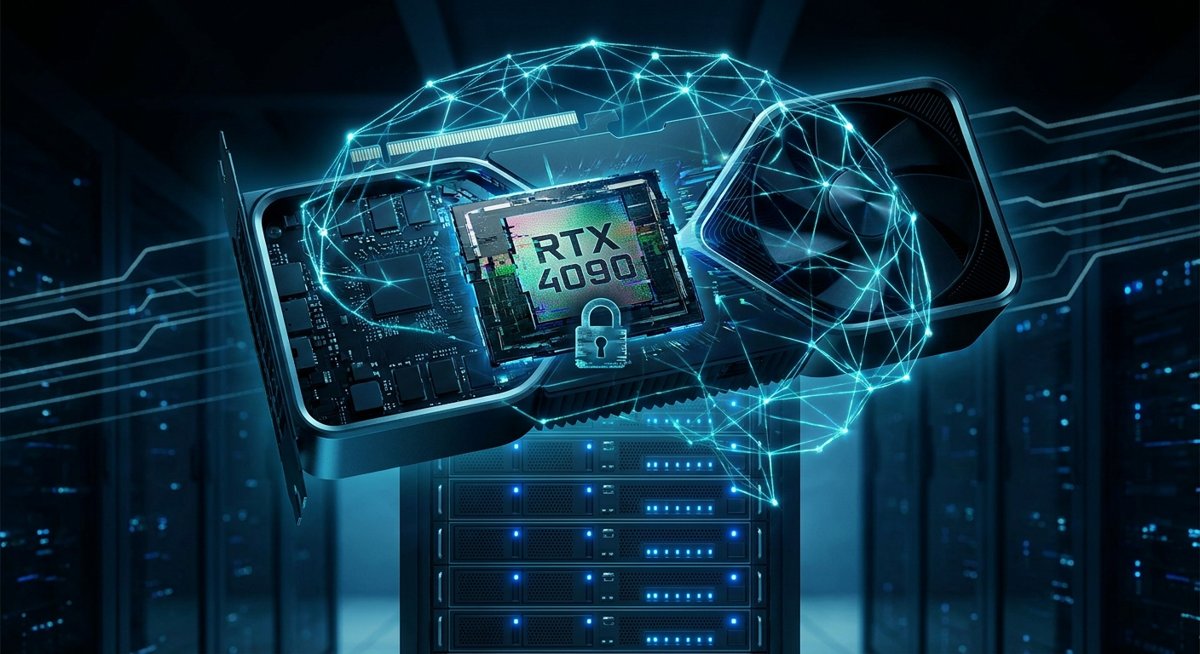
The Reddit warning reads like a service notice: counterfeit RTX 4090s are circulating in parallel markets, with GPU and memory parts almost indistinguishable from original chips. This is not a forum curiosity. The RTX 4090 is one of the most requested consumer cards for LLM inference in self-hosted configurations. When official channels offer irregular availability, many buyers turn to marketplaces where verification relies on photos, feedback and promises. That turns a compute component into a critical asset purchased with consumer e-commerce tools.
The issue goes beyond financial fraud. Buyers of data center servers can rely on certified distribution chains; buyers of a graphics card on a marketplace often have to build their own due diligence. Counterfeits that are almost indistinguishable raise the cost of that verification. Checking is no longer a quick step: it becomes a skill that many small teams, independent researchers and startups have not yet formalized. The asymmetry between seller and buyer widens precisely in the segment where compute autonomy is a strategic lever.
The structural signal is that hardware for local compute is becoming critical infrastructure, but without the tools typical of infrastructure. Firewalls, storage and networks are purchased with certifications, maintenance contracts and supply chain controls. Consumer GPUs, by contrast, often arrive through informal channels because price and availability matter more than traceability. This gap is a flaw in the local AI supply chain: it concerns not just a single card, but the ability of a lab to maintain reproducible and reliable environments.
Passing superficial checks: how fakes enter the pipeline
The most insidious element is that a counterfeit card can pass visual checks and even initial software tests. GPU and memory parts almost identical to the originals fool superficial inspections and utilities that read identifiers. The risk emerges under sustained load, typical of inference with quantization or light fine-tuning sessions. In these scenarios non-original components can show instability, calculation errors or abnormal consumption. The failure is not necessarily immediate: it manifests as irregular behavior that corrupts trust in results.
For a local pipeline, the worst damage is not replacing the card but diagnosing it. A total failure is visible and isolated. An intermittent failure spreads in subtle ways: benchmarks that do not match, inference sessions that freeze after hours, abnormal latency, degraded quality of generated tokens. In a lab that bases its pipelines on local compute, every anomaly requires time to isolate the suspect component, rebuild development environments and explain why results are not reproducible. The hidden cost is in working hours and credibility.
VRAM and memory are particularly critical. Quantized models depend on memory capacity and bandwidth; a fake card may report a VRAM amount but deliver unstable performance or timings under pressure. Firmware can also be modified to hide the real hardware. In practice, the system may work for light loads and fail exactly when inference needs to be pushed into production. This makes counterfeiting not an aesthetic problem but a defect that creeps into the heart of the pipeline.
TCO and hidden costs: intermittent failure as systemic risk
For those evaluating on-premise deployments, the trade-off shifts from list price to TCO. A fake card may look like a bargain, but the risk of replacing it without warranty must be counted in the decision. If the component fails after the marketplace return period, the initial savings turn into a recurring cost item: buying a replacement, downtime, possible damage to other components. TCO is not just the price of silicon, but the set of operational costs linked to reliability.
Intermittent failures are especially expensive because they force cross-validation procedures. A team may need to keep spare cards, run periodic stress tests and compare benchmarks with reference machines. All this subtracts time from productive work. For a startup or independent researcher, days lost diagnosing a stability problem can mean a delayed prototype or a missed deadline. The opportunity cost is often higher than the cost of the card.
Abnormal consumption adds to this. A counterfeit card may draw more power or heat irregularly, affecting power supplies, cooling and electricity costs. In a small self-hosted cluster, the instability of one node can propagate to the entire pipeline. TCO is therefore not calculated on paper but on the real behavior of the component over time. The lesson is that a low price from an unofficial channel can be a loan with high interest in terms of working hours and reliability.
Hardware verification becomes an infrastructure skill
If almost indistinguishable counterfeits make visual checking insufficient, hardware verification must become a structured skill. This does not mean adding a quick step, but adopting procedures similar to those of enterprise environments: checking serial numbers with the manufacturer, verifying firmware signatures, running stress tests with known workloads, monitoring temperatures and power draw. These practices do not eliminate risk, but they reduce the probability that a fake card enters production.
For small teams, the cost of these procedures may seem disproportionate. But it is the same type of investment made for software security: nobody would trust a pipeline to an unverified container. Similarly, a GPU is a component that comes into direct contact with data and models. Hardware verification is not an extra, but part of the control posture that justifies the on-premise choice. The point is not perfection, but reducing information asymmetry.
Official retailers and system integrators can turn certification into a competitive advantage. The guarantee of authentic components becomes a service, not a detail. Those who cannot access enterprise channels can compensate with checklists, verification communities and staggered purchases. The market signals a growing demand for certified provenance: the next generation of self-hosted infrastructure will need hardware attestation procedures, firmware verification and supply chain controls, not to chase perfection, but to prevent initial savings from becoming a recurring cost item.
Data sovereignty and provenance: the boundary shifts downstream
Data sovereignty cannot be defended with software alone. Those who choose a self-hosted LLM do so to maintain control over data and models, but that control starts with hardware provenance. A counterfeit card introduces uncertainty at the base of the system: if you cannot attest what is inside the GPU, every upper layer rests on a fragile assumption. Perimeter security and encryption are not enough if the component processing the data has unverified firmware.
There is no need to invoke backdoors to grasp the risk. It is enough to consider that a counterfeit GPU can have unpredictable behavior under load, corrupt benchmarks or generate calculation errors. In a pipeline that produces results for clients or research, this instability undermines reproducibility. Data sovereignty also includes the ability to guarantee reliable results. A local environment that cannot demonstrate the authenticity of its components weakens the trust of those who use it.
The boundary of sovereignty therefore shifts downstream: it is no longer only a question of where data resides, but which components process it. The attention given to firewalls, storage and networks must extend to GPUs. In perspective, self-hosted infrastructure will need hardware attestation, firmware verification and supply chain controls. This is not bureaucratic drift but the natural evolution of an ecosystem in which local compute becomes critical infrastructure.
What to watch: maturation signals and attestation tools
In the coming months, the signals to monitor concern the reaction of manufacturers and marketplaces. The presence of almost indistinguishable counterfeits will likely push toward stronger verification systems: serial codes with real-time checking, chips with cryptographic identity, certification programs for consumer GPU resellers. These measures may not arrive quickly, but the pressure of on-premise demand makes them more likely. The open source community can also contribute with firmware validation tools.
Another signal is the separation between consumer and infrastructure channels. Today the same RTX 4090 serves both gaming and LLM inference. As persistent workloads increase, some suppliers may differentiate offerings with warranties and support designed for labs. This does not eliminate the parallel market, but creates more traceable alternatives. One signal to monitor is whether provenance becomes an explicit item in contracts.
Finally, the phenomenon signals a maturation of local AI. Counterfeiting is an indirect indicator of the value that consumer GPUs have assumed as critical infrastructure. The next generation of self-hosted environments will need hardware attestation procedures, firmware verification and supply chain controls. AI-RADAR will continue to follow these trade-offs on /llm-onpremise, because data sovereignty is not only about model or framework choice, but also about knowing what is inside the machine that runs it.







💬 Comments (0)
🔒 Log in or register to comment on articles.
No comments yet. Be the first to comment!