
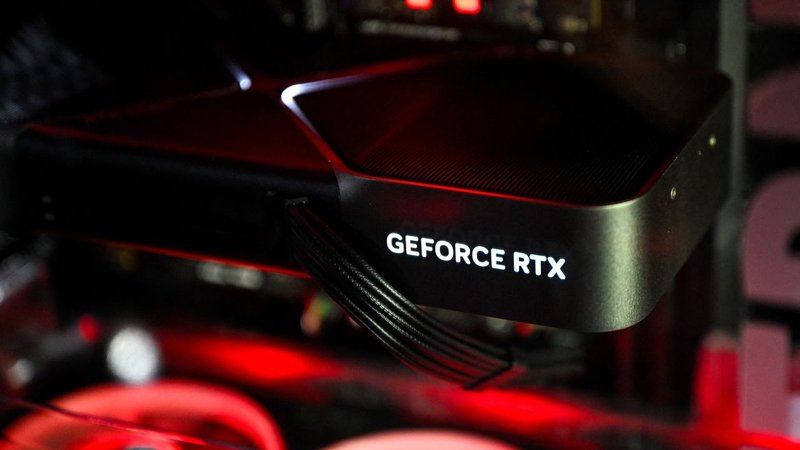
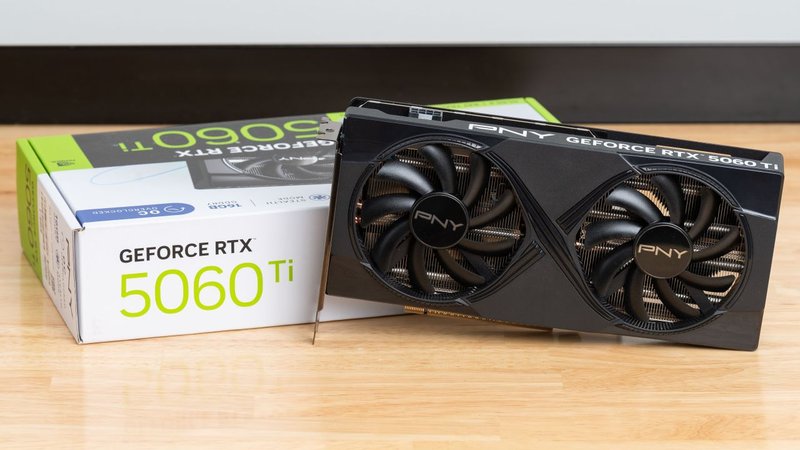
The question comes from a Reddit thread by u/chemist_slime: will there be a Black Friday this year? Judging by the prices circulating in Japan for new NVIDIA GPUs, the answer risks being rhetorical. The RTX 5060 Ti 16 GB has seen increases up to 144% and a price of $1,292; the RTX 5080 has passed $2,400. These are not simple retail spikes: they are the symptom of a market where demand for VRAM no longer comes only from gaming.
The VRAM bottleneck
For anyone building local inference nodes, VRAM capacity is often more important than raw GPU power. A self-hosted LLM must fit into memory to generate tokens at acceptable speed, and the difference between 8 GB and 16 GB can decide whether a model with reduced precision quantization runs locally or not. In this scenario, mid-range consumer cards with 16 GB become a bottleneck contested between two worlds: gamers seeking frame rates and teams that want to avoid the cloud.
The Japanese market amplifies the tension. Yen weakness, import costs, and a distribution chain that tends to inflate price lists make final prices more elastic upward. The 144% figure should not be read only as speculation: it signals that real availability is insufficient relative to composite demand, where the local AI component has become structural.
For those evaluating on-premise deployment, the math changes. The price of a single card is no longer a gaming line item but a TCO variable: acquisition cost, energy consumption, case space, and hardware lifespan enter the same equation. When an RTX 5060 Ti 16 GB travels above one thousand dollars, the cost per GB of VRAM useful for inference approaches levels that push a review of alternatives: previous-generation GPUs with more memory, used workstations, or, for those who can, a rethink of the architecture between edge and cloud. AI-RADAR offers analytical frameworks on /llm-onpremise to evaluate these trade-offs without shortcuts.
The final question remains open. If Black Friday does arrive, it will not be a price-list event but a test of the supply chain's ability to absorb two demands that now move together. What loses is not only the gamer who postpones purchase: it is the idea that the consumer GPU is still a product designed for a single market.





💬 Comments (0)
🔒 Log in or register to comment on articles.
No comments yet. Be the first to comment!