
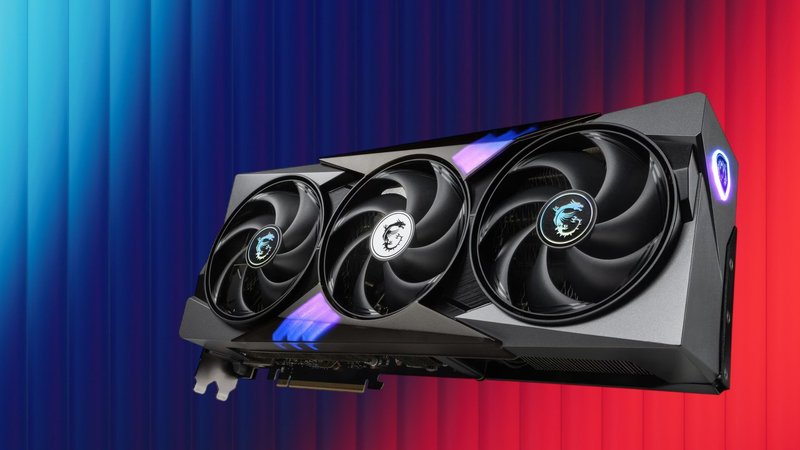
According to a user report on the Micro Center forum, buying an RTX 5090 at the US retail chain now requires a series of additional documents, including a no-export declaration. The news, while limited to a single retailer, carries a meaning beyond store logistics: the most sought-after consumer GPU of the moment is being treated, at least in part, as a dual-use good.
For years the line between gaming GPUs and AI accelerators was clear. The former had little VRAM, limited memory bandwidth, and no compliance obligations. The latter, such as data center models, were subject to export controls and supply contracts. Today that separation is crumbling. A high-end card can run moderate-sized LLMs locally, with enough memory and bandwidth to make self-hosted inference plausible outside data centers. This has turned the consumer GPU into a low-cost piece of AI infrastructure—exactly the kind of hardware that appeals to organizations wanting to avoid the cloud, keep data on premises, and reduce operating cost.
Requiring a no-export declaration shifts the compliance burden onto the individual buyer and the retailer. For Micro Center, it is a way to reduce the risk of sanctions or sales to intermediaries who resell abroad. For the end customer, it adds a bureaucratic step that did not exist before, and it hits especially those buying multiple units: small labs, system builders, research groups assembling machines for local training or inference.
Who gains and who loses
In the short term, the winners are official suppliers and companies selling already-compliant hardware. The administrative barrier can discourage speculative purchases and preserve stock for customers considered legitimate. GPU manufacturers, for their part, gain greater control over distribution without imposing rigid blocks.
The losers are independent buyers who used the consumer route to build local compute nodes at low cost. For them, every additional document means time, uncertainty, and, in some cases, the need to declare intended use. The secondary market also tends to react to such barriers: when official channels tighten, informal sales grow, along with purchases through straw buyers and above-list prices. This is not a prediction but a pattern already seen in other restricted component markets.
Structurally, the move signals that flagship consumer GPUs are now seen as strategic assets. Export restrictions, historically reserved for data center products, are effectively extending to retail. For those evaluating on-premise deployment, this changes the calculation: it is no longer enough to compare price, VRAM, and power consumption; one must also include compliance, actual availability, and the risk that supply becomes more complicated. AI-RADAR covers these trade-offs at /llm-onpremise, but the immediate point is that the path of using gaming GPUs as cheap AI accelerators is becoming less straightforward, and anyone planning local infrastructure would do well not to take it for granted.







💬 Comments (0)
🔒 Log in or register to comment on articles.
No comments yet. Be the first to comment!