
From experiment to prototype: the engineering step
Academia Sinica, Taiwan’s leading research institution, has finalized a quantum chip designed entirely on the island, preparing for a phase that insiders call an “engineering push”. After years of theoretical studies and proof-of-principle demonstrations, the shift to an engineering approach signals the intention to move the technology out of the lab and closer to practical applications.
What we know (and don’t know) about the chip
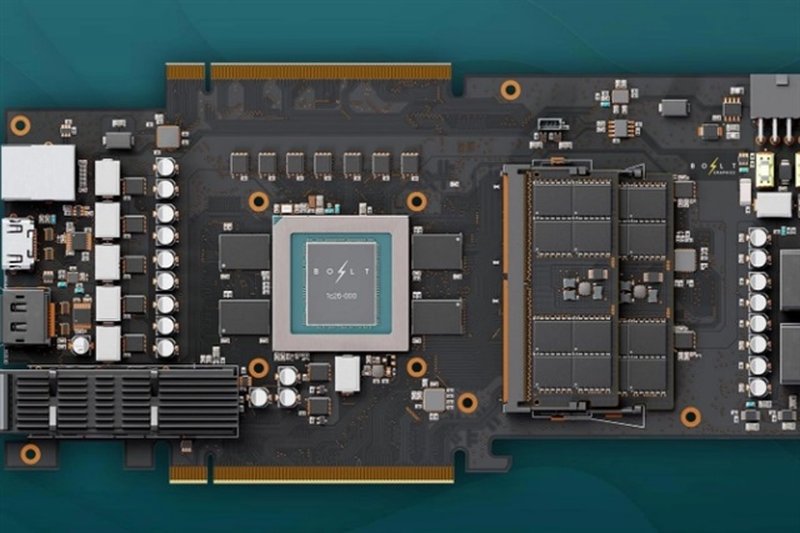
Technical details remain scarce: the announcement includes no information on qubit count, technology type (superconducting, photonics, ion traps), operating frequencies, or error rates. However, the fact that it is referred to as a “chip” – rather than a tabletop quantum optics experiment – suggests an ambition to produce an integrable device, potentially reproducible with advanced fabrication processes. Taiwan already has a proven semiconductor supply chain; its interest in quantum computing represents an effort to stay ahead in the next generation of computing.
Why it matters: sovereignty and the hardware supply chain
In a geopolitical landscape where control of supply chains is increasingly strategic, a made-in-Taiwan quantum chip carries significance beyond basic research. Academia Sinica’s move aligns with a global trend to bolster domestic capabilities for designing and producing critical hardware – a dynamic familiar to those involved in AI infrastructure. Similar to self-hosted Large Language Models, where enterprises and institutions keep data and models within their own data centers, technological sovereignty in advanced hardware is becoming a competitive factor. Locally designed chips reduce dependence on external suppliers and mitigate risks of bottlenecks, sanctions, or shortages.
The quantum horizon and artificial intelligence
Although quantum computers are not yet ready to replace GPU clusters for inference or training of language models, their development could open new scenarios for AI. Quantum machine learning algorithms are under study, and efficient hardware could accelerate specific tasks such as combinatorial optimization or molecular system simulation, with spillover effects on hybrid models. For organizations evaluating on-premise strategies, the evolution of computing architectures is a signal to watch: investing today in scalable and flexible infrastructure means being prepared to integrate quantum accelerators tomorrow, once technological maturity and TCO allow it.
Taiwan’s bet in the global context
Alongside giants like IBM, Google, and Chinese laboratories, Taiwan is positioning itself as a new quantum hub, leveraging its expertise in classical chip manufacturing. Academia Sinica’s engineering push is not only a scientific milestone but a concrete step into the technologies that will shape the decade. If the chip passes engineering validation, it could spark collaborations with the island’s semiconductor industry, creating a vertically integrated ecosystem from design to production – a significant advantage in a field where time-to-market matters as much as raw computing power.





💬 Comments (0)
🔒 Log in or register to comment on articles.
No comments yet. Be the first to comment!