A Leadership Change for Apple
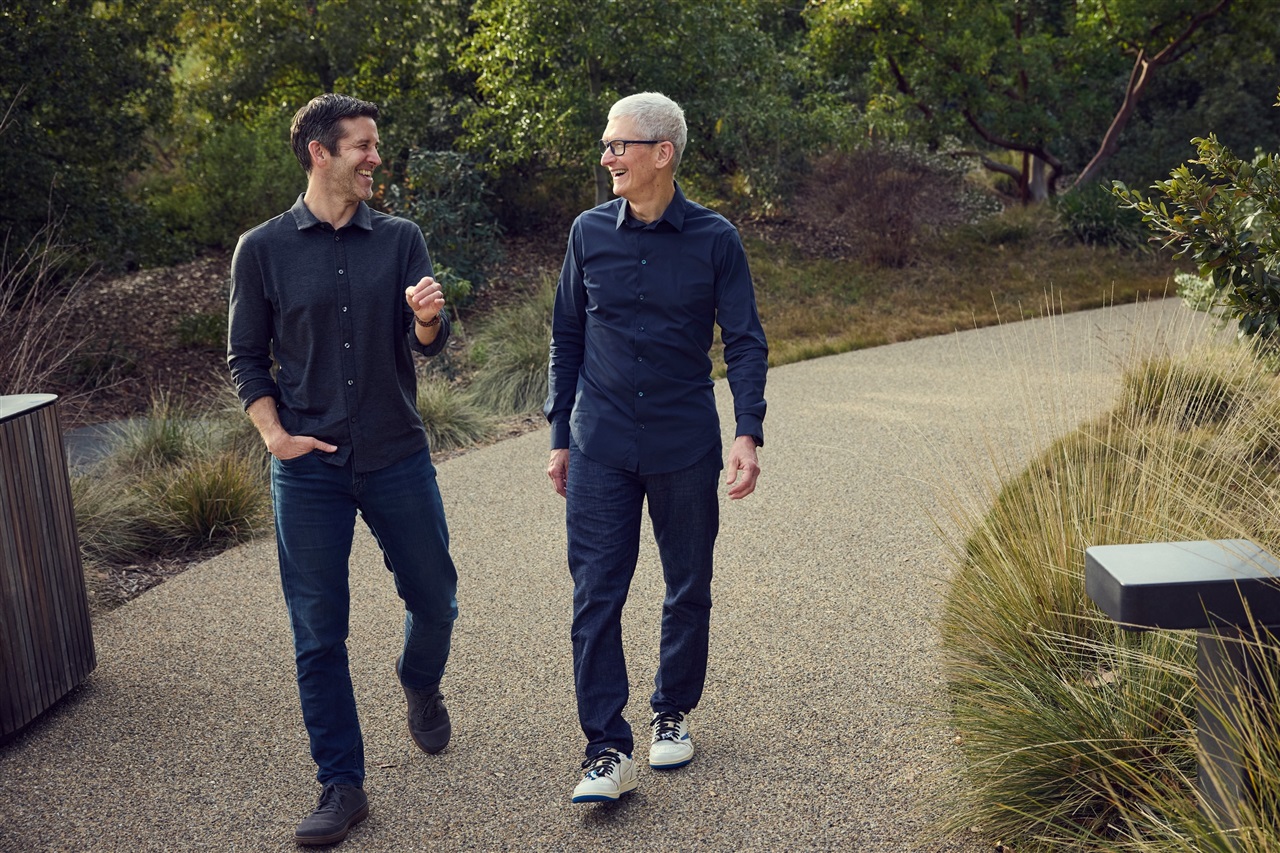
Apple has announced a significant leadership transition, an event that marks a new chapter in the history of the Cupertino giant. John Ternus, a prominent figure within the company, has been designated to assume the role of Chief Executive Officer (CEO). Concurrently, the current CEO, Tim Cook, will transition to the position of executive chairman. This leadership reshuffle at the top represents a crucial moment for Apple, a company that continues to profoundly influence the global technology landscape.
Ternus's appointment as CEO and Cook's new role as executive chairman reflect strategic planning for continuity and innovation. Such leadership changes in companies of this magnitude are always closely watched by analysts and industry players, as they can foreshadow new strategic directions, investments, and priorities. Although the announcement does not detail future product or technological strategies, leadership is a decisive factor in shaping the direction of a complex organization like Apple.
Strategic Implications in the Technology Landscape
A change in leadership at a company of Apple's size and influence, while not immediately specifying plans for Large Language Models (LLM) or deployment infrastructures, can have long-term repercussions across the entire technology ecosystem. Strategic decisions made at the top of giants like Apple often drive innovation in key sectors, from custom silicio design to the evolution of software frameworks and development pipelines. For CTOs, DevOps leads, and infrastructure architects, monitoring these changes means anticipating potential trends that could influence their hardware and software investment choices.
In a context where the deployment of AI workloads, including LLMs, is at the center of discussions, the strategies of major market players can indirectly shape the available options. For example, a company's emphasis on its own hardware architecture or development ecosystems can influence the availability of optimized solutions for inference or fine-tuning, both in cloud and self-hosted environments. The choice between on-premise deployment and cloud-based solutions is a complex decision, requiring careful evaluation of the Total Cost of Ownership (TCO), data sovereignty, and compliance requirements.
The Role of Tech Giants and Deployment Choices
Large technology companies, with their resources and capacity for innovation, play a fundamental role in defining industry standards and directions. Their choices in terms of research and development, acquisitions, and partnerships can accelerate or slow the adoption of certain technologies. In the field of artificial intelligence, for instance, investment in new generations of GPUs, the optimization of algorithms for quantization, or the development of proprietary frameworks can have a direct impact on the feasibility and efficiency of LLM deployments.
For companies evaluating the implementation of AI solutions, understanding the strategies of market leaders is crucial. Although Apple's announcement does not provide specific technical details such as the VRAM of upcoming GPUs or the expected throughput for AI workloads, it underscores the importance of strategic leadership in driving innovation. Decisions regarding the adoption of an air-gapped approach for maximum security or the integration of hybrid solutions require a clear vision of market trends and emerging technological capabilities.
Future Prospects and the AI-RADAR Ecosystem
The leadership transition at Apple occurs during a period of intense technological evolution, with generative artificial intelligence continuing to redefine expectations and opportunities. For the AI-RADAR community, focused on on-premise LLMs, local stacks, and hardware for inference and training, these changes, albeit indirectly, can signal an evolution in the competitive landscape and technological availabilities. A company's ability to innovate and adapt to new challenges largely depends on its leadership and strategic vision.
As the industry continues to debate the merits of cloud computing versus self-hosted deployments, the direction taken by influential companies like Apple can carry significant weight. The priority given to data sovereignty, infrastructure control, and TCO optimization remains central for many technology decision-makers. AI-RADAR continues to provide analysis and frameworks for evaluating these trade-offs, offering a neutral perspective on the various options available for AI/LLM workloads. Leadership is a key factor not only for business success but also for guiding the innovation that fuels the entire sector.







💬 Comments (0)
🔒 Log in or register to comment on articles.
No comments yet. Be the first to comment!