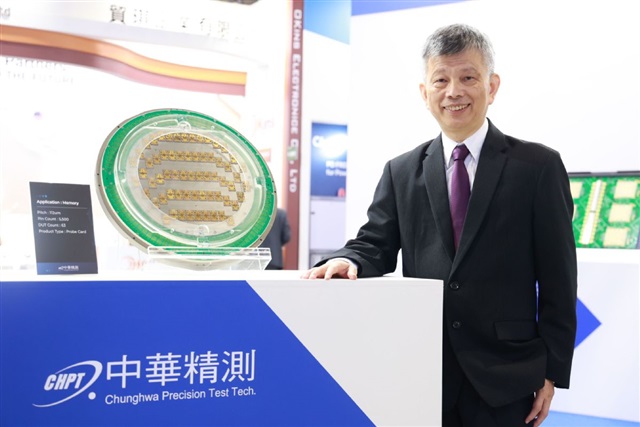
The signal comes from a company that views semiconductors through the lens of test equipment. Chunghwa Precision Test expects ASIC-related revenue to overtake GPU-related revenue by 2027. This is not a minor balance-sheet shift: it suggests the AI hardware ecosystem is reorienting around chips designed for specific workloads.
GPUs remain the default for training and development because of their flexibility. But for large-scale inference, where cost per token, power consumption and predictability matter, ASICs offer efficiency advantages that are hard to ignore. A company designing custom accelerators can optimize silicon for a model family or deployment pattern and lower TCO. The trade-off is equally clear: an ASIC is born specialized and can become a constraint if models or usage patterns change.
The crossing seen by Chunghwa Precision Test points to a fork in the road. Hyperscale cloud operators can afford to develop and manufacture in-house ASICs and integrate them into their pipelines. Organizations evaluating on-premises or self-hosted deployments face a different choice: commercial GPUs are available now and can be repurposed, while specialized accelerators may be more efficient but less versatile. The second-order effect runs through the supply chain: as ASIC volumes grow, test, packaging and integration providers must adjust capacity and tooling, favoring those with visibility into large order roadmaps.
There is also a third-order, less visible consequence. The push toward data sovereignty and local processing rewards predictable, low-power architectures but risks fragmenting the market into vertical silos. In that scenario, the real advantage may not be raw inference speed alone, but the ability to keep workloads portable across different hardware. For those weighing on-premise deployment, AI-RADAR explores such analytical trade-offs at /llm-onpremise.
The year 2027 is not arbitrary: it reflects design cycles for custom silicon already underway. More than the accounting crossover, the structural signal matters: demand for AI computing is polarizing between flexible training and specialized inference. The contest is not only about silicon, but about who can manage the transition without being locked into an architecture that is too rigid.



💬 Comments (0)
🔒 Log in or register to comment on articles.
No comments yet. Be the first to comment!